Almanan Maha, Raynor Jana, Sholl Allyson, Wang Mei, Chougnet Claire, Cardin Rhonda D, Hildeman David A
Department of Pediatrics, University of Cincinnati College of Medicine, Division of Immunobiology, Children's Hospital Medical Center, Cincinnati, OH, United States of America.
Department of Pediatrics, University of Cincinnati College of Medicine, Division of Infectious Diseases, Children's Hospital Medical Center, Cincinnati, OH, United States of America.
PLoS Pathog. 2017 Aug 10;13(8):e1006507. doi: 10.1371/journal.ppat.1006507. eCollection 2017 Aug.
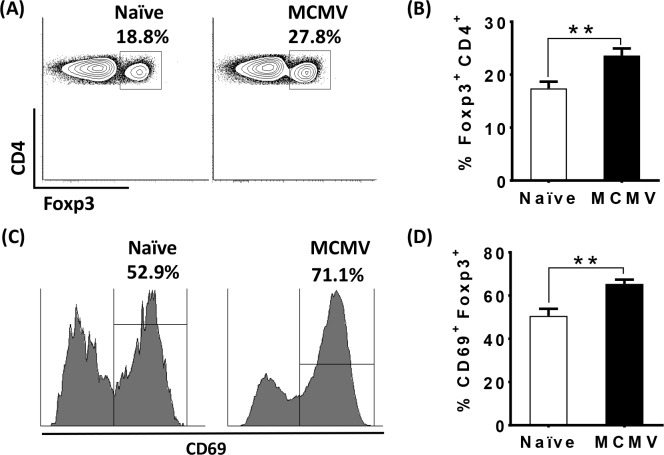
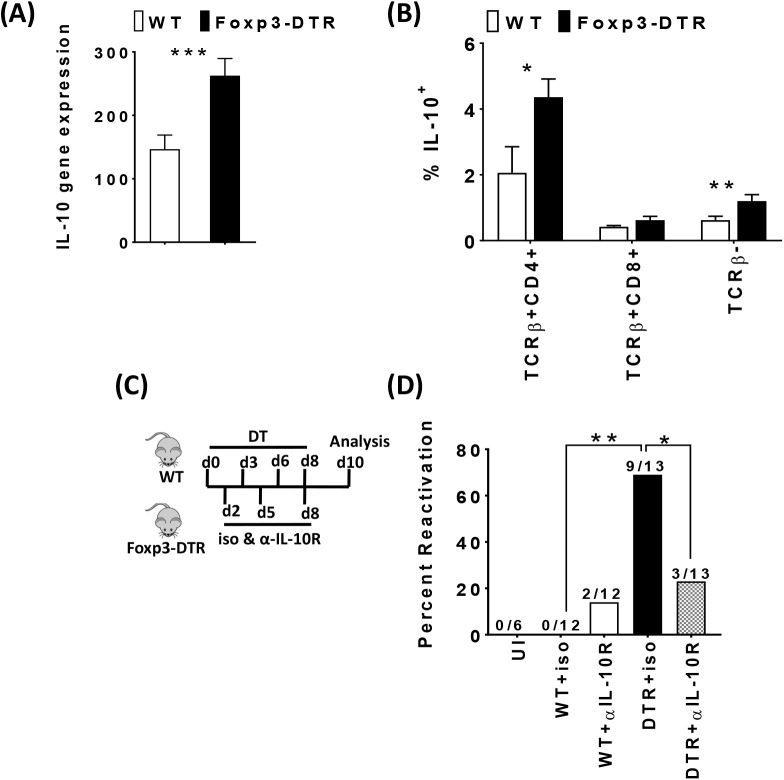
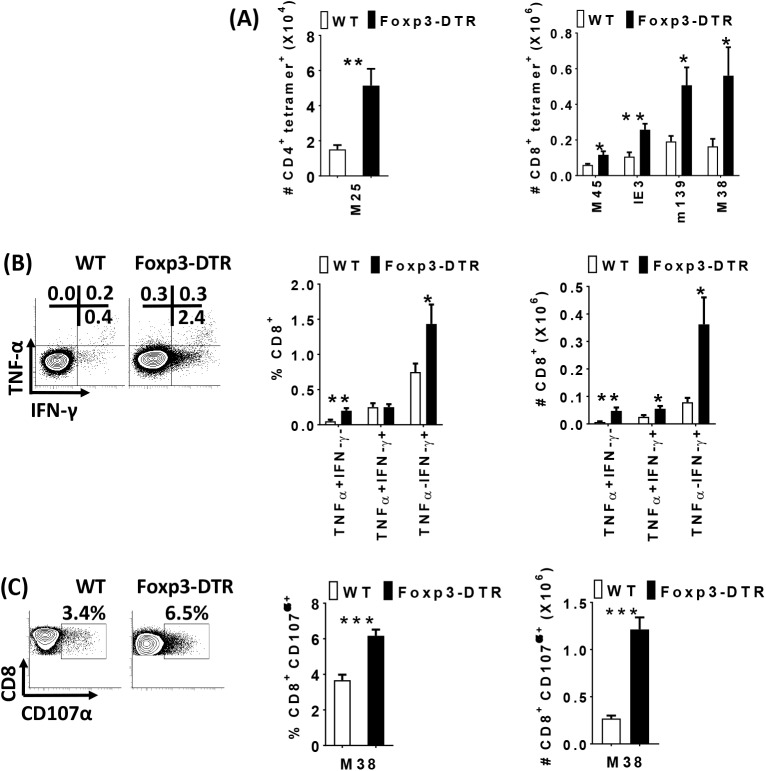
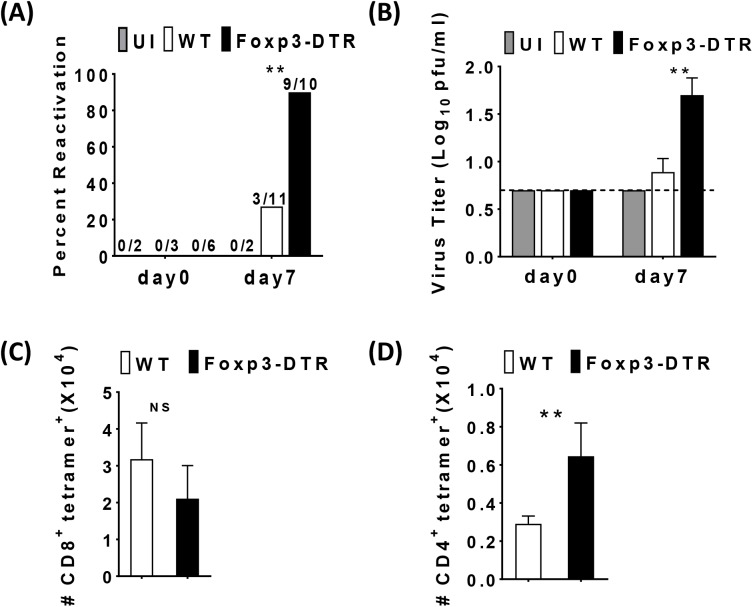
Cytomegalovirus (CMV) causes a persistent, lifelong infection. CMV persists in a latent state and undergoes intermittent subclinical viral reactivation that is quelled by ongoing T cell responses. While T cells are critical to maintain control of infection, the immunological factors that promote CMV persistence remain unclear. Here, we investigated the role of regulatory T cells (Treg) in a mouse model of latent CMV infection using Foxp3-diphtheria toxin receptor (Foxp3-DTR) mice. Eight months after infection, MCMV had established latency in the spleen, salivary gland, lung, and pancreas, which was accompanied by an increased frequency of Treg. Administration of diphtheria toxin (DT) after establishment of latency efficiently depleted Treg and drove a significant increase in the numbers of functional MCMV-specific CD4+ and CD8+ T cells. Strikingly, Treg depletion decreased the number of animals with reactivatable latent MCMV in the spleen. Unexpectedly, in the same animals, ablation of Treg drove a significant increase in viral reactivation in the salivary gland that was accompanied with augmented local IL-10 production by Foxp3-CD4+T cells. Further, neutralization of IL-10 after Treg depletion significantly decreased viral load in the salivary gland. Combined, these data show that Treg have divergent control of MCMV infection depending upon the tissue. In the spleen, Treg antagonize CD8+ effector function and promote viral persistence while in the salivary gland Treg prevent IL-10 production and limit viral reactivation and replication. These data provide new insights into the organ-specific roles of Treg in controlling the reactivation of latent MCMV infection.
巨细胞病毒(CMV)会引发持续终生的感染。CMV以潜伏状态持续存在,并会经历间歇性的亚临床病毒再激活,而这种再激活会被持续的T细胞反应所抑制。虽然T细胞对于维持对感染的控制至关重要,但促进CMV持续存在的免疫因素仍不清楚。在此,我们使用Foxp3-白喉毒素受体(Foxp3-DTR)小鼠,在潜伏性CMV感染的小鼠模型中研究了调节性T细胞(Treg)的作用。感染八个月后,小鼠巨细胞病毒(MCMV)在脾脏、唾液腺、肺和胰腺中建立了潜伏状态,同时Treg的频率增加。潜伏状态建立后给予白喉毒素(DT)可有效清除Treg,并促使功能性MCMV特异性CD4+和CD8+T细胞数量显著增加。令人惊讶的是,Treg的清除减少了脾脏中具有可再激活潜伏MCMV的动物数量。出乎意料的是,在同一批动物中,Treg的缺失导致唾液腺中病毒再激活显著增加,同时Foxp3-CD4+T细胞的局部IL-10产生增加。此外,Treg缺失后中和IL-10可显著降低唾液腺中的病毒载量。综合这些数据表明,Treg对MCMV感染的控制因组织而异。在脾脏中,Treg拮抗CD8+效应功能并促进病毒持续存在,而在唾液腺中,Treg可防止IL-10产生并限制病毒再激活和复制。这些数据为Treg在控制潜伏性MCMV感染再激活中的器官特异性作用提供了新的见解。