Jiao Yunshen, Ding Lingyu, Chu Ming, Wang Tieshan, Kang Jiarui, Zhao Xiaofan, Li Huanhuan, Chen Xi, Gao Zirui, Gao Likai, Wang Yuedan
Department of Immunology, School of Basic Medical Science, Peking University, Beijing, China.
Key Laboratory of Medical Immunology, Ministry of Health, Beijing, China.
PLoS One. 2017 Aug 10;12(8):e0182781. doi: 10.1371/journal.pone.0182781. eCollection 2017.
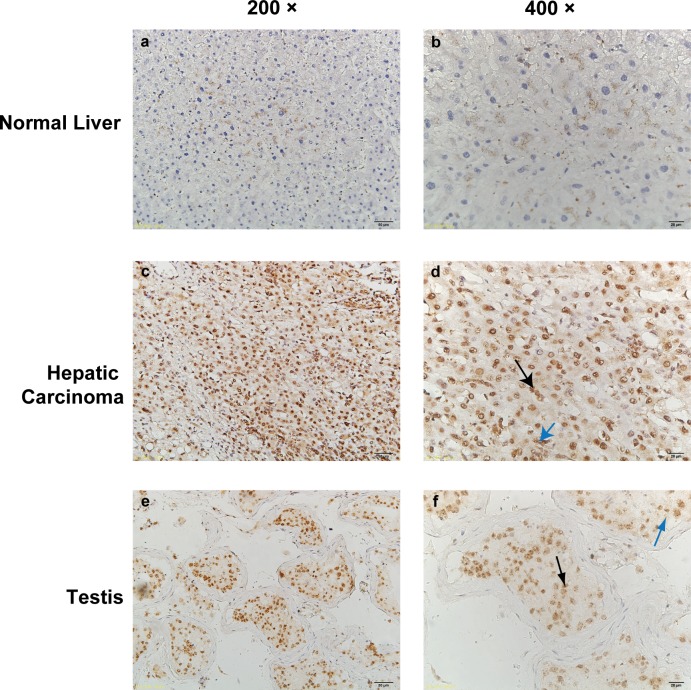
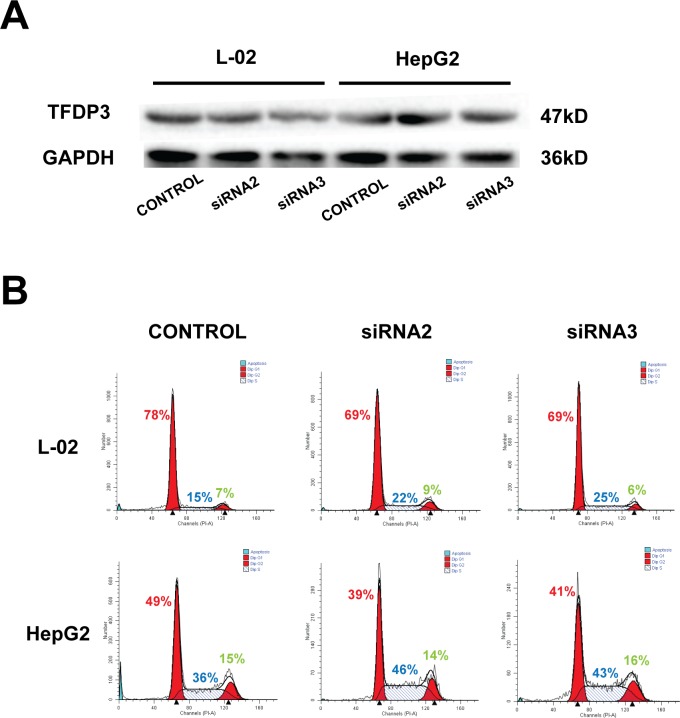
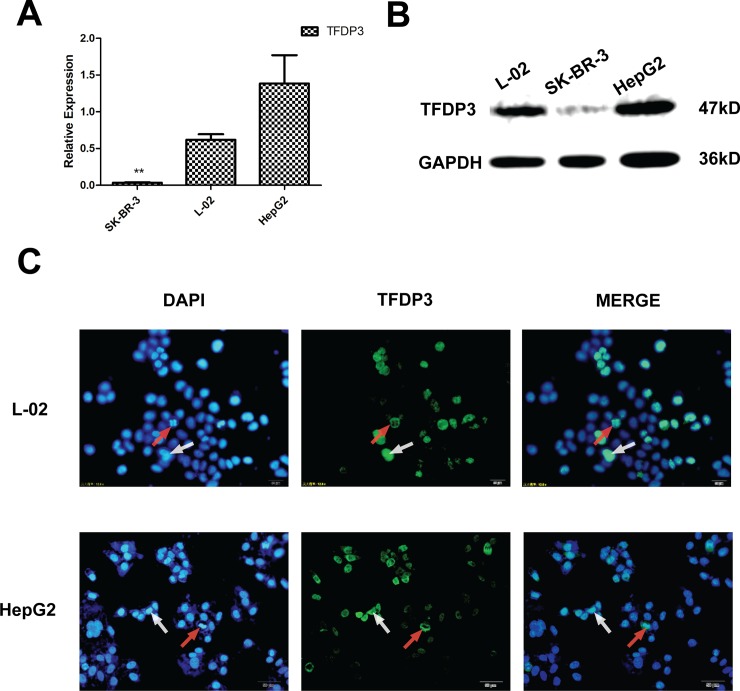
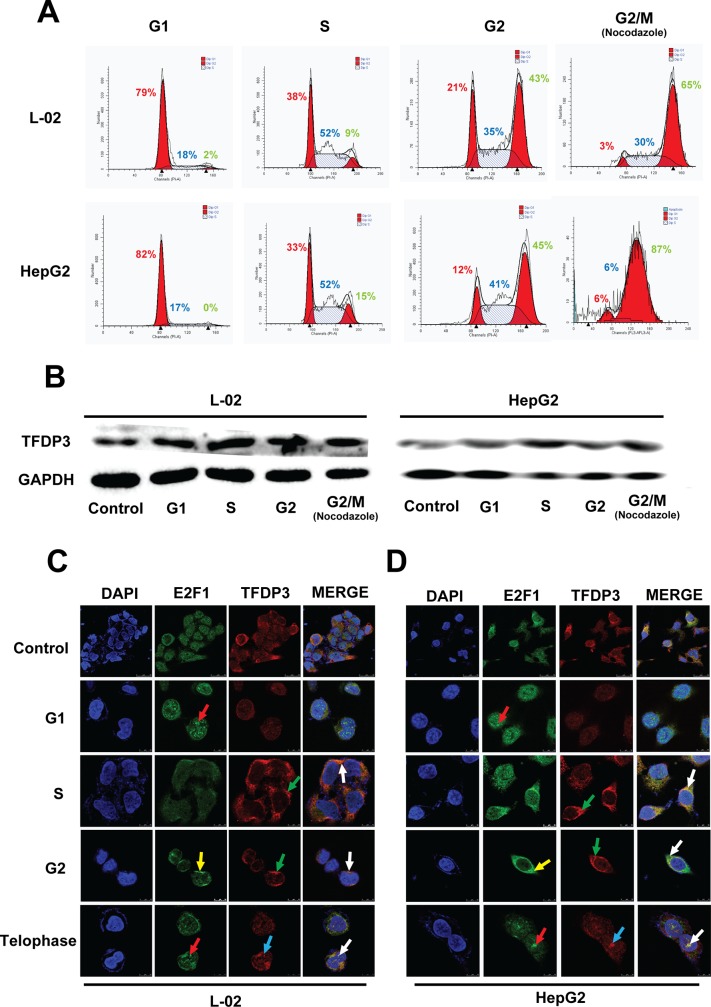
TFDP3, also be known as HCA661, was one of the cancer-testis antigens, which only expressed in human tissues. The recent researches about TFDP3 mostly focused on its ability to control the drug resistance and apoptosis of tumor cells. However, the role of TFDP3 in the progress of the cell cycle is rarely involved. In this study, we examined the expression of TFDP3 in human liver tissues firstly. After that, we detect the expression of TFDP3 at the RNA level and protein level in L-02 cell line and HepG2 cell line, and the location of TFDP3 was defined by immunofluorescence technique. Furthermore, we synchronized the cells to G1 phase, S phase and G2 phase, and arrested cell mitosis. The localization of TFDP3 and co-localization with E2F1 molecules in different phases of hepatocyte lines. Finally, TFDP3 gene knockout was performed on L-02 and HepG2 cell lines, and detected the new cell cycles by flow cytometry. The result showed that the expression of TFDP3 molecule is negative in normal liver tissue, but positive in immortalized human hepatocyte cell line, and the expression level is lower than in hepatocellular carcinoma cell line. The expression level of TFDP3 was in the dynamic change of L-02 and HepG2 cell lines, and was related to the phase transition. TFDP3 can bind to E2F1 molecule to form E2F/TFDP3 complex; and the localizations of TFDP3 and E2F1 molecules and the co-localization were different in different phases of cell cycle in the nucleus and cytoplasm, which indicated that the E2F/TFDP3 complex involved in the process of regulating the cell cycle. By knocking down the TFDP3 expression level in L-02 and HepG2 cell lines, the cell cycle would be arrested in S phase, which confirmed that TFDP3 can be a potential target for tumor therapy.
TFDP3,也被称为HCA661,是癌-睾丸抗原之一,仅在人体组织中表达。最近关于TFDP3的研究大多集中在其控制肿瘤细胞耐药性和凋亡的能力上。然而,TFDP3在细胞周期进程中的作用却很少被涉及。在本研究中,我们首先检测了TFDP3在人肝组织中的表达。之后,我们在L-02细胞系和HepG2细胞系中检测了TFDP3在RNA水平和蛋白质水平的表达,并通过免疫荧光技术确定了TFDP3的定位。此外,我们将细胞同步到G1期、S期和G2期,并使细胞有丝分裂停滞。观察TFDP3在肝细胞系不同阶段的定位以及与E2F1分子的共定位情况。最后,对L-02和HepG2细胞系进行TFDP3基因敲除,并通过流式细胞术检测新的细胞周期。结果显示,TFDP3分子在正常肝组织中表达为阴性,但在永生化人肝细胞系中为阳性,且表达水平低于肝癌细胞系。TFDP3在L-02和HepG2细胞系中的表达水平呈动态变化,且与细胞周期转变有关。TFDP3能与E2F1分子结合形成E2F/TFDP3复合物;TFDP3和E2F1分子在细胞核和细胞质中的定位以及在细胞周期不同阶段的共定位情况不同,这表明E2F/TFDP3复合物参与了细胞周期的调控过程。通过敲低L-02和HepG2细胞系中TFDP3的表达水平,细胞周期将停滞在S期,这证实了TFDP3可成为肿瘤治疗的潜在靶点。