Jourd'heuil Frances L, Xu Haiyan, Reilly Timothy, McKellar Keneta, El Alaoui Chaymae, Steppich Julia, Liu Yong Feng, Zhao Wen, Ginnan Roman, Conti David, Lopez-Soler Reynold, Asif Arif, Keller Rebecca K, Schwarz John J, Thanh Thuy Le Thi, Kawada Norifumi, Long Xiaochun, Singer Harold A, Jourd'heuil David
From the Department of Molecular and Cellular Physiology (F.L.J., H.X., T.R., K.M., C.E.A., J.S., Y.F.L., W.Z., R.G., R.K.K., J.J.S., X.L., H.A.S., D.J.) and Surgery Transplantation (D.C., R.L.-S.), Albany Medical Center, NY; Seton Hall-Hackensack Meridian School of Medicine, Jersey Shore University Medical Center, Hackensack-Meridian Health, Neptune, NJ (A.A.); and Department of Hepatology, Graduate School of Medicine, Osaka City University, Japan (L.T.T.T., N.K.).
Arterioscler Thromb Vasc Biol. 2017 Oct;37(10):1944-1955. doi: 10.1161/ATVBAHA.117.309410. Epub 2017 Aug 10.
The role of hemoglobin and myoglobin in the cardiovascular system is well established, yet other globins in this context are poorly characterized. Here, we examined the expression and function of cytoglobin (CYGB) during vascular injury.
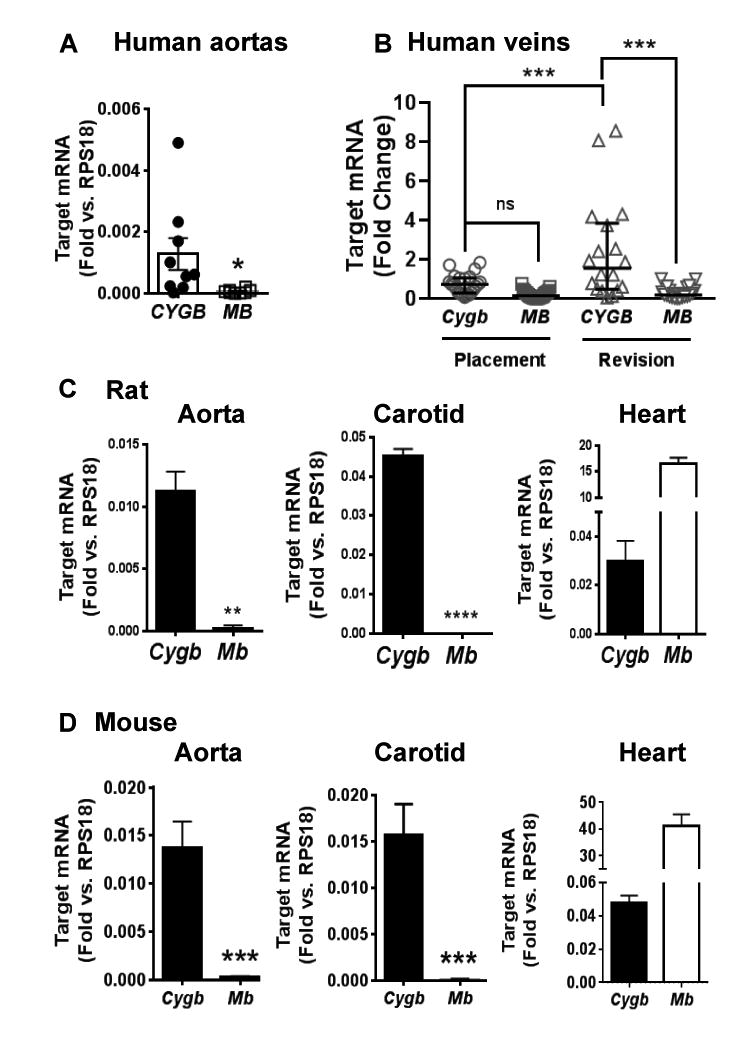
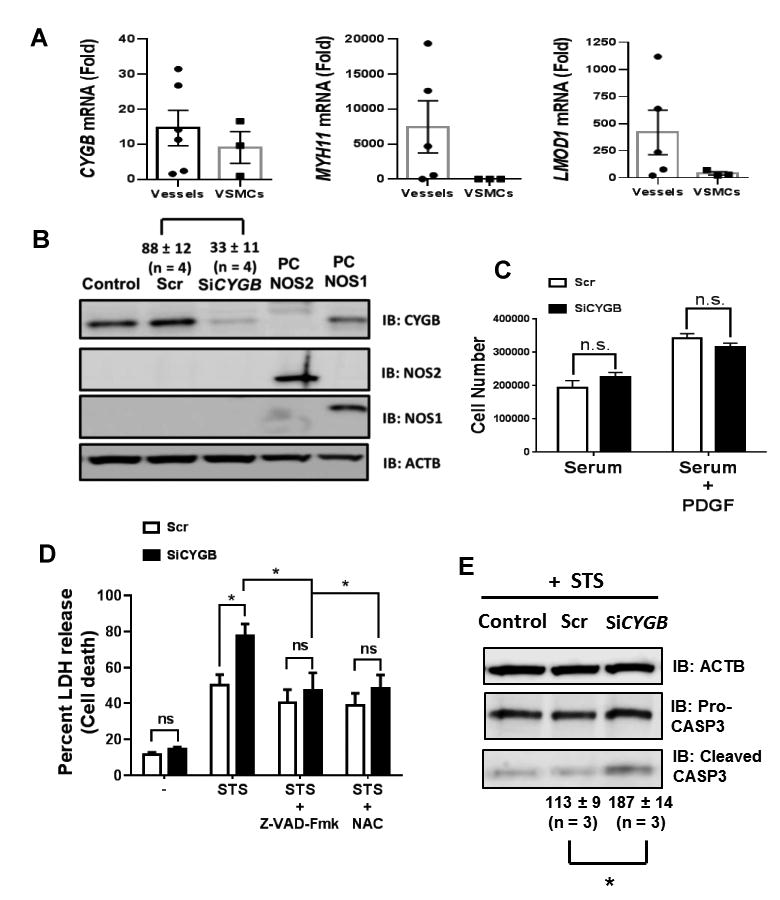
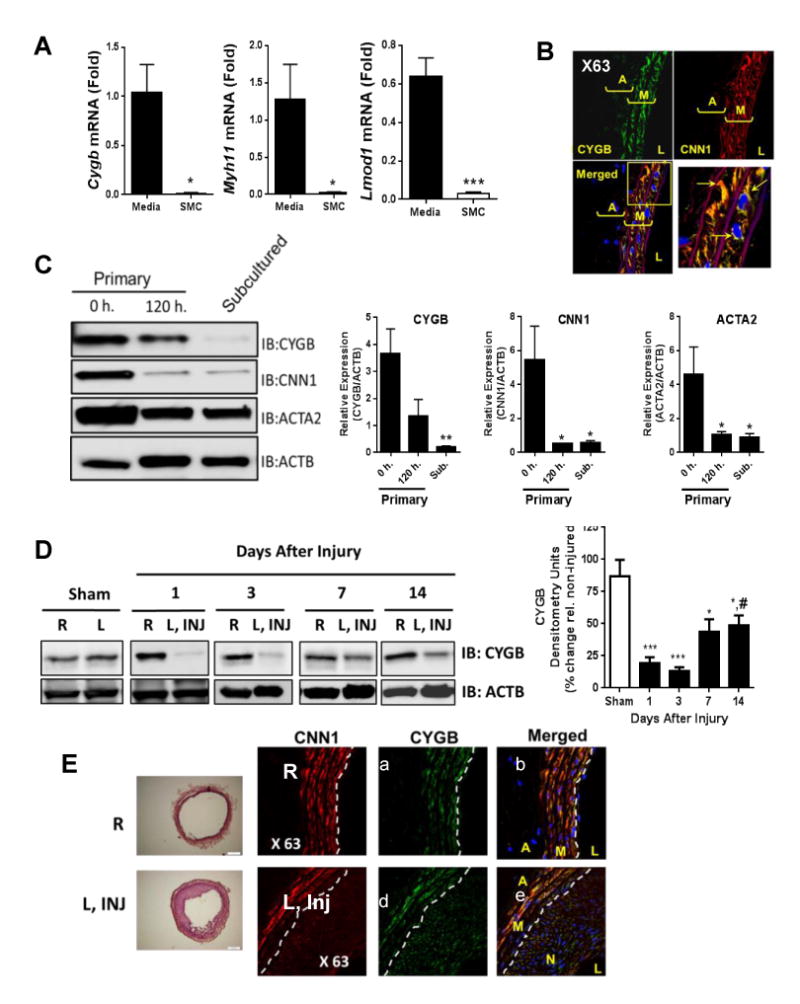
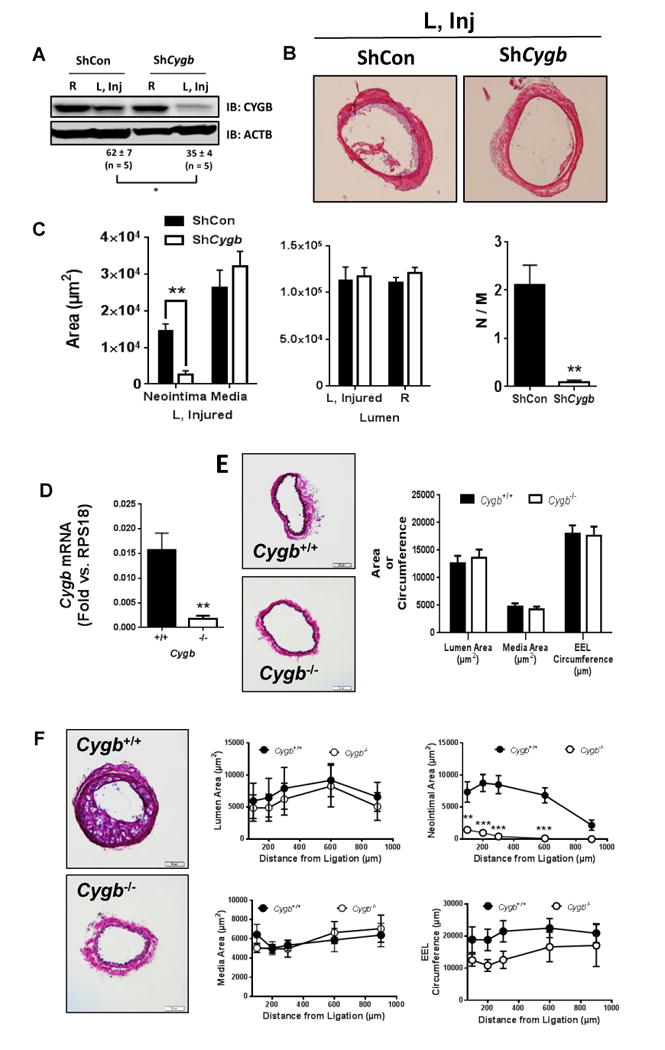
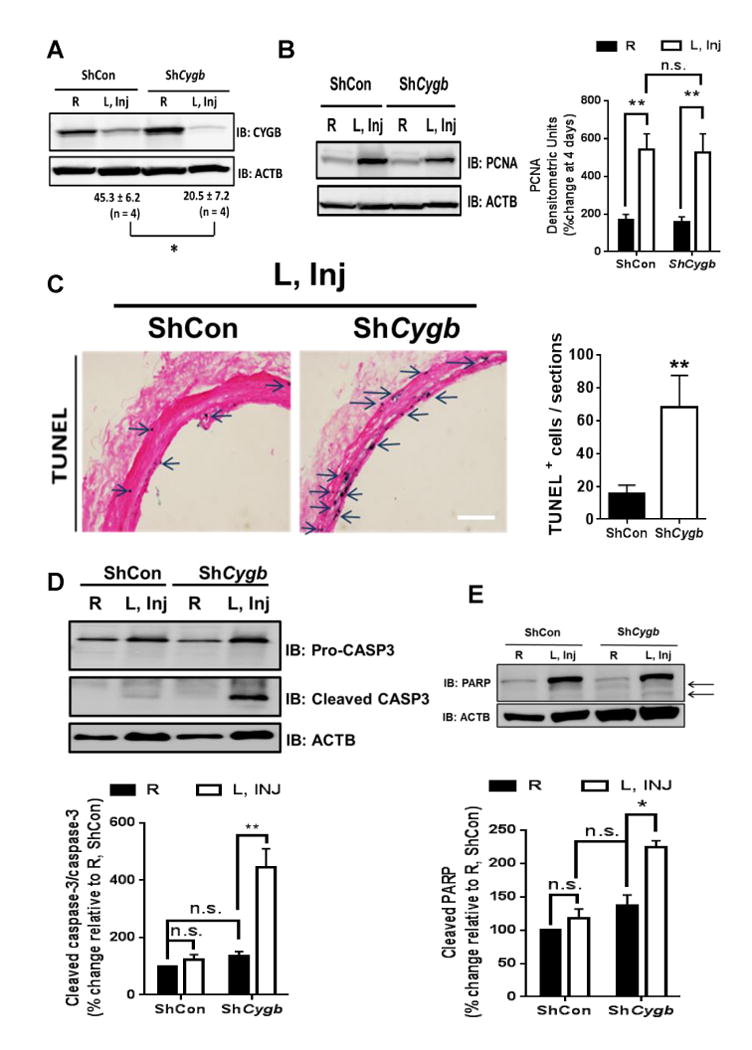
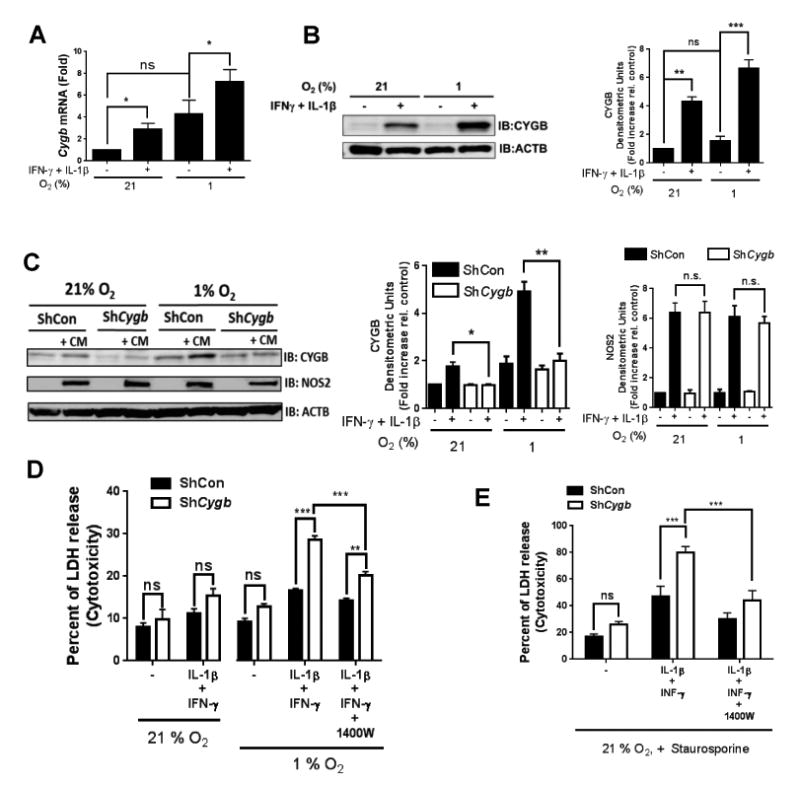
We characterized CYGB content in intact vessels and primary vascular smooth muscle (VSM) cells and used 2 different vascular injury models to examine the functional significance of CYGB in vivo. We found that CYGB was strongly expressed in medial arterial VSM and human veins. In vitro and in vivo studies indicated that CYGB was lost after VSM cell dedifferentiation. In the rat balloon angioplasty model, site-targeted delivery of adenovirus encoding shRNA specific for CYGB prevented its reexpression and decreased neointima formation. Similarly, 4 weeks after complete ligation of the left common carotid, knockout mice displayed little to no evidence of neointimal hyperplasia in contrast to their wild-type littermates. Mechanistic studies in the rat indicated that this was primarily associated with increased medial cell loss, terminal uridine nick-end labeling staining, and caspase-3 activation, all indicative of prolonged apoptosis. In vitro, CYGB could be reexpressed after VSM stimulation with cytokines and hypoxia and loss of CYGB sensitized human and rat aortic VSM cells to apoptosis. This was reversed after antioxidant treatment or NOS2 (nitric oxide synthase 2) inhibition.
These results indicate that CYGB is expressed in vessels primarily in differentiated medial VSM cells where it regulates neointima formation and inhibits apoptosis after injury.
血红蛋白和肌红蛋白在心血管系统中的作用已得到充分证实,然而在此背景下的其他球蛋白的特征却鲜为人知。在此,我们研究了细胞球蛋白(CYGB)在血管损伤过程中的表达和功能。
我们对完整血管和原代血管平滑肌(VSM)细胞中的CYGB含量进行了表征,并使用2种不同的血管损伤模型来研究CYGB在体内的功能意义。我们发现CYGB在动脉中层VSM和人静脉中强烈表达。体外和体内研究表明,VSM细胞去分化后CYGB丢失。在大鼠球囊血管成形术模型中,靶向递送编码针对CYGB的shRNA的腺病毒可阻止其重新表达并减少新生内膜形成。同样,在左颈总动脉完全结扎4周后,与野生型同窝小鼠相比,基因敲除小鼠几乎没有新生内膜增生的迹象。在大鼠中的机制研究表明,这主要与中层细胞丢失增加、末端脱氧核苷酸转移酶介导的缺口末端标记染色和半胱天冬酶-3激活有关,所有这些都表明凋亡延长。在体外,VSM细胞受到细胞因子和缺氧刺激后CYGB可以重新表达,而CYGB的丢失会使人和大鼠主动脉VSM细胞对凋亡敏感。抗氧化剂治疗或一氧化氮合酶2(NOS2)抑制后这种情况会逆转。
这些结果表明,CYGB主要在分化的中层VSM细胞中表达,在血管中调节新生内膜形成并抑制损伤后的凋亡。