Smith Gina A, Fearnley Gareth W, Abdul-Zani Izma, Wheatcroft Stephen B, Tomlinson Darren C, Harrison Michael A, Ponnambalam Sreenivasan
Endothelial Cell Biology Unit, School of Molecular & Cellular Biology, University of Leeds, Leeds LS2 9JT, UK.
Leeds Institute of Cardiovascular & Metabolic Medicine, Faculty of Medicine & Health, University of Leeds, Leeds LS2 9JT, UK.
Biol Open. 2017 Oct 15;6(10):1404-1415. doi: 10.1242/bio.027896.
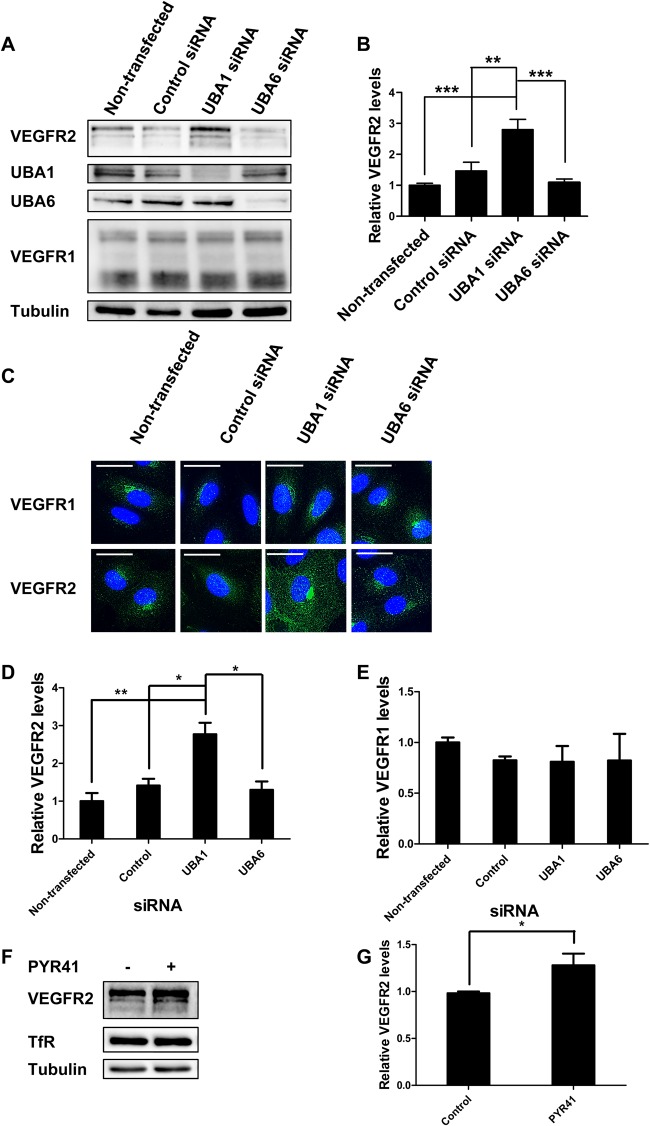
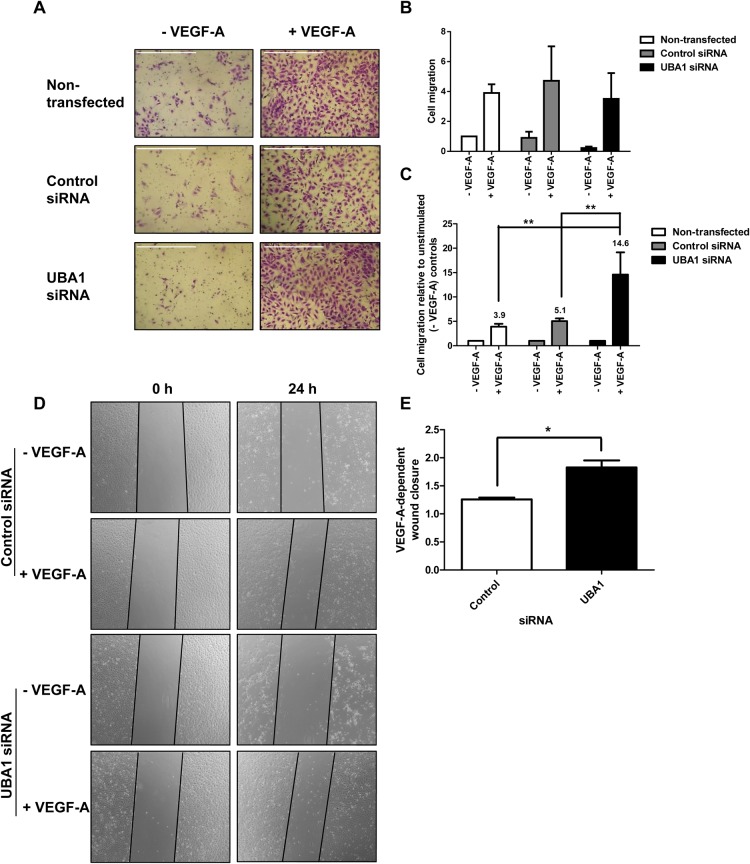
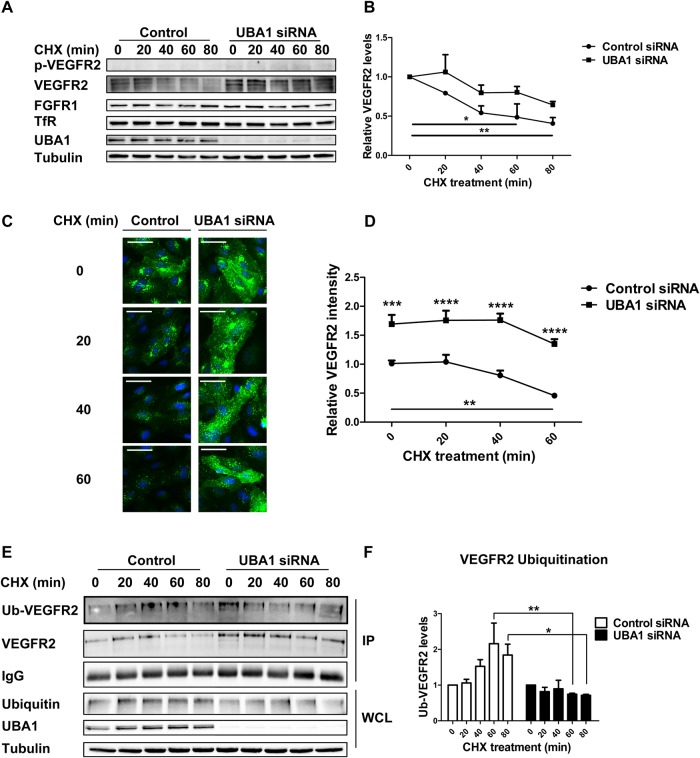
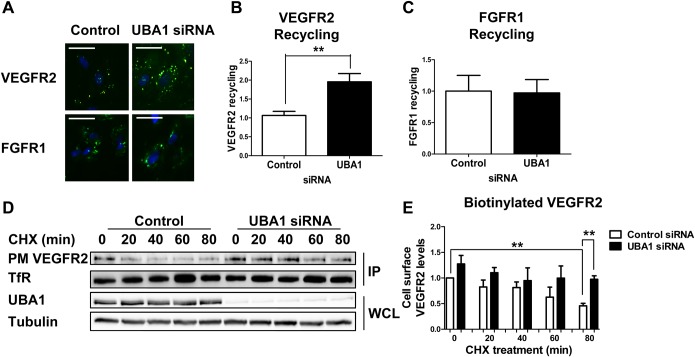
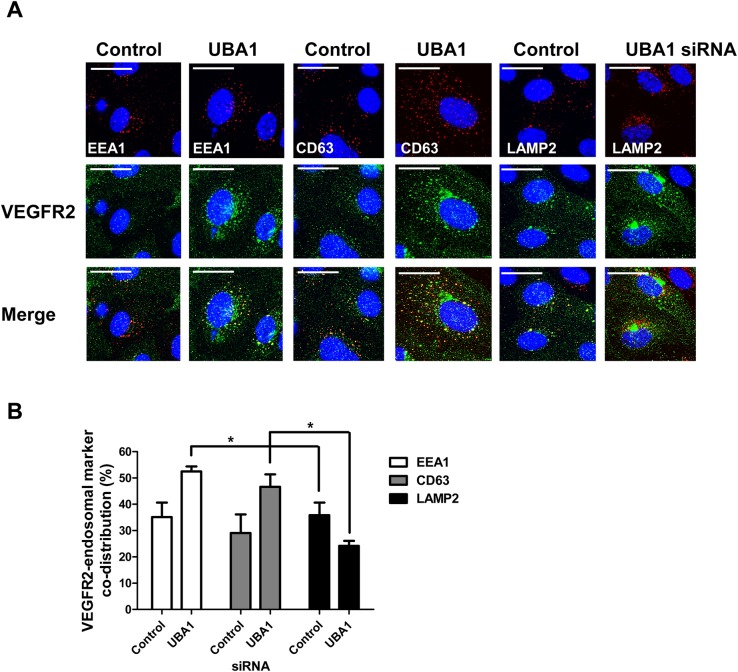
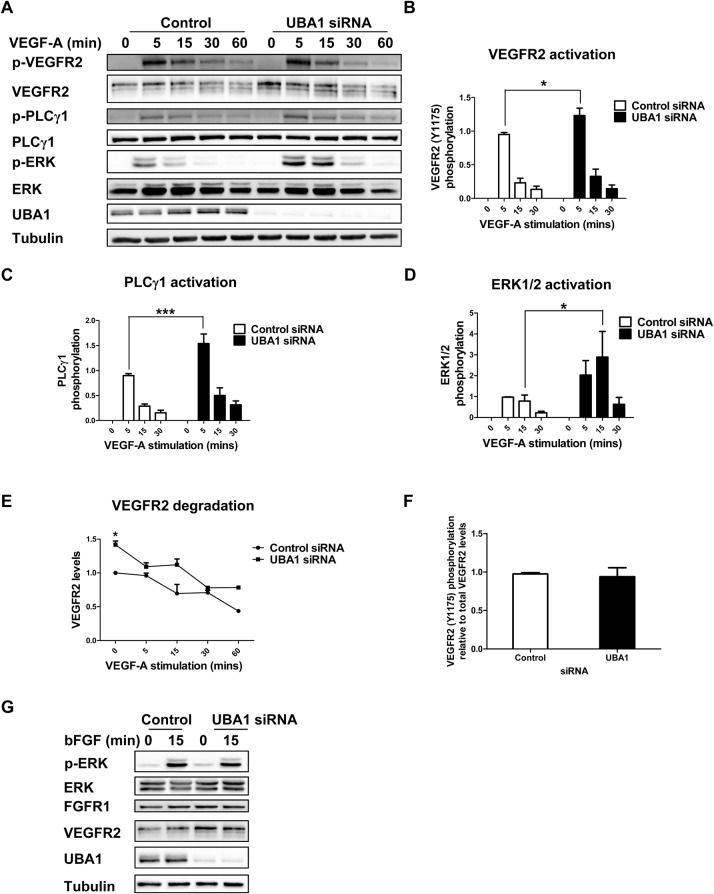
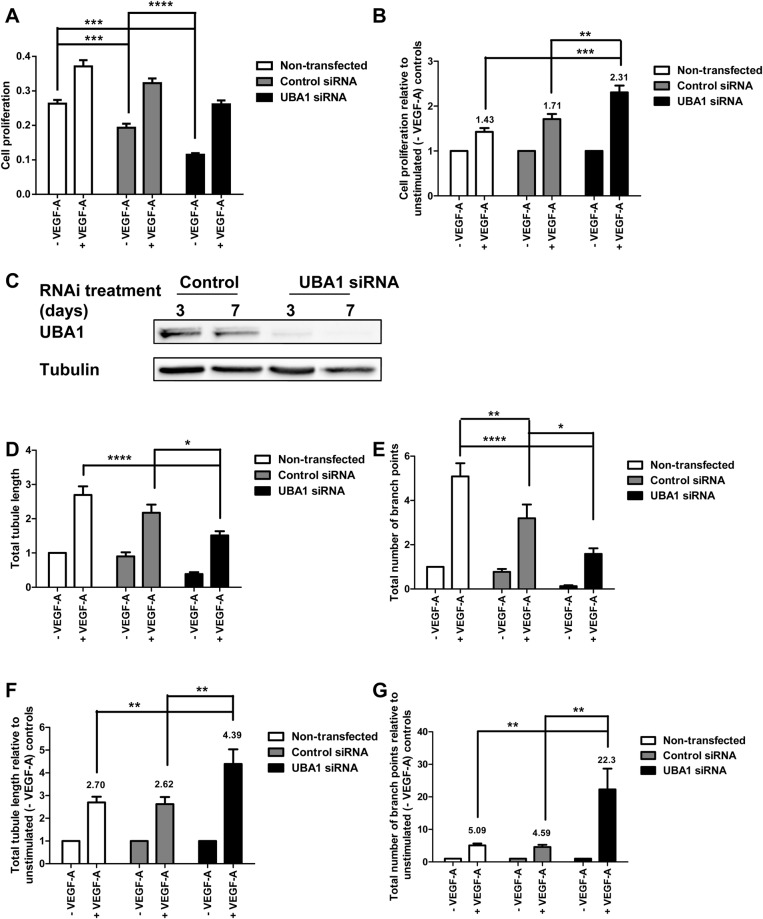
Cell surface receptors can undergo recycling or proteolysis but the cellular decision-making events that sort between these pathways remain poorly defined. Vascular endothelial growth factor A (VEGF-A) and vascular endothelial growth factor receptor 2 (VEGFR2) regulate signal transduction and angiogenesis, but how signaling and proteolysis is regulated is not well understood. Here, we provide evidence that a pathway requiring the E1 ubiquitin-activating enzyme UBA1 controls basal VEGFR2 levels, hence metering plasma membrane receptor availability for the VEGF-A-regulated endothelial cell response. VEGFR2 undergoes VEGF-A-independent constitutive degradation via a UBA1-dependent ubiquitin-linked pathway. Depletion of UBA1 increased VEGFR2 recycling from endosome-to-plasma membrane and decreased proteolysis. Increased membrane receptor availability after UBA1 depletion elevated VEGF-A-stimulated activation of key signaling enzymes such as PLCγ1 and ERK1/2. Although UBA1 depletion caused an overall decrease in endothelial cell proliferation, surviving cells showed greater VEGF-A-stimulated responses such as cell migration and tubulogenesis. Our study now suggests that a ubiquitin-linked pathway regulates the balance between receptor recycling and degradation which in turn impacts on the intensity and duration of VEGF-A-stimulated signal transduction and the endothelial response.
细胞表面受体可经历再循环或蛋白水解过程,但在这些途径之间进行分选的细胞决策事件仍不清楚。血管内皮生长因子A(VEGF-A)和血管内皮生长因子受体2(VEGFR2)调节信号转导和血管生成,但信号传导和蛋白水解如何被调节尚不清楚。在这里,我们提供证据表明,一条需要E1泛素激活酶UBA1的途径控制着基础VEGFR2水平,从而调节质膜受体的可用性,以实现VEGF-A调节的内皮细胞反应。VEGFR2通过一条依赖UBA1的泛素连接途径进行不依赖VEGF-A的组成型降解。UBA1的缺失增加了VEGFR2从内体到质膜的再循环,并减少了蛋白水解。UBA1缺失后膜受体可用性的增加提高了VEGF-A刺激的关键信号酶如PLCγ1和ERK1/2的激活。虽然UBA1的缺失导致内皮细胞增殖总体下降,但存活细胞显示出更强的VEGF-A刺激反应,如细胞迁移和管腔形成。我们的研究现在表明,一条泛素连接途径调节受体再循环和降解之间的平衡,这反过来又影响VEGF-A刺激的信号转导强度和持续时间以及内皮细胞反应。