Singh Manjul, Gupta Aditi, Laxmi Ashverya
National Institute of Plant Genome ResearchNew Delhi, India.
Interdisciplinary Centre for Plant Genomics, University of Delhi South CampusNew Delhi, India.
Front Plant Sci. 2017 Jul 27;8:1304. doi: 10.3389/fpls.2017.01304. eCollection 2017.
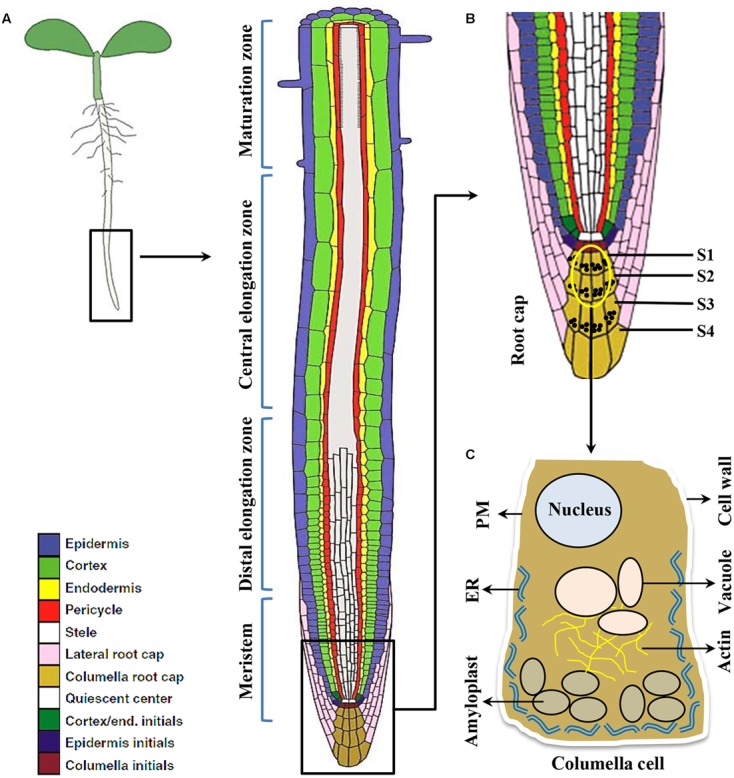
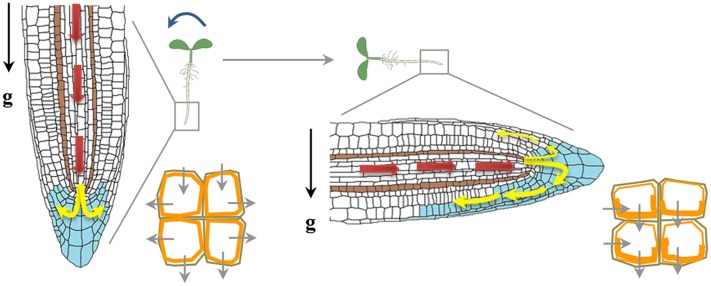
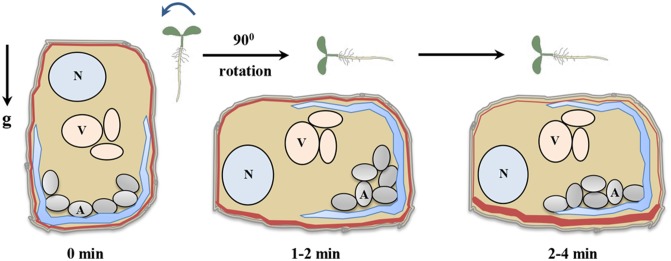
Plants being sessile can often be judged as passive acceptors of their environment. However, plants are actually even more active in responding to the factors from their surroundings. Plants do not have eyes, ears or vestibular system like animals, still they "know" which way is up and which way is down? This is facilitated by receptor molecules within plant which perceive changes in internal and external conditions such as light, touch, obstacles; and initiate signaling pathways that enable the plant to react. Plant responses that involve a definite and specific movement are called "tropic" responses. Perhaps the best known and studied tropisms are phototropism, i.e., response to light, and geotropism, i.e., response to gravity. A robust root system is vital for plant growth as it can provide physical anchorage to soil as well as absorb water, nutrients and essential minerals from soil efficiently. Gravitropic responses of both primary as well as lateral root thus become critical for plant growth and development. The molecular mechanisms of root gravitropism has been delved intensively, however, the mechanism behind how the potential energy of gravity stimulus converts into a biochemical signal in vascular plants is still unknown, due to which gravity sensing in plants still remains one of the most fascinating questions in molecular biology. Communications within plants occur through phytohormones and other chemical substances produced in plants which have a developmental or physiological effect on growth. Here, we review current knowledge of various intrinsic signaling mechanisms that modulate root gravitropism in order to point out the questions and emerging developments in plant directional growth responses. We are also discussing the roles of sugar signals and their interaction with phytohormone machinery, specifically in context of root directional responses.
植物由于固着生长,常常被视为其环境的被动接受者。然而,实际上植物在对周围环境因素做出反应时更为活跃。植物不像动物那样有眼睛、耳朵或前庭系统,但它们仍然“知道”哪个方向是向上的,哪个方向是向下的。这是由植物体内的受体分子促成的,这些受体分子能感知内部和外部条件的变化,如光、触摸、障碍物等,并启动信号通路,使植物能够做出反应。涉及明确且特定运动的植物反应被称为“向性”反应。也许最广为人知且研究最多的向性是向光性,即对光的反应,以及向地性,即对重力的反应。强大的根系对植物生长至关重要,因为它能为植物提供在土壤中的物理固定,还能有效地从土壤中吸收水分、养分和必需矿物质。因此,主根和侧根的向地性反应对植物的生长和发育都至关重要。虽然已经深入研究了根向地性的分子机制,然而,在维管植物中,重力刺激的势能如何转化为生化信号的背后机制仍然未知,正因如此,植物中的重力感知仍然是分子生物学中最引人入胜的问题之一。植物内部的通讯是通过植物激素和植物产生的其他化学物质进行的,这些物质对生长具有发育或生理影响。在此,我们综述了各种调节根向地性的内在信号机制的现有知识,以便指出植物定向生长反应中的问题和新出现的进展。我们还将讨论糖信号的作用及其与植物激素机制的相互作用,特别是在根定向反应的背景下。