Department of Medicine, University of Texas Health Science Center, San Antonio, TX 78229.
The Graduate School of Biomedical Sciences, University of Texas Health Science Center, San Antonio, TX 78229.
Signal Transduct Target Ther. 2016;1:16030-. doi: 10.1038/sigtrans.2016.30. Epub 2016 Dec 23.
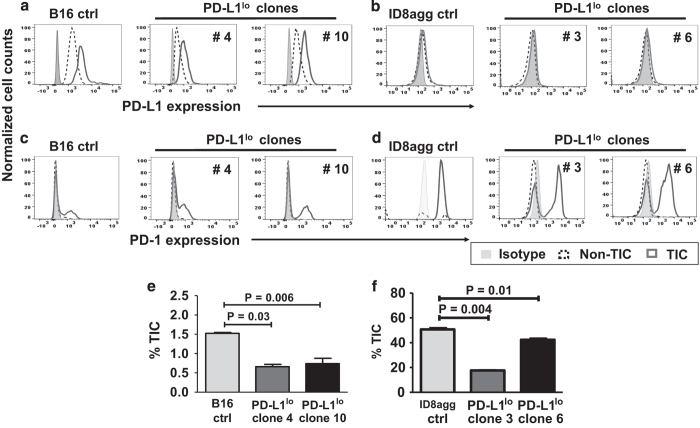
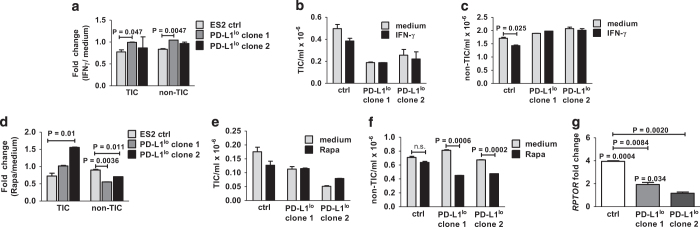
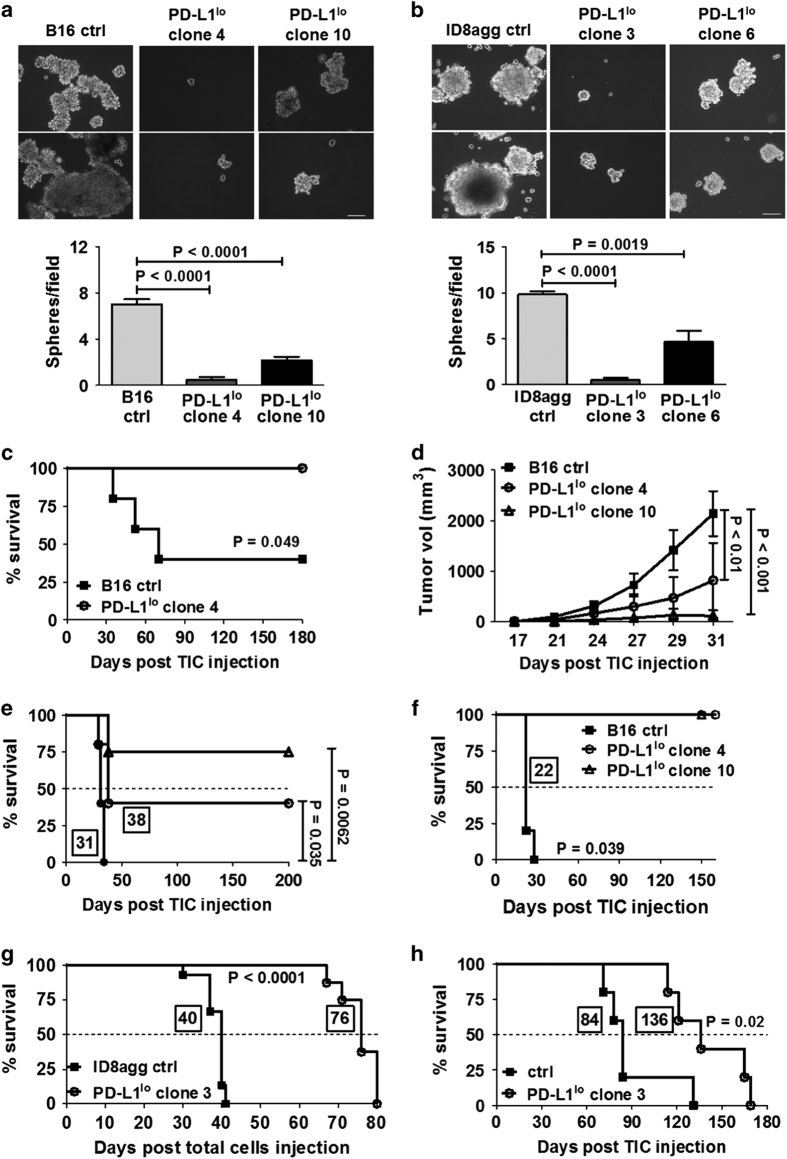
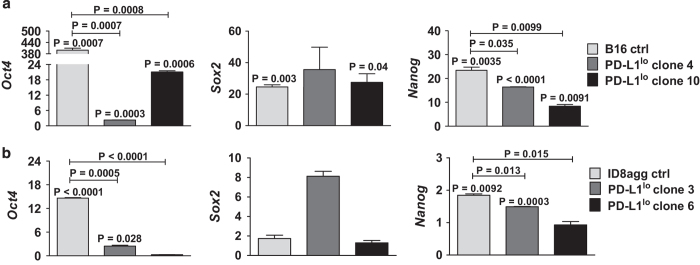
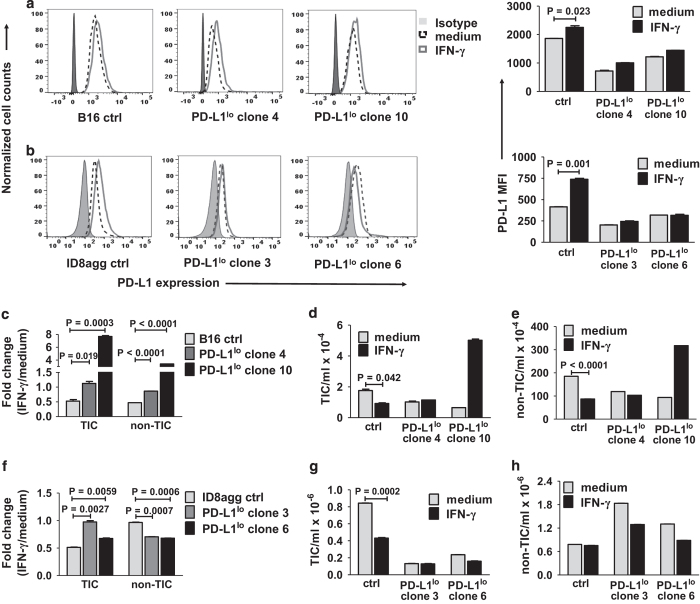
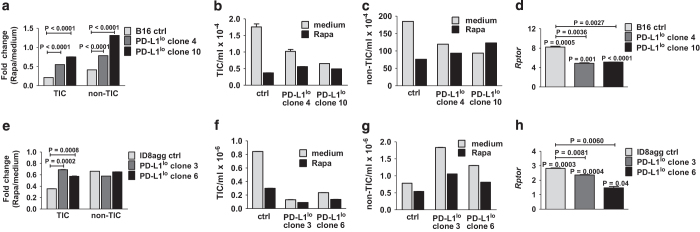
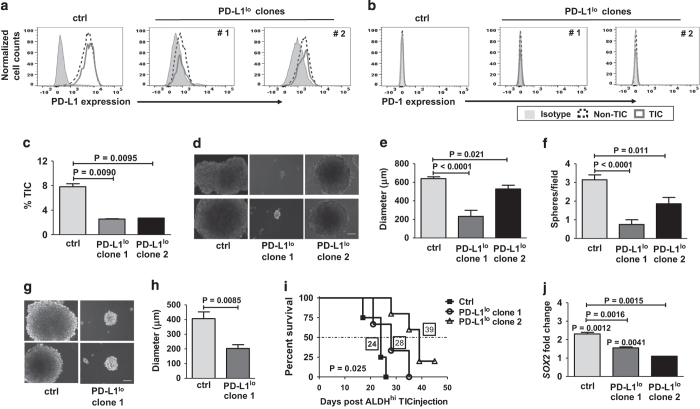
As tumor PD-L1 provides signals to anti-tumor PD-1 T cells that blunt their functions, αPD-1 and αPD-L1 antibodies have been developed as anti-cancer immunotherapies based on interrupting this signaling axis. However, tumor cell-intrinsic PD-L1 signals also regulate immune-independent tumor cell proliferation and mTOR signals, among other important effects. Tumor initiating cells (TIC) generate carcinomas, resist treatments and promote relapse. We show here that in murine B16 melanoma and ID8agg ovarian carcinoma cells, TIC express more PD-L1 versus non-TIC. Silencing PD-L1 in B16 and ID8agg cells by shRNA ("PD-L1") reduced TIC numbers, the canonical TIC genes and and functions as assessed by tumorosphere development, immune-dependent and immune-independent tumorigenesis, and serial transplantability . Strikingly, tumor PD-L1 sensitized TIC to interferon-γ and rapamycin Cell-intrinsic PD-L1 similarly drove functional TIC generation, canonical TIC gene expression, and sensitivity to interferon-γ and rapamycin in human ES2 ovarian cancer cells. Thus, tumor-intrinsic PD-L1 signals promote TIC generation and virulence, possibly by promoting canonical TIC gene expression, suggesting that PD-L1 has novel signaling effects on cancer pathogenesis and treatment responses.
肿瘤 PD-L1 向抗肿瘤 PD-1 T 细胞提供信号,使它们的功能钝化,因此基于阻断这一信号轴,αPD-1 和 αPD-L1 抗体已被开发为抗癌免疫疗法。然而,肿瘤细胞内在的 PD-L1 信号也调节免疫独立的肿瘤细胞增殖和 mTOR 信号等重要作用。肿瘤起始细胞 (TIC) 产生癌,抵抗治疗并促进复发。我们在这里显示,在鼠 B16 黑色素瘤和 ID8agg 卵巢癌细胞中,TIC 比非 TIC 表达更多的 PD-L1。通过 shRNA(“PD-L1”)沉默 B16 和 ID8agg 细胞中的 PD-L1 减少了 TIC 数量、典型的 TIC 基因 和 ,并通过肿瘤球体发育、免疫依赖和免疫独立的肿瘤发生以及连续移植性来评估功能。引人注目的是,肿瘤 PD-L1 使 TIC 对干扰素-γ和雷帕霉素敏感 细胞内在的 PD-L1 同样驱动功能性 TIC 生成、典型的 TIC 基因表达以及对人 ES2 卵巢癌细胞中干扰素-γ和雷帕霉素的敏感性。因此,肿瘤内在的 PD-L1 信号促进 TIC 的产生和毒力,可能通过促进典型的 TIC 基因表达,表明 PD-L1 对癌症发病机制和治疗反应具有新的信号作用。