The Human Pain Research Group, Faculty of Biology, Medicine and Health, University of Manchester, Manchester, UK.
Division of Neuroscience and Experimental Psychology, School of Biological Science, Faculty of Biology, Medicine and Health, University of Manchester, Manchester Academic Health Science Centre, Manchester, UK.
Psychopharmacology (Berl). 2017 Oct;234(19):2929-2939. doi: 10.1007/s00213-017-4686-6. Epub 2017 Aug 10.
Although there is clear evidence for the serotonergic regulation of descending control of pain in animals, little direct evidence exists in humans. The majority of our knowledge comes from the use of serotonin (5-HT)-modulating antidepressants as analgesics in the clinical management of chronic pain.
Here, we have used an acute tryptophan depletion (ATD) to manipulate 5-HT function and examine its effects of ATD on heat pain threshold and tolerance, attentional manipulation of nociceptive processing and mood in human volunteers.
Fifteen healthy participants received both ATD and balanced amino acid (BAL) drinks on two separate sessions in a double-blind cross-over design. Pain threshold and tolerance were determined 4 h post-drink via a heat thermode. Additional attention, distraction and temperature discrimination paradigms were completed using a laser-induced heat pain stimulus. Mood was assessed prior and throughout each session.
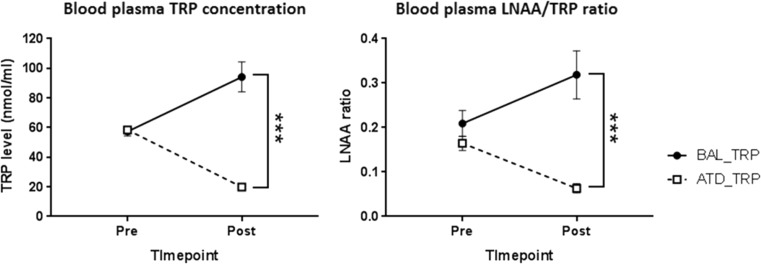
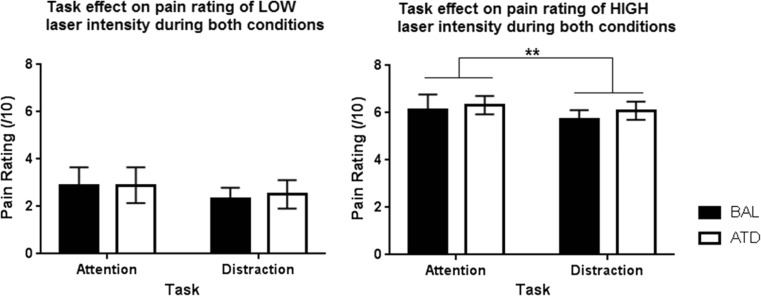
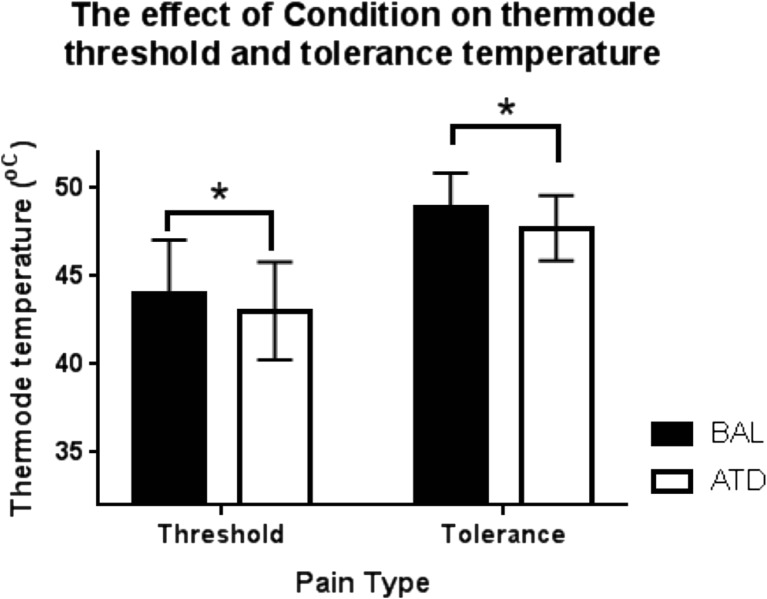
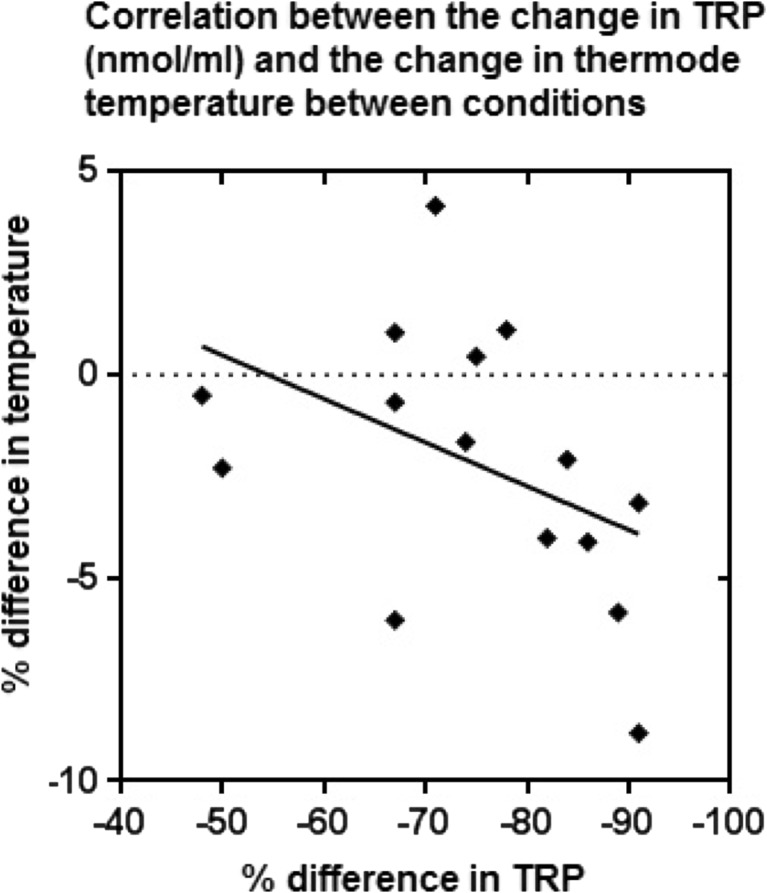
Our investigation reported that the ATD lowered plasma TRP levels by 65.05 ± 7.29% and significantly reduced pain threshold and tolerance in response to the heat thermode. There was a direct correlation between the reduction in total plasma TRP levels and reduction in thermode temperature. In contrast, ATD showed no effect on laser-induced pain nor significant impact of the distraction-induced analgesia on pain perception but did reduce performance of the painful temperature discrimination task. Importantly, all findings were independent of any effects of ATD on mood.
As far as we are aware, it is the first demonstration of 5-HT effects on pain perception which are not confounded by mood changes.
尽管动物的下行疼痛控制受血清素能调节这一现象已得到明确证实,但人类直接证据很少。我们的大部分知识来自于使用 5-羟色胺(5-HT)调节抗抑郁药作为慢性疼痛的临床管理中的镇痛药。
在这里,我们使用急性色氨酸耗竭(ATD)来操纵 5-HT 功能,并检查其对人类志愿者的热痛阈值和耐痛性、伤害性处理的注意力操作和情绪的影响。
15 名健康参与者在双盲交叉设计的两项单独试验中分别接受 ATD 和平衡氨基酸(BAL)饮料。在饮用后 4 小时通过热测热仪确定疼痛阈值和耐痛性。使用激光诱导的热痛刺激完成了其他注意力、分散注意力和温度辨别范式。在每次试验前后评估情绪。
我们的研究报告称,ATD 将血浆 TRP 水平降低了 65.05%±7.29%,并显著降低了热测热仪对疼痛阈值和耐痛性的反应。总血浆 TRP 水平的降低与热测温度的降低直接相关。相比之下,ATD 对激光诱导的疼痛没有影响,也没有对分散诱导的镇痛对疼痛感知产生显著影响,但确实降低了痛苦温度辨别任务的表现。重要的是,所有发现都与 ATD 对情绪的任何影响无关。
据我们所知,这是首次证明 5-HT 对疼痛感知的影响不受情绪变化的影响。