Mussawy Haider, Viezens Lennart, Hauenherm Gerrit, Schroeder Malte, Schaefer Christian
Department of Orthopaedic Surgery, University Medical Centre Hamburg-Eppendorf, Hamburg, Germany.
Department of Trauma-, Hand-, and Reconstructive Surgery, University Medical Centre Hamburg-Eppendorf, Hamburg, Germany.
PLoS One. 2017 Aug 11;12(8):e0183186. doi: 10.1371/journal.pone.0183186. eCollection 2017.
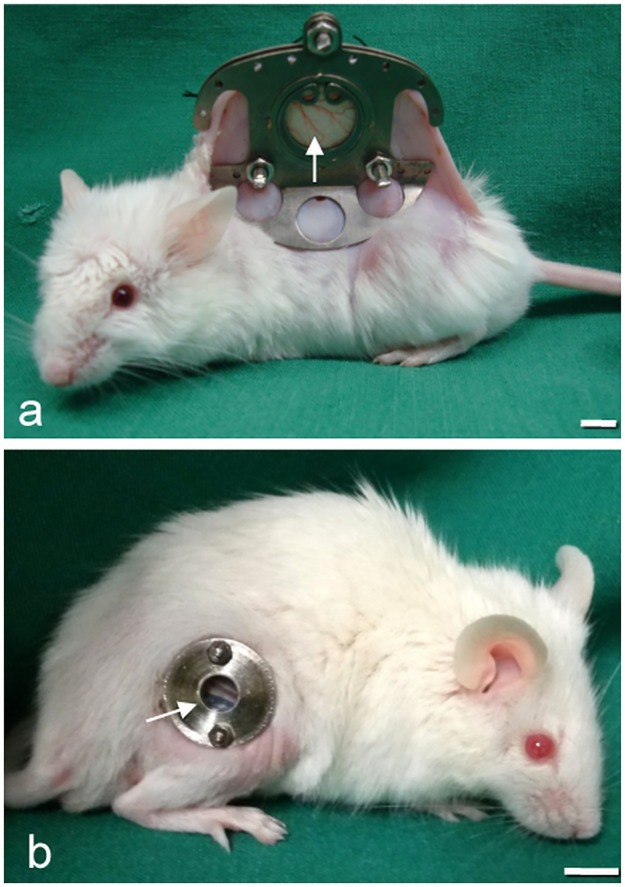
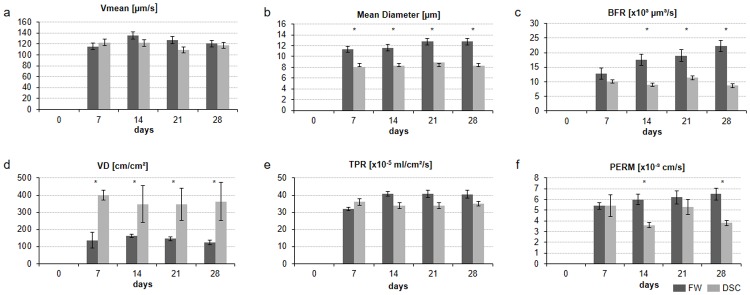
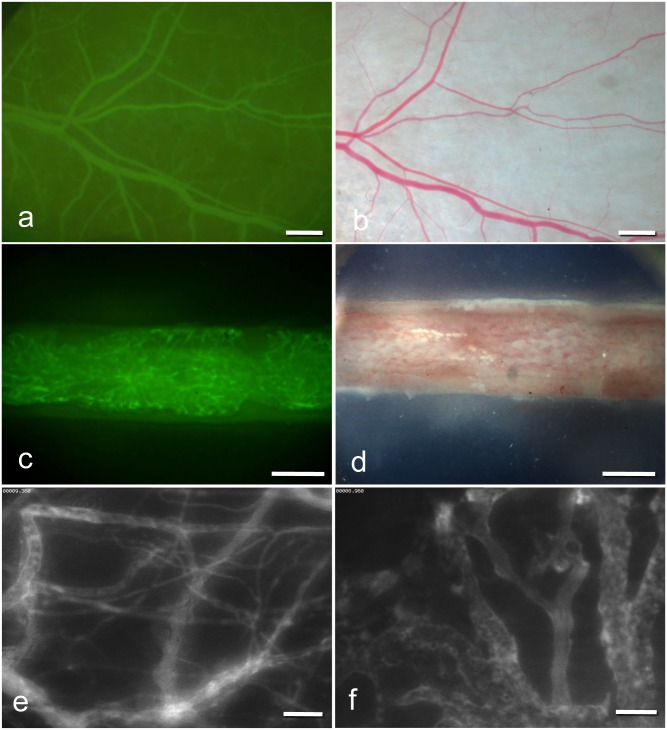
Organ-specific microcirculation plays a central role in tumor growth, tumor cell homing, tissue engineering, and wound healing. Mouse models are widely used to study these processes; however, these mouse strains often possess unique microhemodynamic parameters, making it difficult to directly compare experiments. The full functional characterization of bone and striated muscle microcirculatory parameters in non-obese diabetic-severe combined immunodeficiency/y-chain; NOD-Prkds IL2rg (NSG) mice has not yet been reported. Here, we established either a dorsal skinfold chamber or femur window in NSG mice (n = 23), allowing direct analysis of microcirculatory parameters in vivo by intravital fluorescence microscopy at 7, 14, 21, and 28 days after chamber preparation. Organ-specific differences were observed. Bone had a significantly lower vessel density but a higher vessel diameter than striated muscle. Bone also showed higher effective vascular permeability than striated muscle. The centerline velocity values were similar in the femur window and dorsal skinfold chamber, with a higher volumetric blood flow in bone. Interestingly, bone and striated muscle showed similar tissue perfusion rates. Knowledge of physiological microhemodynamic values of bone and striated muscle in NSG mice makes it possible to analyze pathophysiological processes at these anatomic sites, such as tumor growth, tumor metastasis, and tumor microcirculation, as well as the response to therapeutic agents.
器官特异性微循环在肿瘤生长、肿瘤细胞归巢、组织工程和伤口愈合中起着核心作用。小鼠模型被广泛用于研究这些过程;然而,这些小鼠品系往往具有独特的微血流动力学参数,使得直接比较实验变得困难。非肥胖糖尿病严重联合免疫缺陷/γ链;NOD-Prkds IL2rg(NSG)小鼠的骨骼和横纹肌微循环参数的完整功能特征尚未见报道。在此,我们在NSG小鼠(n = 23)中建立了背部皮褶室或股骨窗口,通过活体荧光显微镜在室制备后7、14、21和28天对体内微循环参数进行直接分析。观察到了器官特异性差异。骨骼的血管密度显著低于横纹肌,但血管直径更大。骨骼的有效血管通透性也高于横纹肌。股骨窗口和背部皮褶室的中心线速度值相似,骨骼中的体积血流量更高。有趣的是,骨骼和横纹肌的组织灌注率相似。了解NSG小鼠骨骼和横纹肌的生理微血流动力学值使得分析这些解剖部位的病理生理过程成为可能,如肿瘤生长、肿瘤转移和肿瘤微循环,以及对治疗药物的反应。