Harrison Emily B, Emanuel Katy, Lamberty Benjamin G, Morsey Brenda M, Li Min, Kelso Matthew L, Yelamanchili Sowmya V, Fox Howard S
Department of Pharmacology and Experimental Neuroscience, College of Medicine, University of Nebraska Medical CenterOmaha, NE, United States.
Department of Pharmacy Practice, College of Pharmacy, University of Nebraska Medical CenterOmaha, NE, United States.
Front Mol Neurosci. 2017 Jul 28;10:228. doi: 10.3389/fnmol.2017.00228. eCollection 2017.
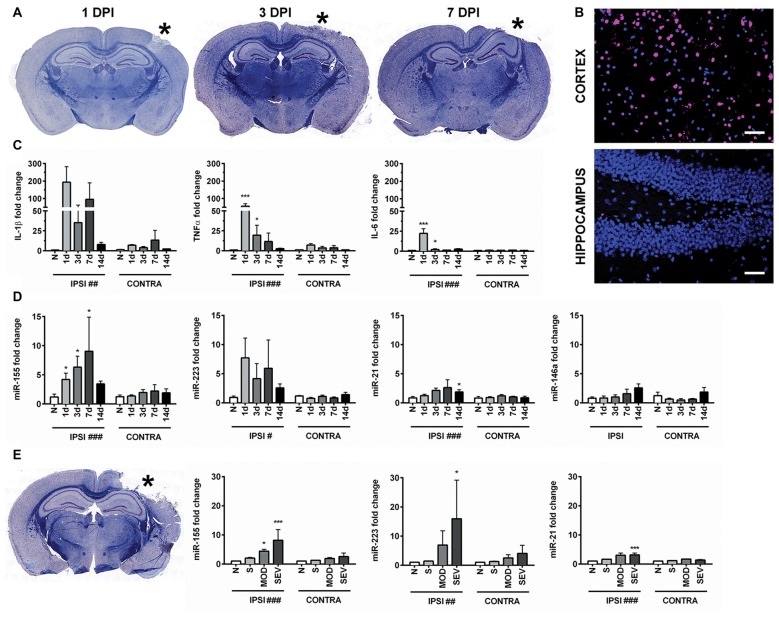
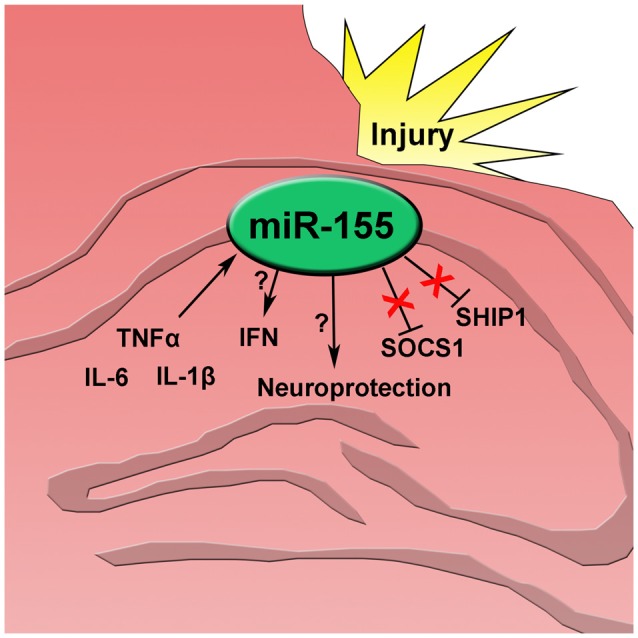
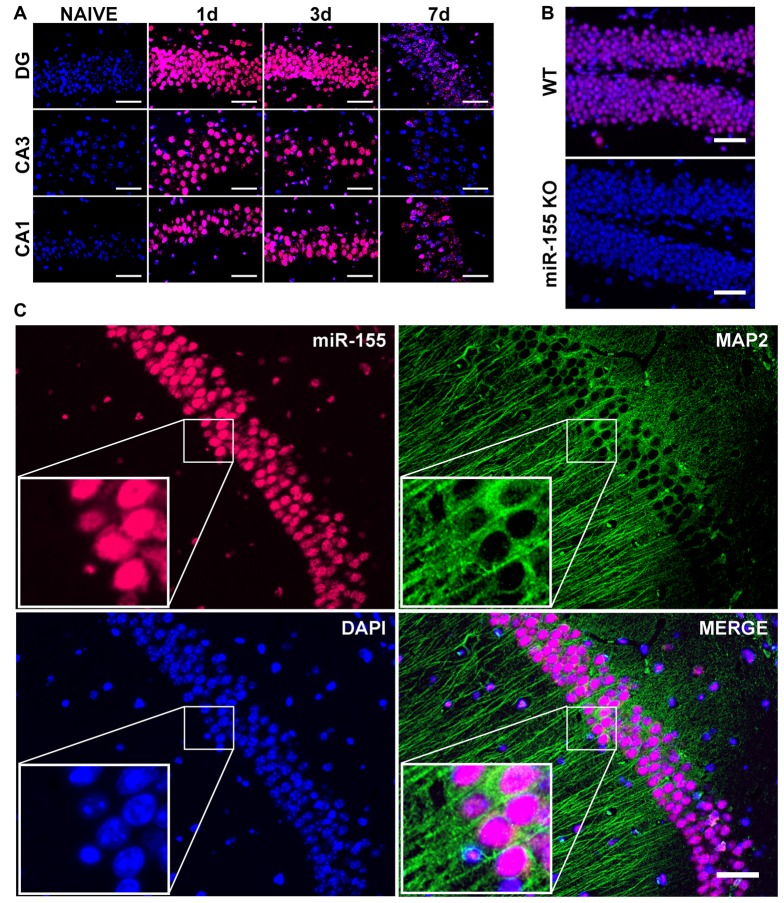
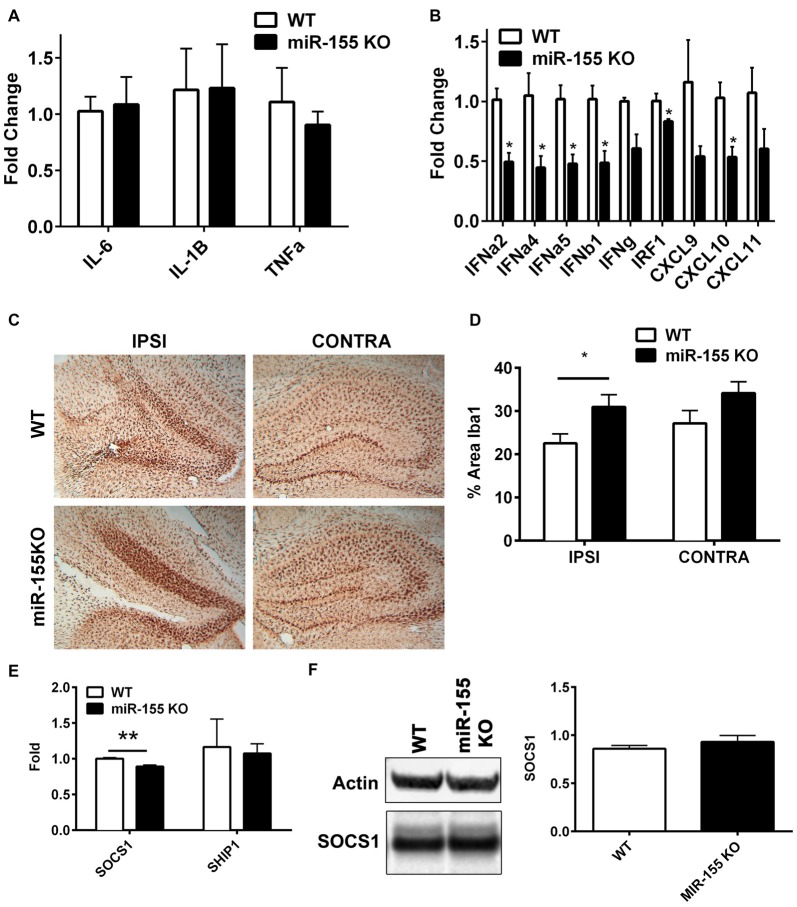
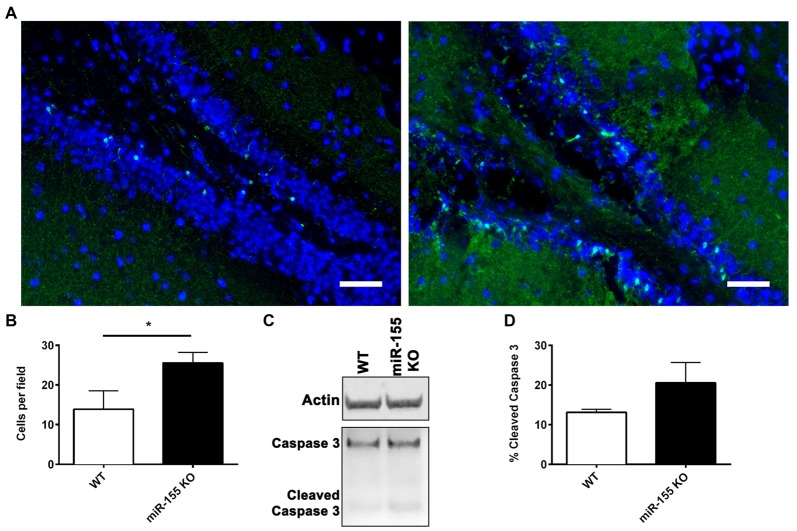
Traumatic brain injury (TBI) produces profound and lasting neuroinflammation that has both beneficial and detrimental effects. Recent evidence has implicated microRNAs (miRNAs) in the regulation of inflammation both in the periphery and the CNS. We examined the expression of inflammation associated miRNAs in the context of TBI using a mouse controlled cortical impact (CCI) model and found increased levels of miR-21, miR-223 and miR-155 in the hippocampus after CCI. The expression of miR-155 was elevated 9-fold after CCI, an increase confirmed by hybridization (ISH). Interestingly, expression of miR-155 was largely found in neuronal nuclei as evidenced by co-localization with DAPI in MAP2 positive neurons. In miR-155 knock out (KO) mice expression of type I interferons and , as well as IFN regulatory factor 1 and IFN-induced chemokine was decreased after TBI relative to wild type (WT) mice. Unexpectedly, miR-155 KO mice had increased levels of microglial marker Iba1 and increased neuronal degeneration as measured by fluoro-jade C (FJC) staining, suggesting a neuroprotective role for miR-155 in the context of TBI. This work demonstrates a role for miR-155 in regulation of the IFN response and neurodegeneration in the aftermath of TBI. While the presence of neuronal nuclear miRNAs has been described previously, their importance in disease states is relatively unknown. Here, we show evidence of dynamic regulation and pathological function of a nuclear miRNA in TBI.
创伤性脑损伤(TBI)会引发深刻且持久的神经炎症,这种炎症既有有益作用,也有有害影响。最近的证据表明,微小RNA(miRNA)在外周和中枢神经系统的炎症调节中都发挥着作用。我们使用小鼠控制性皮质撞击(CCI)模型,研究了TBI背景下与炎症相关的miRNA的表达情况,发现CCI后海马体中miR-21、miR-223和miR-155的水平升高。CCI后miR-155的表达升高了9倍,这一增加通过杂交(ISH)得到证实。有趣的是,miR-155的表达主要在神经元细胞核中被发现,在MAP2阳性神经元中与DAPI共定位就证明了这一点。在miR-155基因敲除(KO)小鼠中,与野生型(WT)小鼠相比,TBI后I型干扰素α和β以及IFN调节因子1和IFN诱导趋化因子的表达降低。出乎意料的是,通过氟玉髓C(FJC)染色测量,miR-155 KO小鼠的小胶质细胞标志物Iba1水平升高,神经元变性增加,这表明miR-155在TBI背景下具有神经保护作用。这项工作证明了miR-155在TBI后IFN反应和神经变性调节中的作用。虽然之前已经描述过神经元细胞核miRNA的存在,但其在疾病状态中的重要性相对未知。在这里,我们展示了TBI中核miRNA动态调节和病理功能的证据。