Li Yang, Zhang Xue, Hu Shuai, Liu Huiquan, Xu Jin-Rong
Purdue-NWAFU Joint Research Center, College of Plant Protection, Northwest A&F University, Yangling, Shaanxi, China.
Department of Botany and Plant Pathology, Purdue University, West Lafayette, Indiana, United States of America.
PLoS Genet. 2017 Aug 14;13(8):e1006954. doi: 10.1371/journal.pgen.1006954. eCollection 2017 Aug.
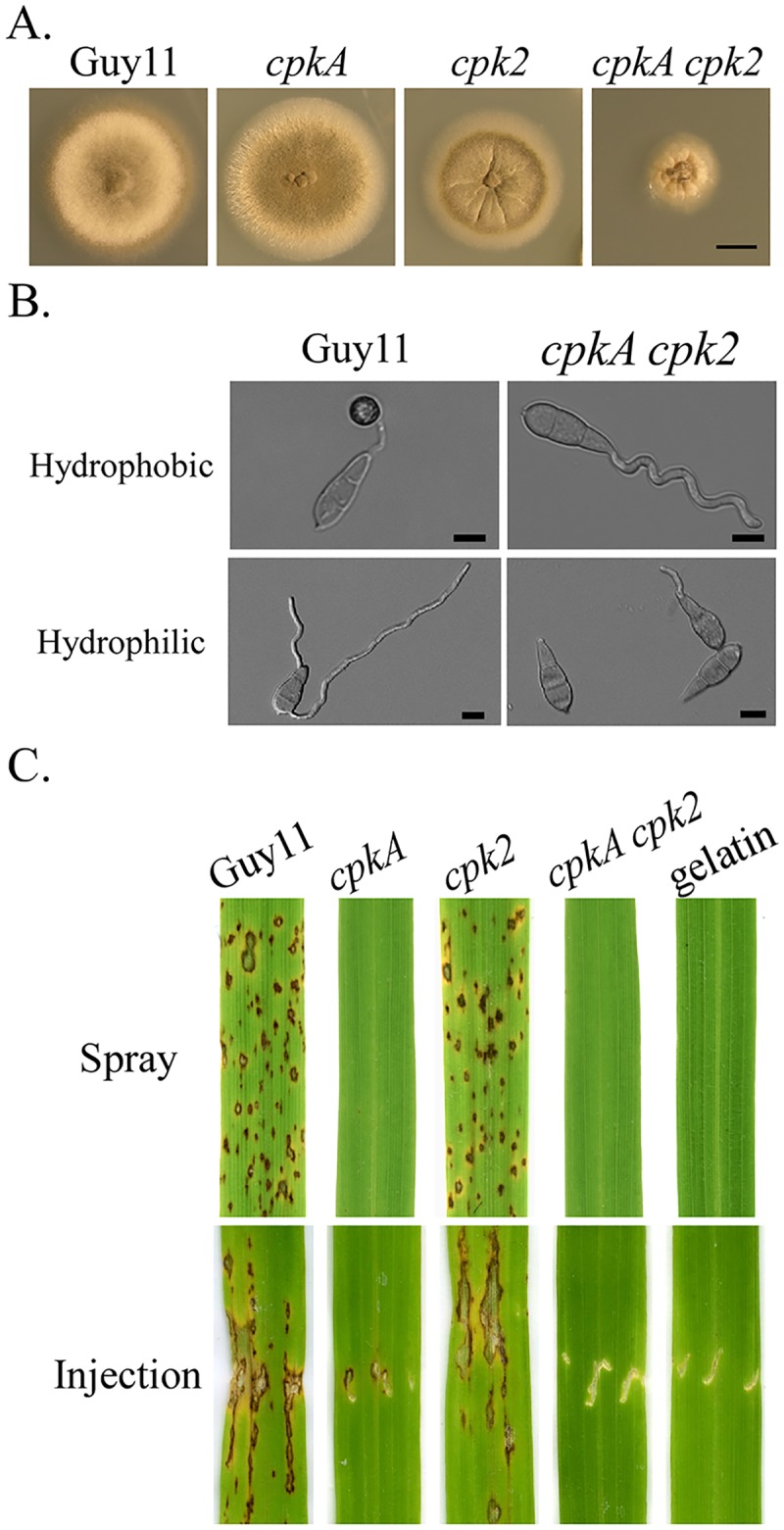
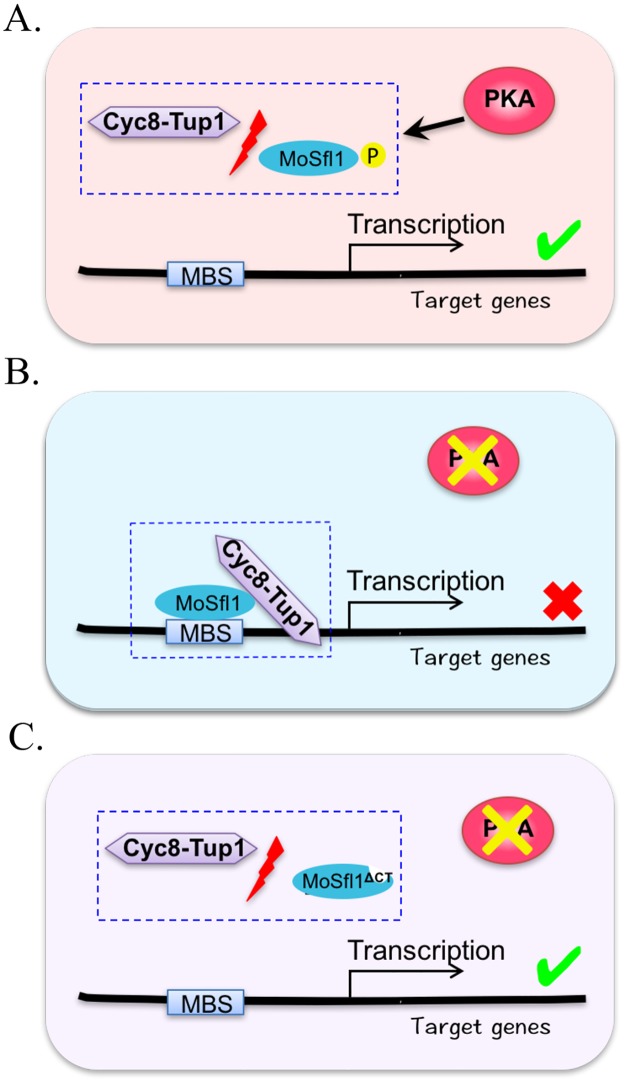
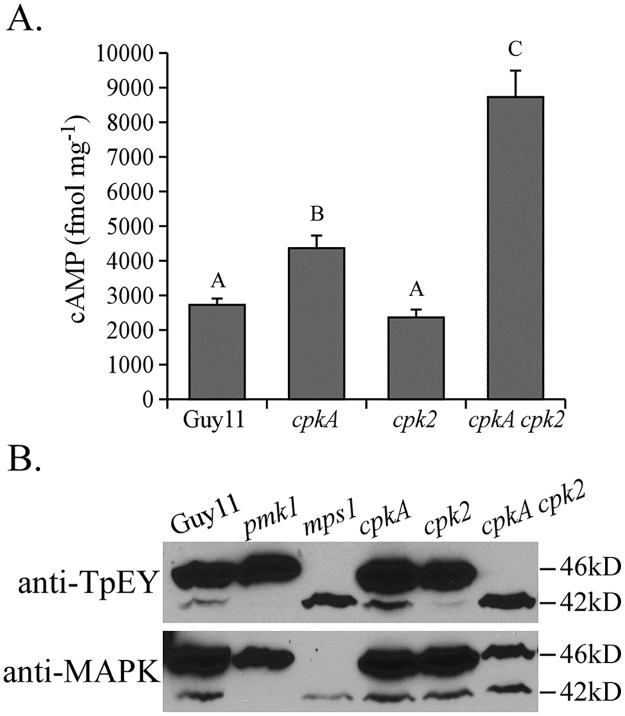
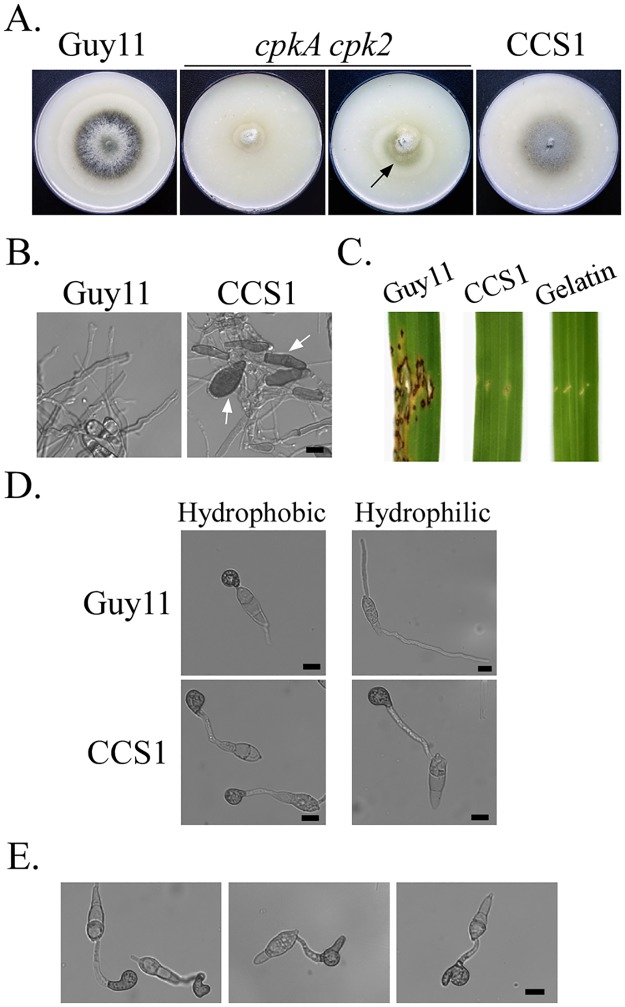
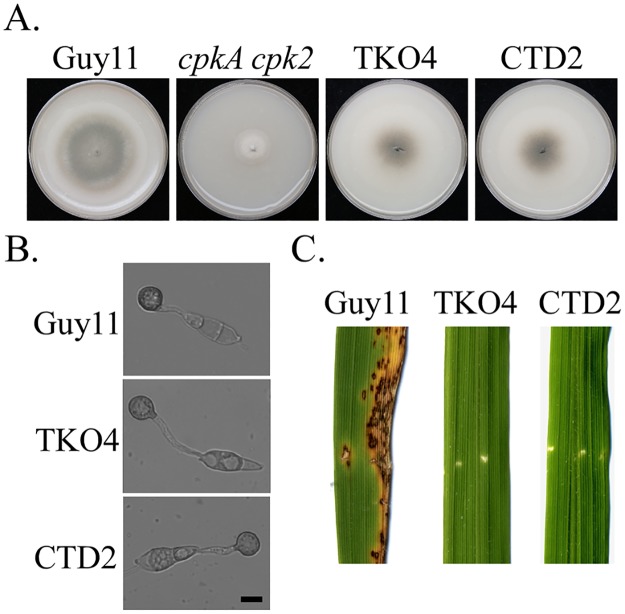
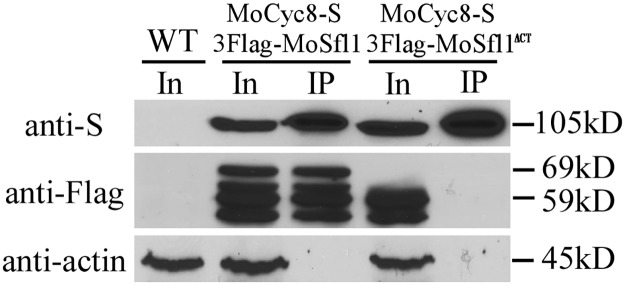
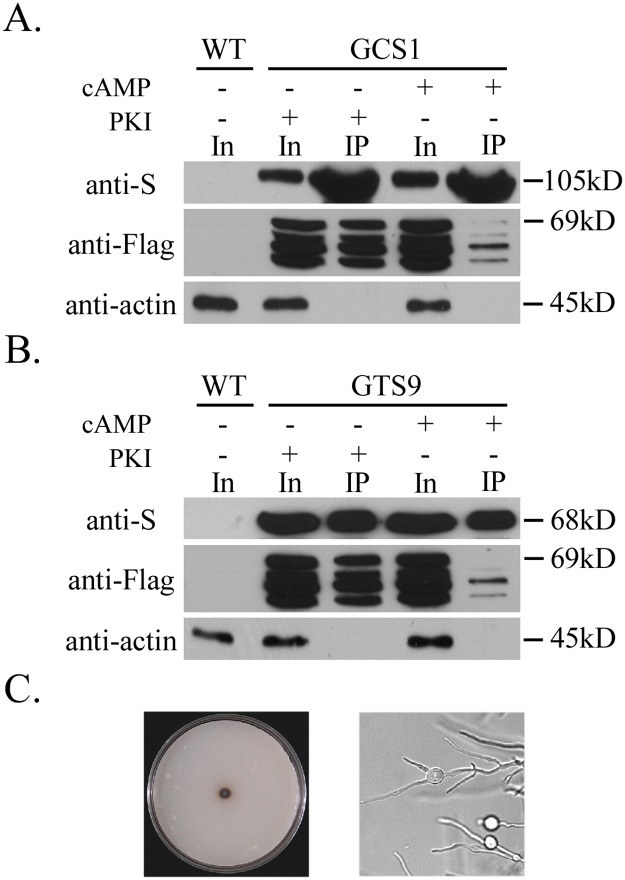
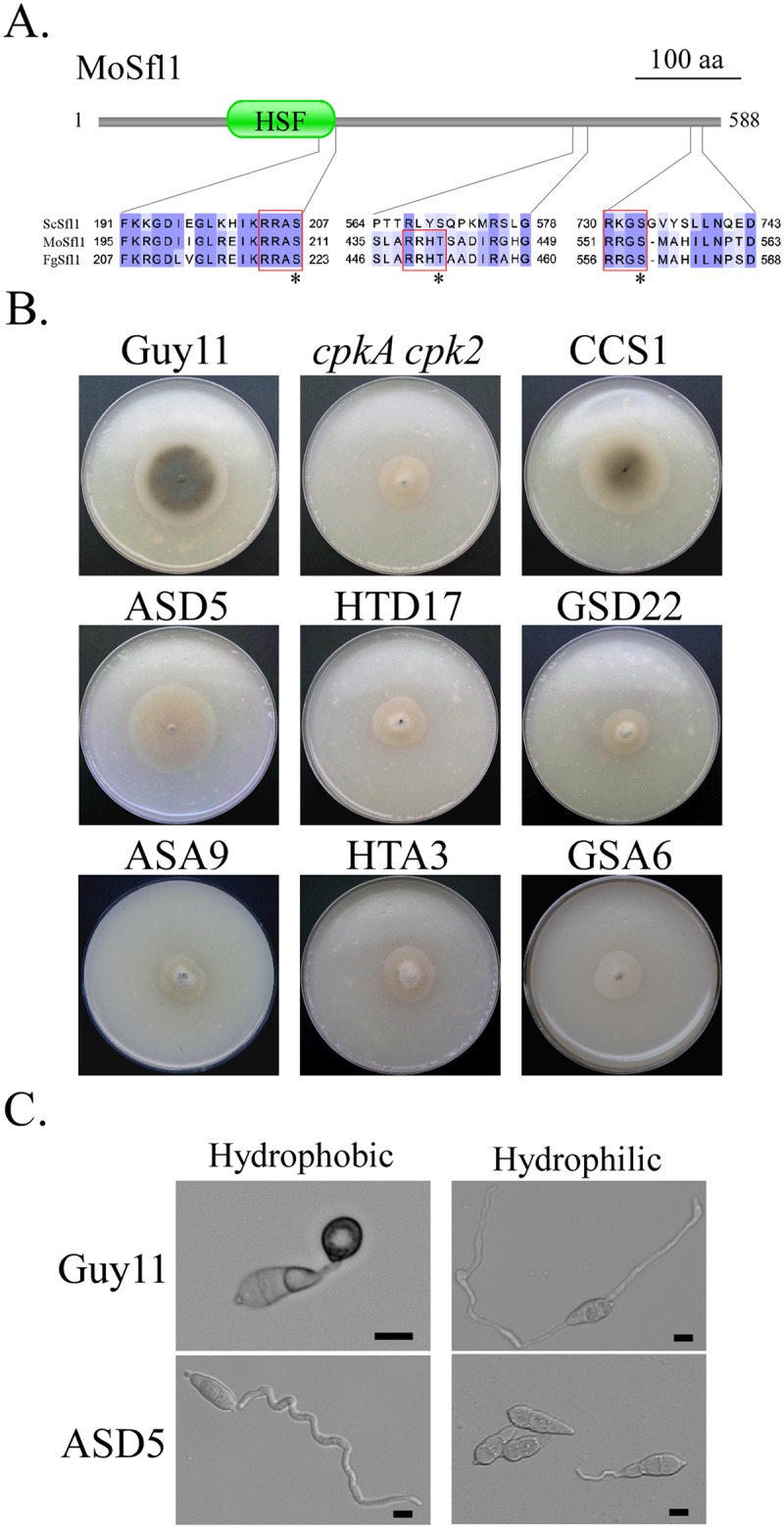
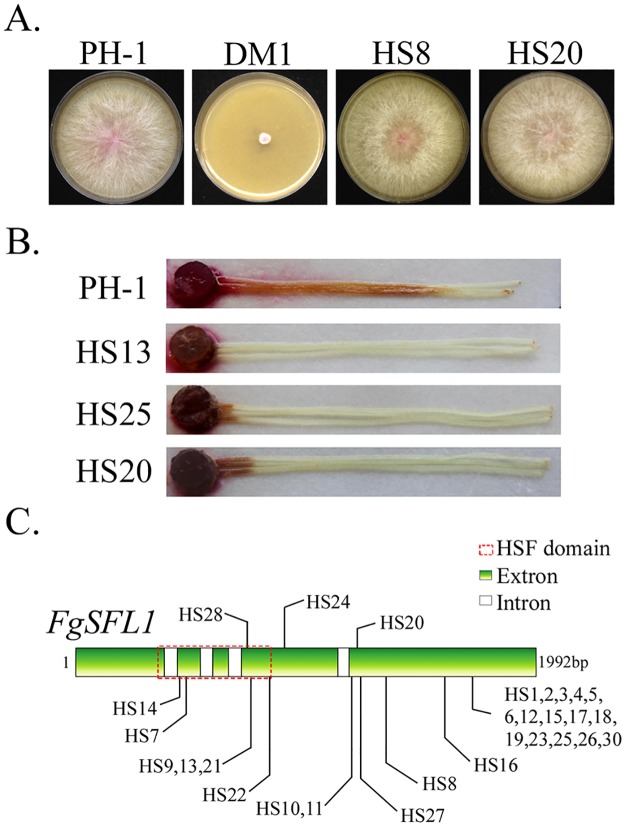
In the rice blast fungus Magnaporthe oryzae, the cAMP-PKA pathway regulates surface recognition, appressorium turgor generation, and invasive growth. However, deletion of CPKA failed to block appressorium formation and responses to exogenous cAMP. In this study, we generated and characterized the cpk2 and cpkA cpk2 mutants and spontaneous suppressors of cpkA cpk2 in M. oryzae. Our results demonstrate that CPKA and CPK2 have specific and overlapping functions, and PKA activity is essential for appressorium formation and plant infection. Unlike the single mutants, the cpkA cpk2 mutant was significantly reduced in growth and rarely produced conidia. It failed to form appressoria although the intracellular cAMP level and phosphorylation of Pmk1 MAP kinase were increased. The double mutant also was defective in plant penetration and Mps1 activation. Interestingly, it often produced fast-growing spontaneous suppressors that formed appressoria but were still non-pathogenic. Two suppressor strains of cpkA cpk2 had deletion and insertion mutations in the MoSFL1 transcription factor gene. Deletion of MoSFL1 or its C-terminal 93-aa (MoSFL1ΔCT) was confirmed to suppress the defects of cpkA cpk2 in hyphal growth but not appressorium formation or pathogenesis. We also isolated 30 spontaneous suppressors of the cpkA cpk2 mutant in Fusarium graminearum and identified mutations in 29 of them in FgSFL1. Affinity purification and co-IP assays showed that this C-terminal region of MoSfl1 was essential for its interaction with the conserved Cyc8-Tup1 transcriptional co-repressor, which was reduced by cAMP treatment. Furthermore, the S211D mutation at the conserved PKA-phosphorylation site in MoSFL1 partially suppressed the defects of cpkA cpk2. Overall, our results indicate that PKA activity is essential for appressorium formation and proper activation of Pmk1 or Mps1 in M. oryzae, and phosphorylation of MoSfl1 by PKA relieves its interaction with the Cyc8-Tup1 co-repressor and suppression of genes important for hyphal growth.
在稻瘟病菌Magnaporthe oryzae中,cAMP-PKA信号通路调控表面识别、附着胞膨压产生及侵染性生长。然而,敲除CPKA未能阻断附着胞形成及对外源cAMP的响应。在本研究中,我们构建并鉴定了稻瘟病菌中的cpk2和cpkA cpk2突变体以及cpkA cpk2的自发抑制子。我们的结果表明CPKA和CPK2具有特定且重叠的功能,并且PKA活性对于附着胞形成和植物侵染至关重要。与单突变体不同,cpkA cpk2突变体的生长显著减弱且很少产生分生孢子。尽管细胞内cAMP水平和Pmk1丝裂原活化蛋白激酶的磷酸化增加,但它仍无法形成附着胞。双突变体在植物穿透和Mps1激活方面也存在缺陷。有趣的是,它经常产生快速生长的自发抑制子,这些抑制子能形成附着胞但仍无致病性。cpkA cpk2的两个抑制菌株在MoSFL1转录因子基因中存在缺失和插入突变。证实敲除MoSFL1或其C末端93个氨基酸(MoSFL1ΔCT)可抑制cpkA cpk2在菌丝生长方面的缺陷,但不能抑制附着胞形成或致病性。我们还在禾谷镰刀菌中分离出cpkA cpk2突变体的30个自发抑制子,并在其中29个中鉴定出FgSFL1中的突变。亲和纯化和免疫共沉淀分析表明,MoSfl1的这个C末端区域对于其与保守的Cyc8-Tup1转录共抑制因子的相互作用至关重要,cAMP处理会使其相互作用减弱。此外,MoSFL1中保守的PKA磷酸化位点处的S211D突变部分抑制了cpkA cpk2的缺陷。总体而言,我们的结果表明PKA活性对于稻瘟病菌中附着胞形成以及Pmk1或Mps1的正确激活至关重要,并且PKA对MoSfl1的磷酸化可缓解其与Cyc8-Tup1共抑制因子的相互作用以及对菌丝生长重要基因的抑制作用。