Division of Hematology and Oncology, Department of Internal Medicine, School of Medicine, University of California Davis, Sacramento, California.
Department of Urology, Changhai Hospital, Second Military Medical University, Shanghai, China.
Clin Cancer Res. 2017 Nov 1;23(21):6580-6591. doi: 10.1158/1078-0432.CCR-17-0033. Epub 2017 Aug 14.
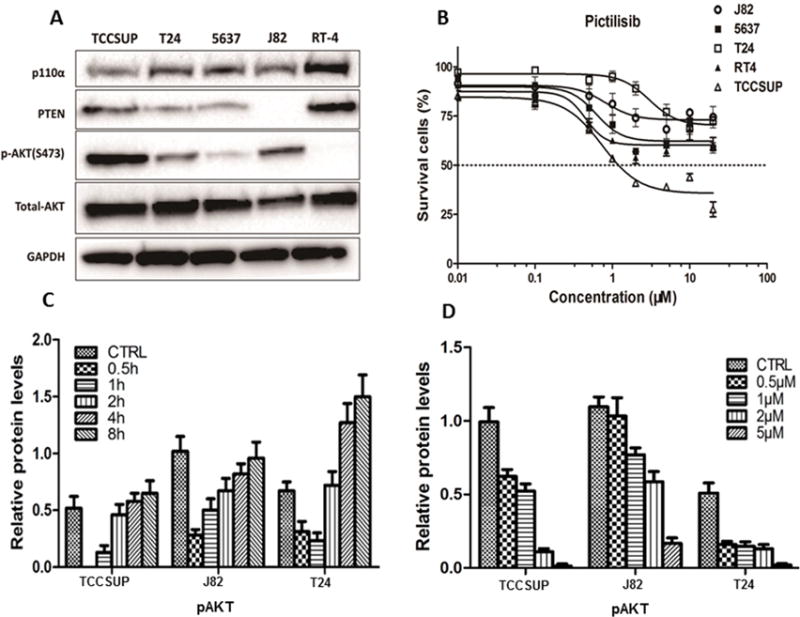
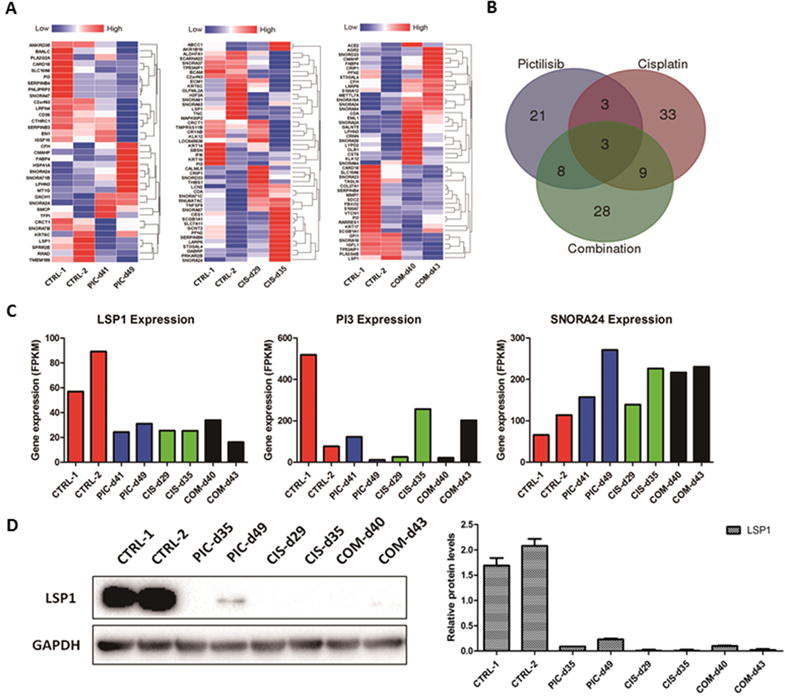
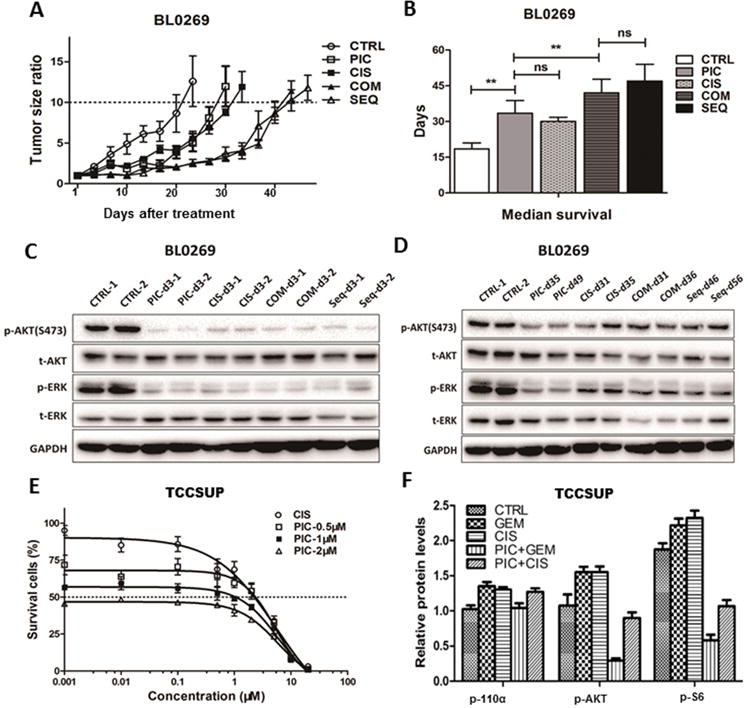
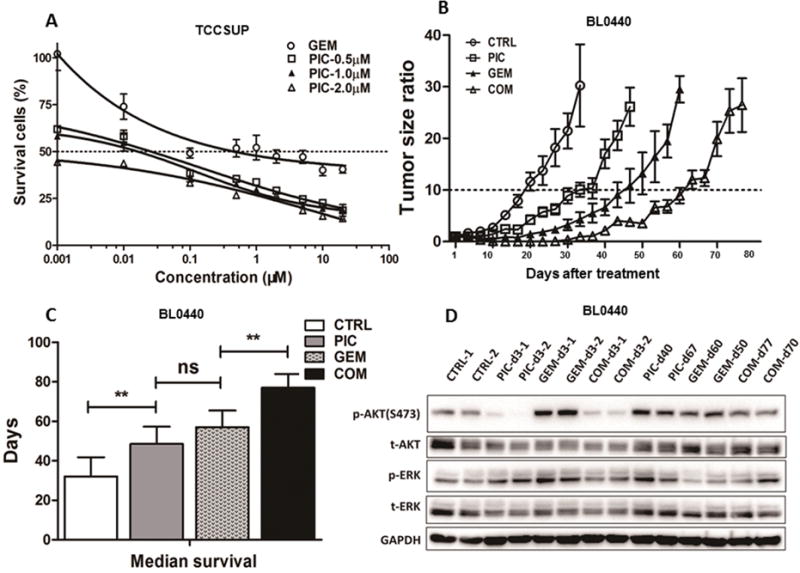
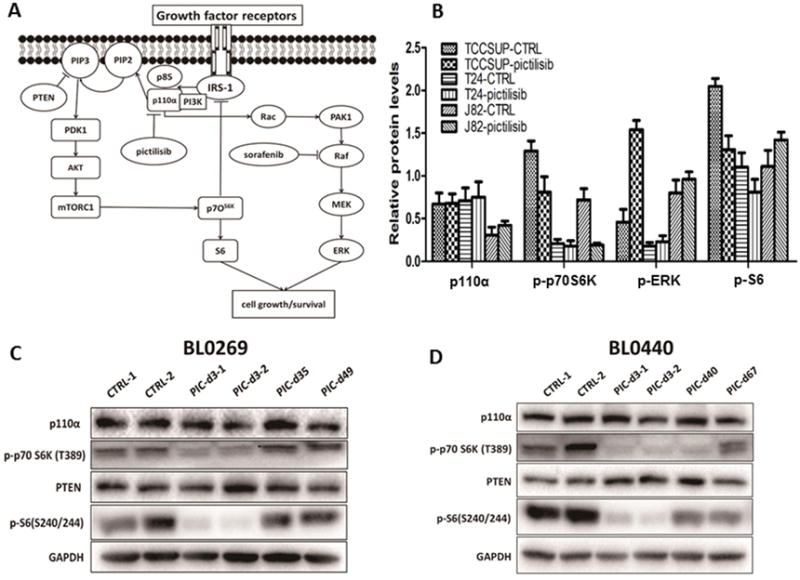
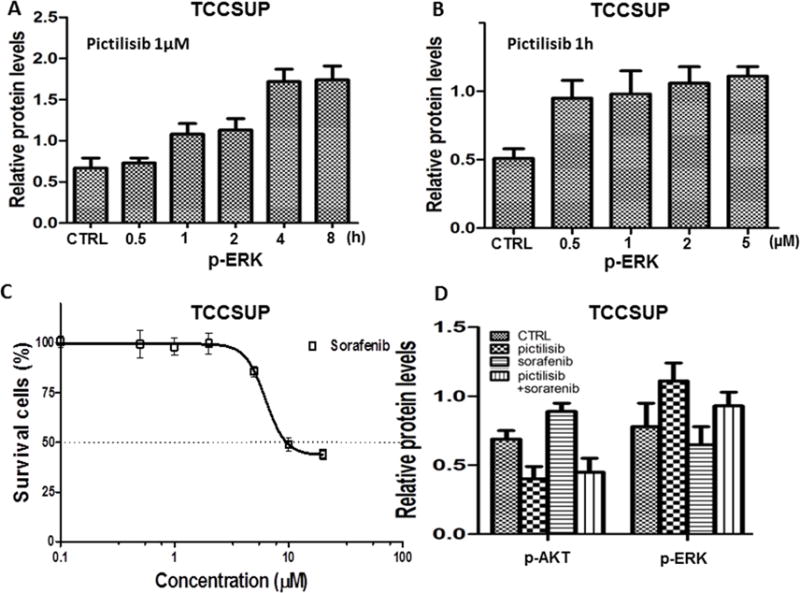
Activation of the PI3K pathway occurs in over 40% of bladder urothelial cancers. The aim of this study is to determine the therapeutic potential, the underlying action, and the resistance mechanisms of drugs targeting the PI3K pathway. Urothelial cancer cell lines and patient-derived xenografts (PDXs) were analyzed for alterations of the PI3K pathway and for their sensitivity to the small-molecule inhibitor pictilisib alone and in combination with cisplatin and/or gemcitabine. Potential predictive biomarkers for pictilisib were evaluated, and RNA sequencing was performed to explore drug resistance mechanisms. The bladder cancer cell line TCCSUP, which harbors a E545K mutation, was sensitive to pictilisib compared to cell lines with wild-type Pictilisib exhibited stronger antitumor activity in bladder cancer PDX models with H1047R mutation or amplification than the control PDX model. Pictilisib synergized with cisplatin and/or gemcitabine , significantly delayed tumor growth, and prolonged survival compared with single-drug treatment in the PDX models. The phosphorylation of ribosomal protein S6 correlated with response to pictilisib both and , and could potentially serve as a biomarker to predict response to pictilisib. Pictilisib activated the compensatory MEK/ERK pathway that likely contributed to pictilisib resistance, which was reversed by cotreatment with the RAF inhibitor sorafenib. RNA sequencing of tumors resistant to treatment suggested that downregulation correlated with drug resistance. These preclinical results provide new insights into the therapeutic potential of targeting the PI3K pathway for the treatment of bladder cancer. .
PI3K 通路的激活发生在超过 40%的膀胱尿路上皮癌中。本研究旨在确定针对 PI3K 通路的药物的治疗潜力、潜在作用和耐药机制。分析了尿路上皮癌细胞系和患者来源的异种移植(PDX)中 PI3K 通路的改变及其对小分子抑制剂 pictilisib 的单独和联合顺铂和/或吉西他滨的敏感性。评估了 pictilisib 的潜在预测生物标志物,并进行了 RNA 测序以探索耐药机制。与具有野生型 相比,携带 E545K 突变的膀胱癌细胞系 TCCSUP 对 pictilisib 敏感。与对照 PDX 模型相比,在具有 H1047R 突变或扩增的膀胱癌 PDX 模型中,pictilisib 表现出更强的抗肿瘤活性。与单药治疗相比,pictilisib 与顺铂和/或吉西他滨联合使用可显著延缓肿瘤生长并延长 PDX 模型中的生存时间。核糖体蛋白 S6 的磷酸化与 pictilisib 的反应相关,这可能是预测 pictilisib 反应的生物标志物。pictilisib 激活了代偿性 MEK/ERK 通路,这可能导致了 pictilisib 的耐药性,而 RAF 抑制剂 sorafenib 的联合治疗则逆转了这种耐药性。对耐药性肿瘤的 RNA 测序表明, 下调与药物耐药性相关。这些临床前结果为针对 PI3K 通路治疗膀胱癌的治疗潜力提供了新的见解。