Ilonzo Nicole, Goss Selena, Yang Chun, Dudkiewicz Michael
Mount Sinai St. Luke's-West, New York, NY, USA.
Case Rep Vasc Med. 2017;2017:9460958. doi: 10.1155/2017/9460958. Epub 2017 Jul 20.
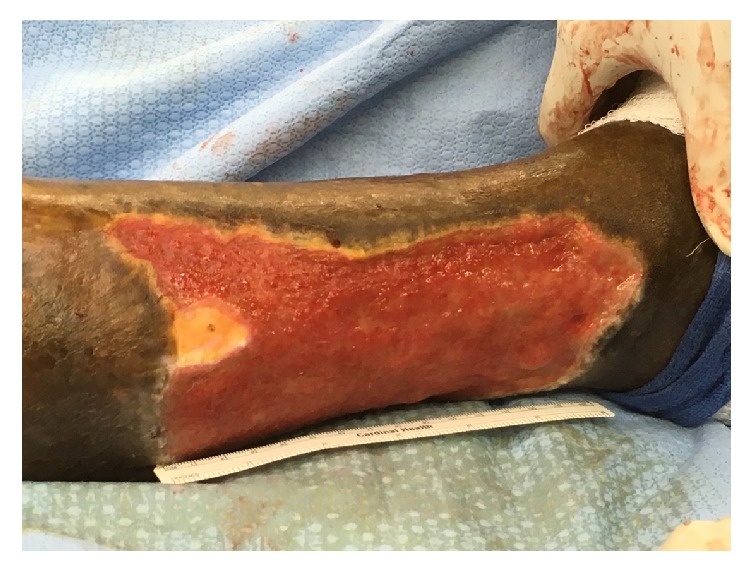
Most femoral artery arteriovenous fistulas occur as a result of percutaneous interventions. However, arteriovenous fistulas can occur in the setting of trauma, with resultant consequences such as heart failure, steal syndrome, or venous insufficiency. Indications for endovascular repair in this setting are limited to patients who are at too high risk for anesthesia, have a hostile groin, or would not survive significant bleeding. We report the case of a traumatic femoral arteriovenous fistula, causing severe venous insufficiency and arteriomegaly, in a 58-year-old male, with history of traumatic gunshot wound complicated by popliteal DVT. Surgical options for arteriovenous fistula include open and endovascular repair but this patient's fistula was more suitable for endovascular repair for reasons that will be discussed.
大多数股动脉动静脉瘘是经皮介入治疗的结果。然而,动静脉瘘也可发生于创伤情况下,会导致心力衰竭、窃血综合征或静脉功能不全等后果。在这种情况下,血管内修复的适应症仅限于麻醉风险过高、腹股沟情况不佳或无法承受大量出血的患者。我们报告一例58岁男性创伤性股动脉动静脉瘘病例,该患者有创伤性枪伤史并伴有腘静脉深静脉血栓形成,导致严重的静脉功能不全和动脉扩张。动静脉瘘的手术选择包括开放修复和血管内修复,但鉴于将讨论的原因,该患者的瘘更适合血管内修复。