Mohammadi Saeed, Norooznezhad Amir Hossein, Mohammadi Ashraf Malek, Nasiri Hajar, Nikbakht Mohsen, Saki Najmaldin, Vaezi Mohammad, Alimoghaddam Kamran, Ghavamzadeh Ardeshir
Hematology, Oncology and Stem Cell Transplantation Research Center, Tehran University of Medical Sciences, North Kargar Avenue, Tehran, 14117-13131 Iran.
Regenerative Medicine Research Center, Kermanshah University of Medical Sciences, Kermanshah, Iran.
Exp Hematol Oncol. 2017 Aug 9;6:24. doi: 10.1186/s40164-017-0082-5. eCollection 2017.
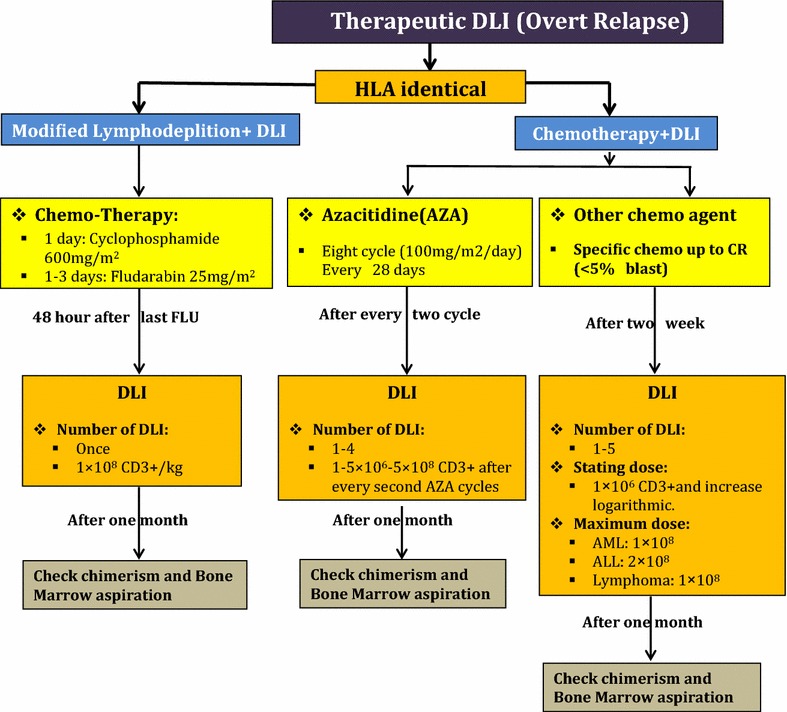
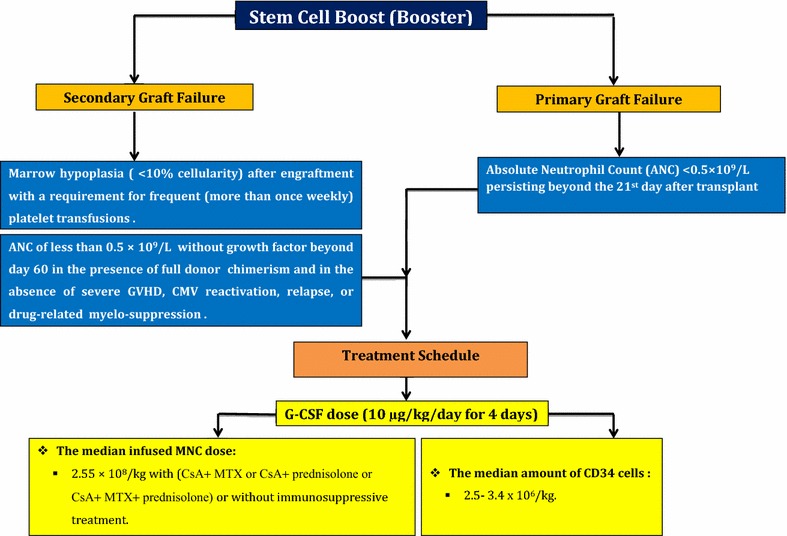
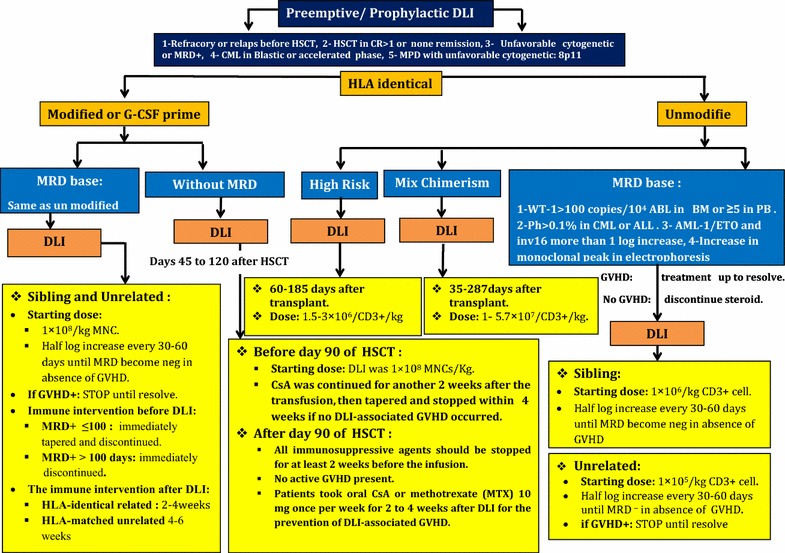
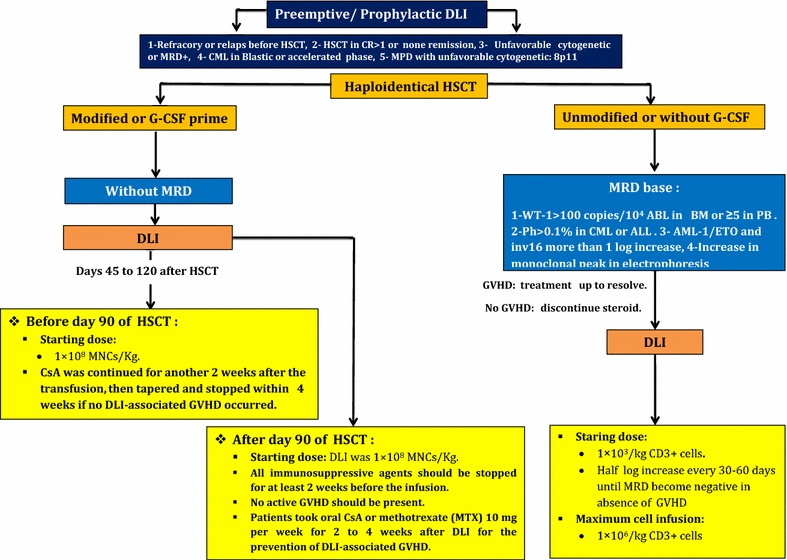
Allogeneic hematopoietic stem cell transplantation (allo-HSCT) has been considered as a valuable approach in treatment of numerous malignant and none malignant hematologic disorders. However, relapse and poor graft function (PGF) after allo-SCT remain to be controversial issues which may affect the transplantation outcome. Relevant articles were searched in MEDLINE database (2000-2016) using keywords and phrases: donor lymphocyte infusions, allogeneic stem cells transplantation, relapsed hematologic malignancies, booster schedules, cell dose, laboratory monitoring protocols and technical aspects of apheresis. Relapse of disease and PGF could be reduced via noting some main points such as choosing the suitable time and patient for donor lymphocyte infusion (DLI) and also determination of patients who ought to candidate for second allogeneic HSCT or for the use of stem cell boost. DLI and stem cell booster are promising treatment strategies noted in this review. Finally, this paper discusses indications and technical aspects of DLI and stem cell booster in hematological malignancies and emphasizes their therapeutic or pre-emptive potentials.
异基因造血干细胞移植(allo-HSCT)已被视为治疗多种恶性和非恶性血液系统疾病的一种有价值的方法。然而,异基因造血干细胞移植后的复发和移植物功能不良(PGF)仍是可能影响移植结果的有争议的问题。使用关键词和短语在MEDLINE数据库(2000 - 2016年)中检索相关文章:供体淋巴细胞输注、异基因干细胞移植、复发性血液系统恶性肿瘤、强化方案、细胞剂量、实验室监测方案以及单采术的技术方面。通过注意一些要点,如选择合适的时间和患者进行供体淋巴细胞输注(DLI),以及确定哪些患者应该接受第二次异基因造血干细胞移植或使用干细胞强化治疗,可以降低疾病复发和PGF。DLI和干细胞强化是本综述中值得关注的有前景的治疗策略。最后,本文讨论了DLI和干细胞强化在血液系统恶性肿瘤中的适应证和技术方面,并强调了它们的治疗或预防潜力。