Centre for Cardiovascular Science, The University of Edinburgh, Edinburgh, UK.
School of Clinical Sciences, The University of Edinburgh, Edinburgh, UK.
J Cardiovasc Transl Res. 2017 Dec;10(5-6):489-498. doi: 10.1007/s12265-017-9766-9. Epub 2017 Aug 14.
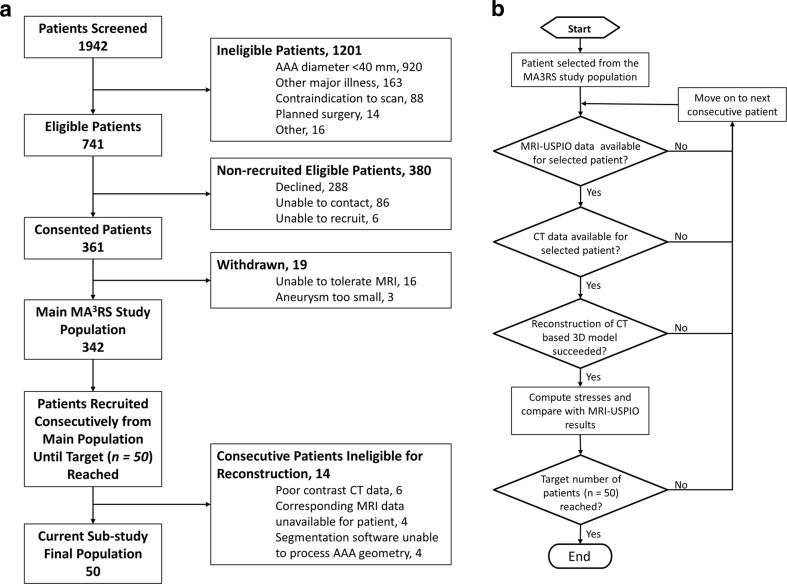
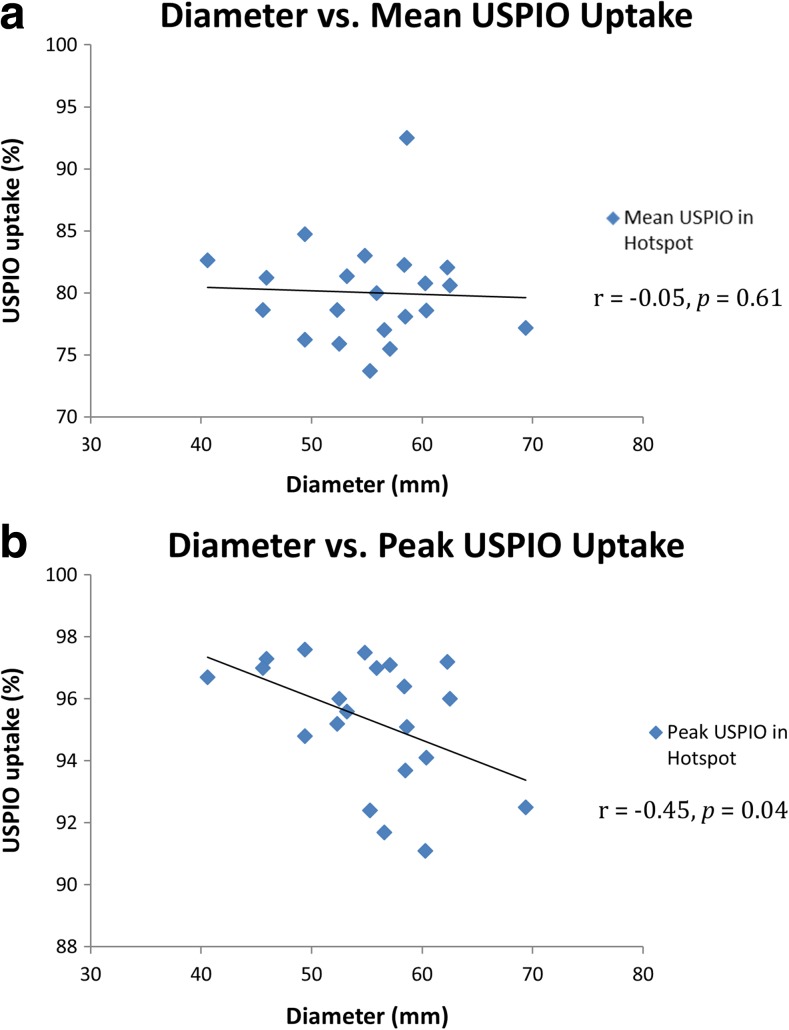
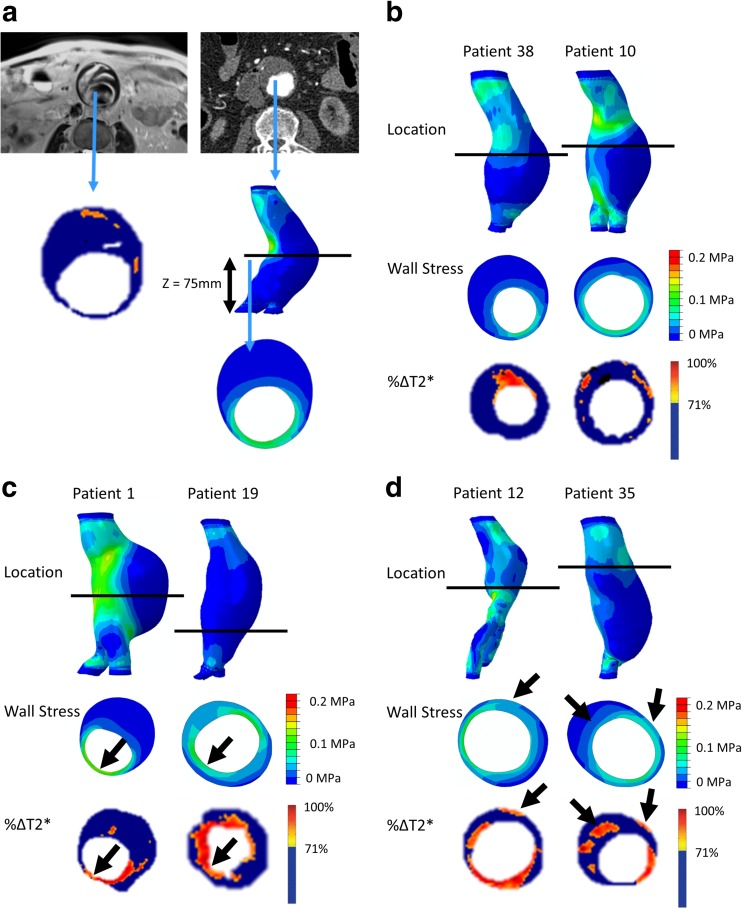
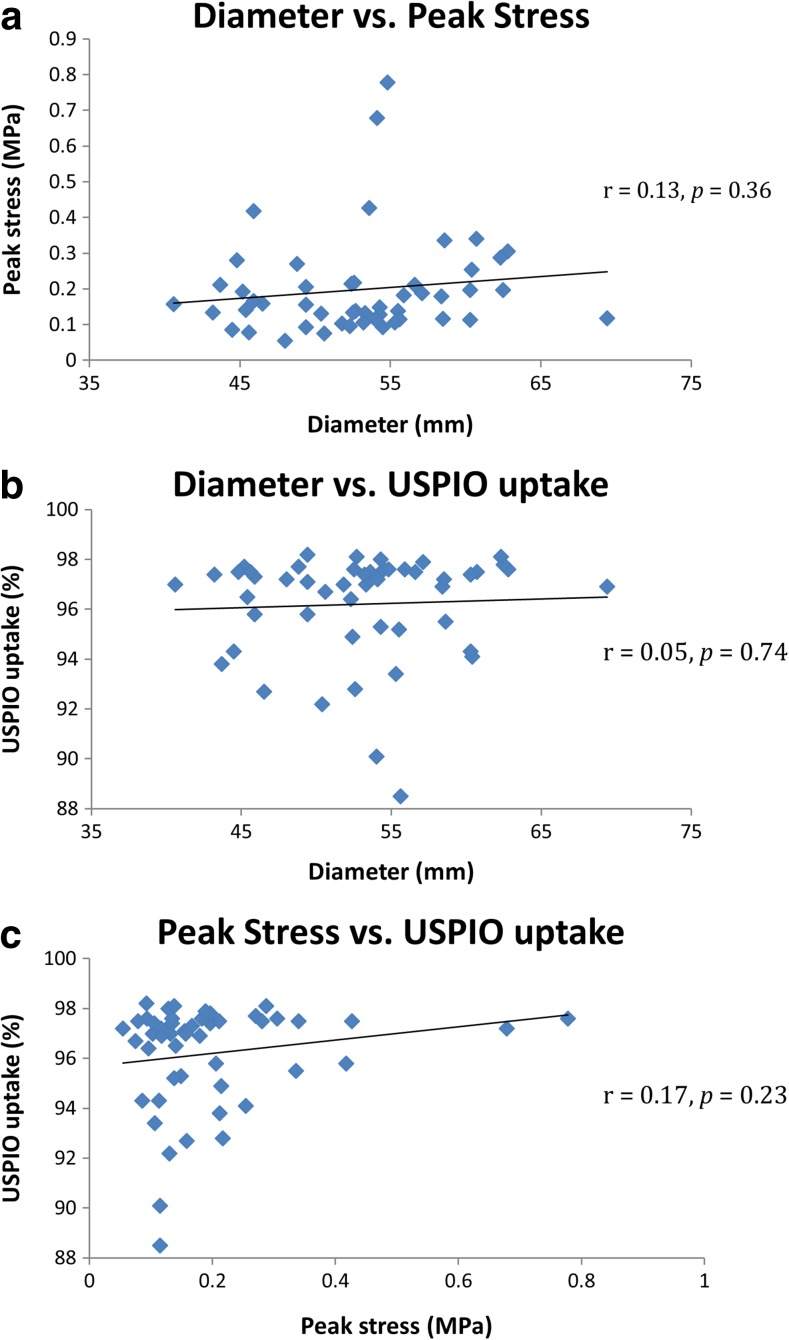
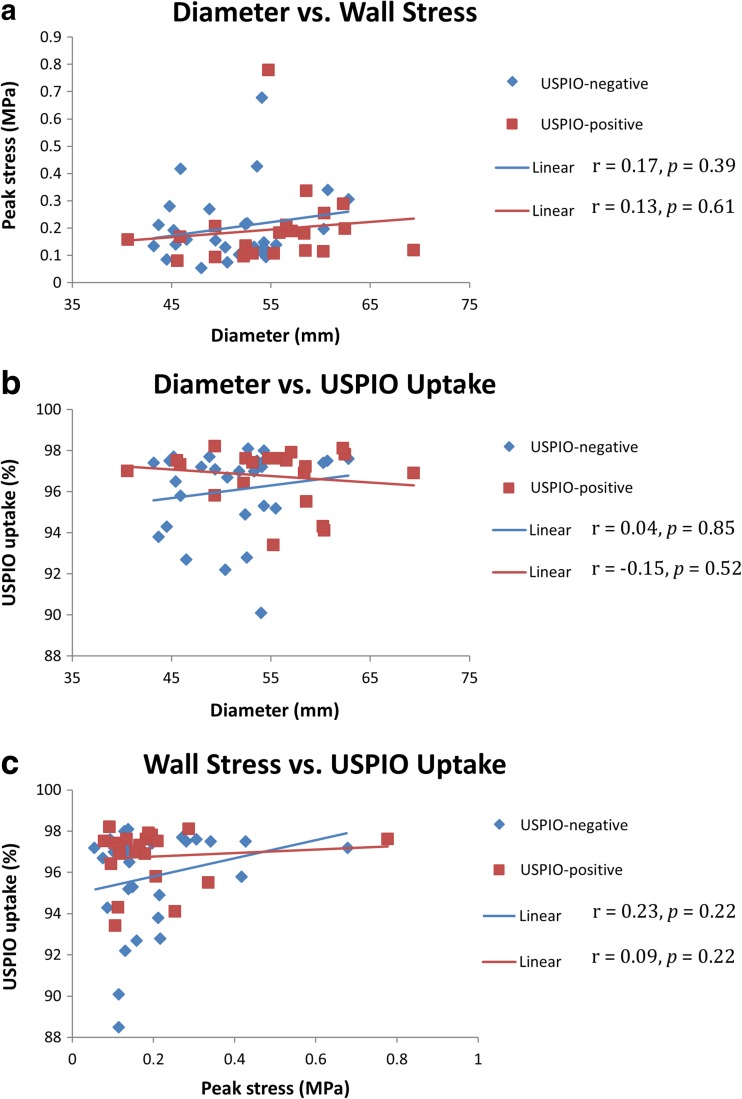
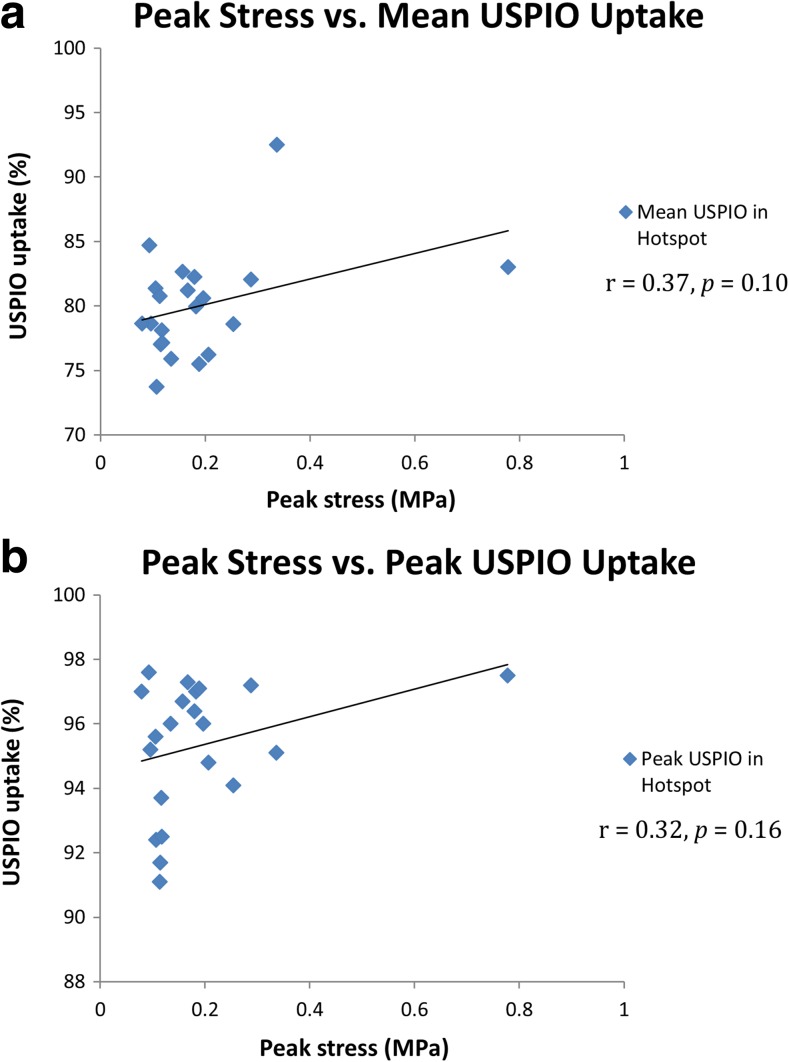
Inflammation detected through the uptake of ultrasmall superparamagnetic particles of iron oxide (USPIO) on magnetic resonance imaging (MRI) and finite element (FE) modelling of tissue stress both hold potential in the assessment of abdominal aortic aneurysm (AAA) rupture risk. This study aimed to examine the spatial relationship between these two biomarkers. Patients (n = 50) > 40 years with AAA maximum diameters > = 40 mm underwent USPIO-enhanced MRI and computed tomography angiogram (CTA). USPIO uptake was compared with wall stress predictions from CTA-based patient-specific FE models of each aneurysm. Elevated stress was commonly observed in areas vulnerable to rupture (e.g. posterior wall and shoulder). Only 16% of aneurysms exhibited co-localisation of elevated stress and mural USPIO enhancement. Globally, no correlation was observed between stress and other measures of USPIO uptake (i.e. mean or peak). It is suggested that cellular inflammation and stress may represent different but complimentary aspects of AAA disease progression.
在磁共振成像 (MRI) 上检测到的超小超顺磁性氧化铁颗粒 (USPIO) 的摄取和组织应力的有限元 (FE) 建模都有可能用于评估腹主动脉瘤 (AAA) 破裂风险。本研究旨在检查这两种生物标志物之间的空间关系。接受 MRI 和计算机断层血管造影 (CTA) 检查的患者(n=50)年龄>40 岁,AAA 最大直径> =40mm。比较 USPIO 摄取与每个动脉瘤的 CTA 基于患者特定的 FE 模型预测的壁应力。在易破裂的区域(如后壁和肩部)通常观察到升高的应力。只有 16%的动脉瘤显示出升高的壁应力和壁内 USPIO 增强的共定位。总体而言,未观察到应力与 USPIO 摄取的其他测量值(即平均或峰值)之间存在相关性。因此,细胞炎症和应激可能代表 AAA 疾病进展的不同但互补的方面。