Fu Chang, Shi Dapeng, Gao Yongju, Xu Junling
Department of Nuclear Medicine, Zhengzhou University People's Hospital, Zhengzhou, Henan 450000, P.R. China.
Department of Radiology, Zhengzhou University People's Hospital, Zhengzhou, Henan 450000, P.R. China.
Exp Ther Med. 2017 Aug;14(2):1058-1064. doi: 10.3892/etm.2017.4594. Epub 2017 Jun 13.
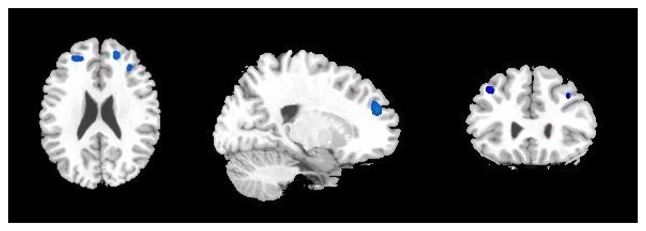
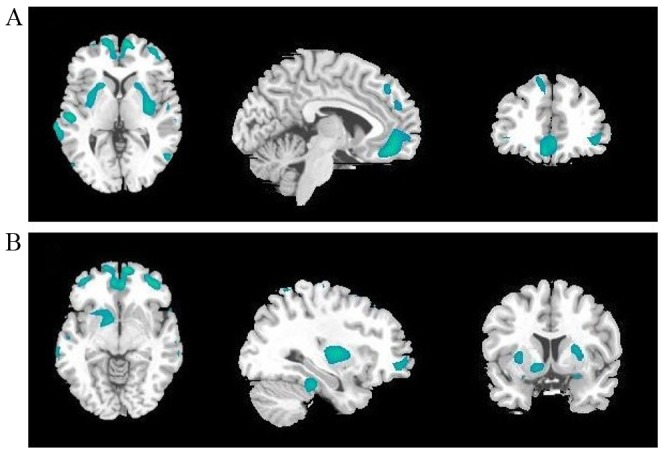
The aim of this study was to explore the functions of cerebral blood perfusion and glucose metabolism in the prefrontal lobe of patients with major depression disorder (MDD), and to analyze the correlations between these functional changes and depressive symptoms. 3D-arterial spin labeling (ASL) and F-fluorodeoxyglucose (FDG) positron emission tomography/computed tomography (PET/CT) were successfully performed in 17 patients with MDD and 16 healthy controls in a resting state. The depressive symptoms of the patients were classified into seven factors and scored with the Hamilton Depression Rating Scale. Regional cerebral blood flow (CBF) values and standardized uptake values (SUV) of F-FDG in the whole brain were respectively compared between the patients and healthy controls using a two-sample t-test, and the correlations between the CBF and SUV in the prefrontal cerebral regions with the patients' Hamilton scores were evaluated using Pearson correlation analysis. Decreased regional CBF was indicated in the bilateral middle and the right superior frontal gyri, and decreased regional SUV was indicated in the bilateral superior, middle and inferior frontal gyri in the MDD patients compared with the controls. Positive correlations were observed between CBF values and aggregate Hamilton scores in the left middle and right middle frontal gyri of the patients. Positive correlations were also observed between SUVs and aggregate Hamilton scores in the left middle and right middle frontal gyri. F-FDG PET/CT was indicated to be more sensitive than 3D-ASL in identifying the functional abnormalities in the prefrontal lobe. Decreased CBF and SUV in the prefrontal lobe were closely correlated with Hamilton score. The left middle frontal gyrus may be a key functional region in MDD.
本研究旨在探讨重度抑郁症(MDD)患者前额叶的脑血流灌注和葡萄糖代谢功能,并分析这些功能变化与抑郁症状之间的相关性。对17例MDD患者和16名健康对照者在静息状态下成功进行了三维动脉自旋标记(ASL)和氟脱氧葡萄糖(FDG)正电子发射断层扫描/计算机断层扫描(PET/CT)检查。将患者的抑郁症状分为七个因子,并用汉密尔顿抑郁量表进行评分。采用两样本t检验比较患者和健康对照者全脑的局部脑血流量(CBF)值和F-FDG标准化摄取值(SUV),并采用Pearson相关分析评估前额叶区域CBF和SUV与患者汉密尔顿评分之间的相关性。与对照组相比,MDD患者双侧中额回和右侧额上回的局部CBF降低,双侧额上回、额中回和额下回的局部SUV降低。在患者的左侧额中回和右侧额中回,观察到CBF值与汉密尔顿总分之间呈正相关。在左侧额中回和右侧额中回,也观察到SUV与汉密尔顿总分之间呈正相关。结果表明,F-FDG PET/CT在识别前额叶功能异常方面比三维ASL更敏感。前额叶CBF和SUV降低与汉密尔顿评分密切相关。左侧额中回可能是MDD的关键功能区。