Modave Elodie, MacDonald Anna J, Sarre Stephen D
Institute for Applied Ecology, University of Canberra, ACT, 2601, Canberra, Australia.
Gigascience. 2017 Aug 1;6(8):1-13. doi: 10.1093/gigascience/gix052.
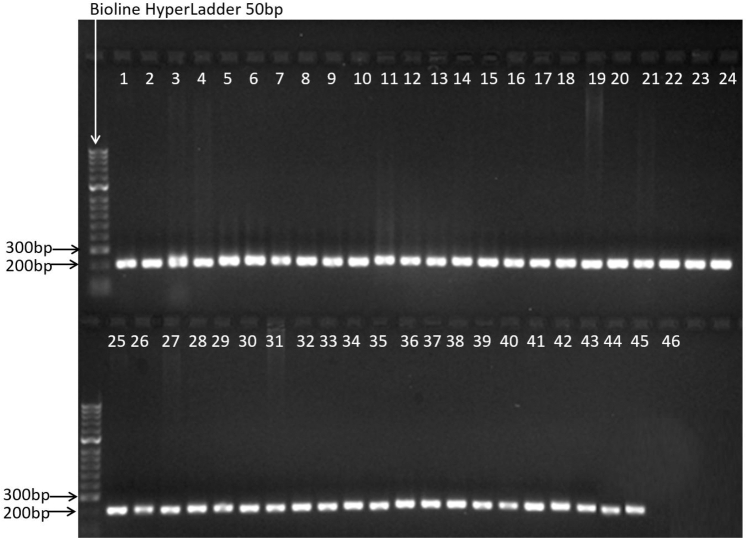
Identification of species from trace samples is now possible through the comparison of diagnostic DNA fragments against reference DNA sequence databases. DNA detection of animals from non-invasive samples, such as predator faeces (scats) that contain traces of DNA from their species of origin, has proved to be a valuable tool for the management of elusive wildlife. However, application of this approach can be limited by the availability of appropriate genetic markers. Scat DNA is often degraded, meaning that longer DNA sequences, including standard DNA barcoding markers, are difficult to recover. Instead, targeted short diagnostic markers are required to serve as diagnostic mini-barcodes. The mitochondrial genome is a useful source of such trace DNA markers because it provides good resolution at the species level and occurs in high copy numbers per cell. We developed a mini-barcode based on a short (178 bp) fragment of the conserved 12S ribosomal ribonucleic acid mitochondrial gene sequence, with the goal of discriminating amongst the scats of large mammalian predators of Australia. We tested the sensitivity and specificity of our primers and can accurately detect and discriminate amongst quolls, cats, dogs, foxes, and devils from trace DNA samples. Our approach provides a cost-effective, time-efficient, and non-invasive tool that enables identification of all 8 medium-large mammal predators in Australia, including native and introduced species, using a single test. With modification, this approach is likely to be of broad applicability elsewhere.
通过将诊断性DNA片段与参考DNA序列数据库进行比较,现在可以从微量样本中识别物种。从非侵入性样本(如捕食者粪便(粪便))中检测动物的DNA已被证明是管理难以捉摸的野生动物的一种有价值的工具,这些样本中含有来自其来源物种的DNA痕迹。然而,这种方法的应用可能会受到合适遗传标记可用性的限制。粪便DNA通常会降解,这意味着包括标准DNA条形码标记在内的较长DNA序列很难恢复。相反,需要有针对性的短诊断标记作为诊断微型条形码。线粒体基因组是此类微量DNA标记的有用来源,因为它在物种水平上具有良好的分辨率,并且每个细胞中以高拷贝数存在。我们基于保守的12S核糖体核糖核酸线粒体基因序列的短片段(178 bp)开发了一种微型条形码,目的是区分澳大利亚大型哺乳动物捕食者的粪便。我们测试了引物的敏感性和特异性,能够从微量DNA样本中准确检测和区分袋鼬、猫、狗、狐狸和袋獾。我们的方法提供了一种经济高效、省时且非侵入性的工具,通过一次测试就能识别澳大利亚所有8种大中型哺乳动物捕食者,包括本地物种和外来物种。经过修改,这种方法可能在其他地方具有广泛的适用性。