Owens Rebecca, Jones Leah Ffion, Moore Michael, Pilat Dirk, McNulty Cliodna
Public Health England, Gloucester GL50 2QJ, UK.
Department of Primary Care and Population Sciences, Aldermoor Health Centre Southampton, University of Southampton, Southampton SO16 5ST, UK.
Antibiotics (Basel). 2017 Aug 16;6(3):16. doi: 10.3390/antibiotics6030016.
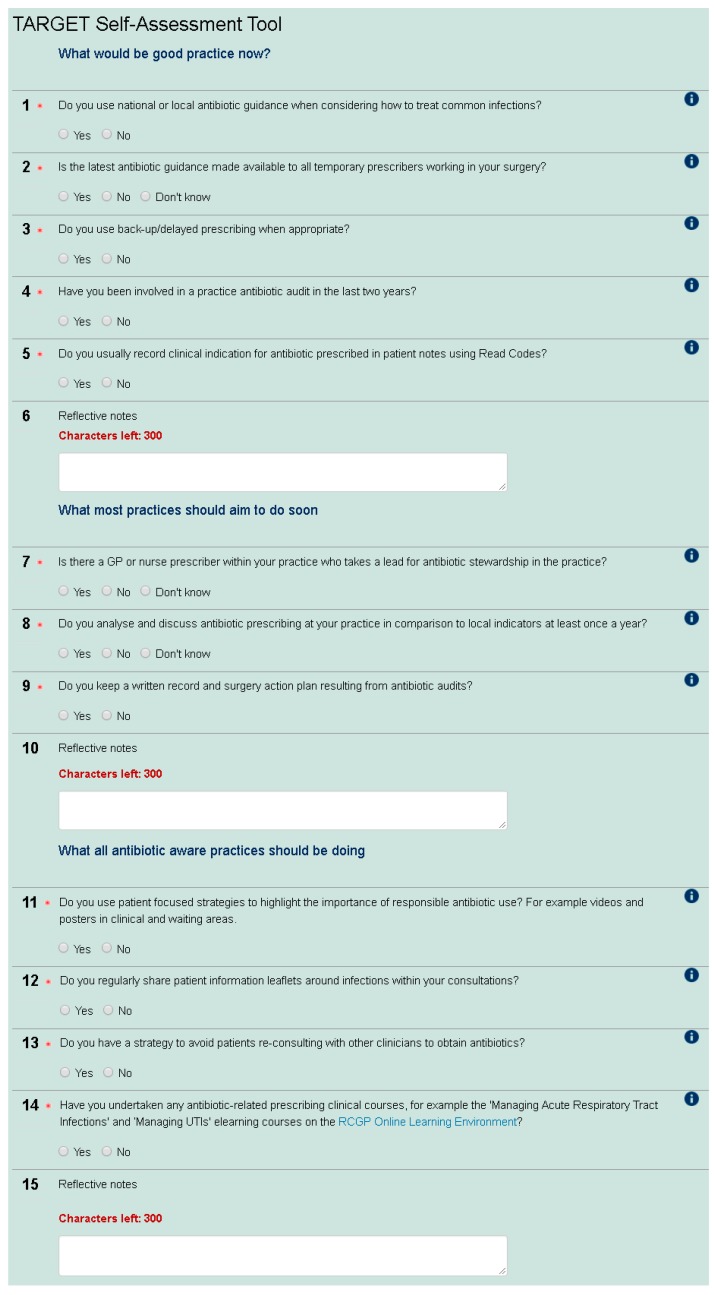
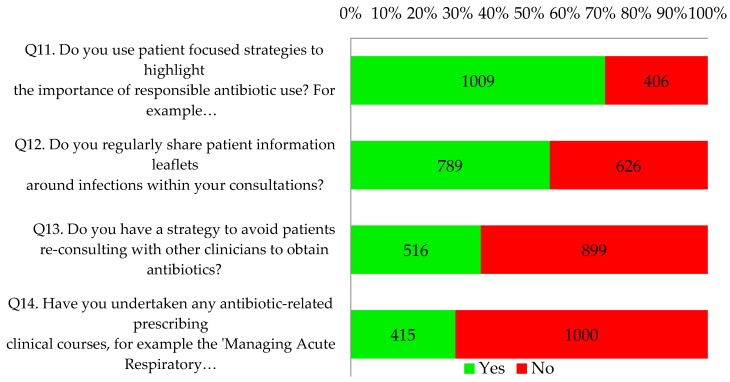
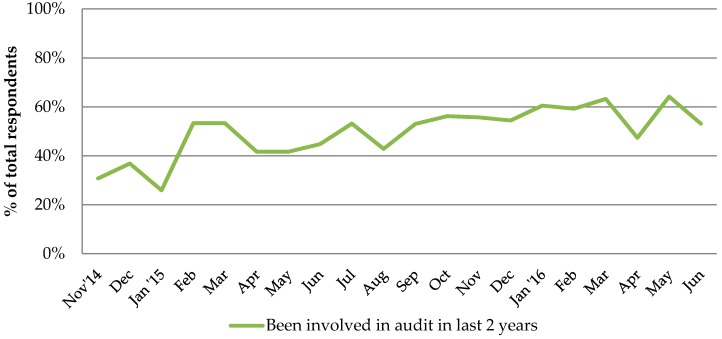
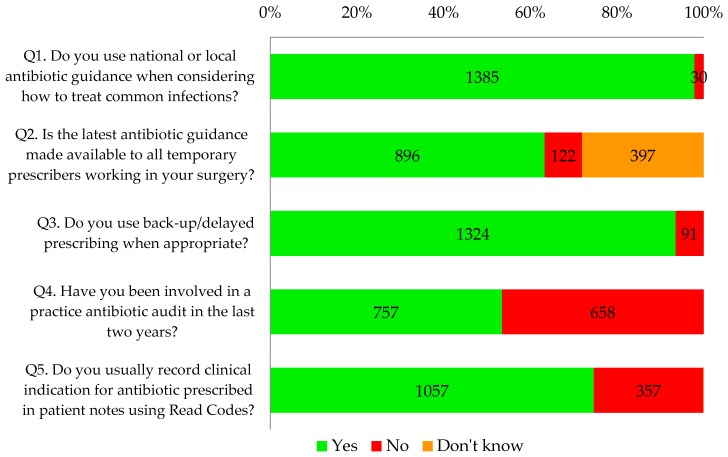
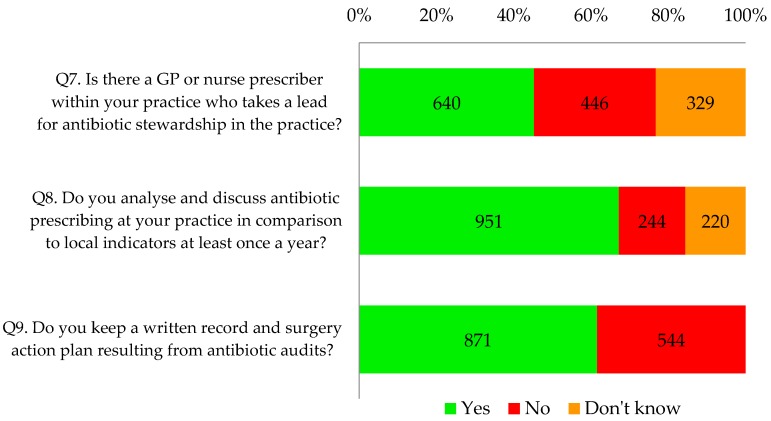
Multifaceted antimicrobial stewardship (AMS) interventions including: antibiotic guidance, reviews of antibiotic use using audits, education, patient facing materials, and self-assessment, are successful in improving antimicrobial use. We aimed to measure the self-reported AMS activity of staff completing a self-assessment tool (SAT). The Royal College of General Practitioners (RCGP)/Public Health England (PHE) SAT enables participants considering an AMS eLearning course to answer 12 short questions about their AMS activities. Questions cover guidance, audit, and reflection about antibiotic use, patient facing materials, and education. Responses are recorded digitally. Data were collated, anonymised, and exported into Microsoft Excel. Between November 2014 and June 2016, 1415 users completed the SAT. Ninety eight percent reported that they used antibiotic guidance for treating common infections and 63% knew this was available to all prescribers. Ninety four percent of GP respondents reported having used delayed prescribing when appropriate, 25% were not using Read codes, and 62% reported undertaking a practice-wide antibiotic audit in the last two years, of which, 77% developed an audit action plan. Twenty nine percent had undertaken other antibiotic-related clinical courses. Fifty six percent reported sharing patient leaflets covering infection. Many prescribers reported undertaking a range of AMS activities. GP practice managers should ensure that all clinicians have access to prescribing guidance. Antibiotic audits should be encouraged to enable GP staff to understand their prescribing behaviour and address gaps in good practice. Prescribers are not making full use of antibiotic prescribing-related training opportunities. Read coding facilitates more accurate auditing and its use by all clinicians should be encouraged.
多方面的抗菌药物管理(AMS)干预措施,包括:抗生素使用指南、通过审计对抗生素使用情况进行审查、教育、面向患者的材料以及自我评估,在改善抗菌药物使用方面取得了成功。我们旨在衡量完成自我评估工具(SAT)的工作人员自我报告的AMS活动。皇家全科医师学院(RCGP)/英国公共卫生部(PHE)的SAT使考虑参加AMS电子学习课程的参与者能够回答12个关于其AMS活动的简短问题。问题涵盖抗生素使用的指南、审计以及反思、面向患者的材料和教育。回答以数字方式记录。数据经过整理、匿名化处理后导出到Microsoft Excel中。在2014年11月至2016年6月期间,1415名用户完成了SAT。98%的人报告称他们在治疗常见感染时使用了抗生素指南,63%的人知道所有开处方者都可获取该指南。94%的全科医生(GP)受访者报告在适当的时候使用了延迟处方,25%的人未使用Read编码,62%的人报告在过去两年中进行了全诊所范围的抗生素审计,其中77%制定了审计行动计划。29%的人参加了其他与抗生素相关的临床课程。56%的人报告分享了有关感染的患者传单。许多开处方者报告开展了一系列AMS活动。全科医生诊所经理应确保所有临床医生都能获取处方指南。应鼓励进行抗生素审计,以使全科医生工作人员了解其处方行为并弥补良好实践中的差距。开处方者没有充分利用与抗生素处方相关的培训机会。Read编码有助于更准确地进行审计,应鼓励所有临床医生使用。