Shariff Masroor, Klenowski Paul, Morgan Michael, Patkar Omkar, Mu Erica, Bellingham Mark, Belmer Arnauld, Bartlett Selena E
Institute of Health and Biomedical Innovation at Translational Research Institute, Queensland University of Technology, Brisbane, Australia.
School of Biomedical Sciences, The University of Queensland, Brisbane, Queensland, Australia.
PLoS One. 2017 Aug 16;12(8):e0183063. doi: 10.1371/journal.pone.0183063. eCollection 2017.
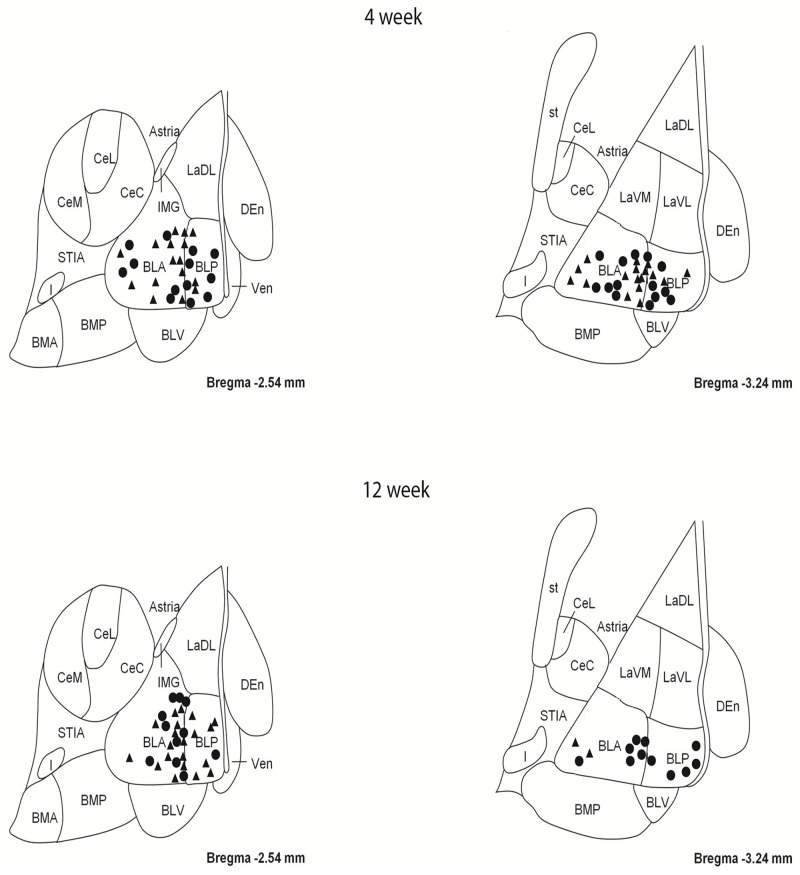
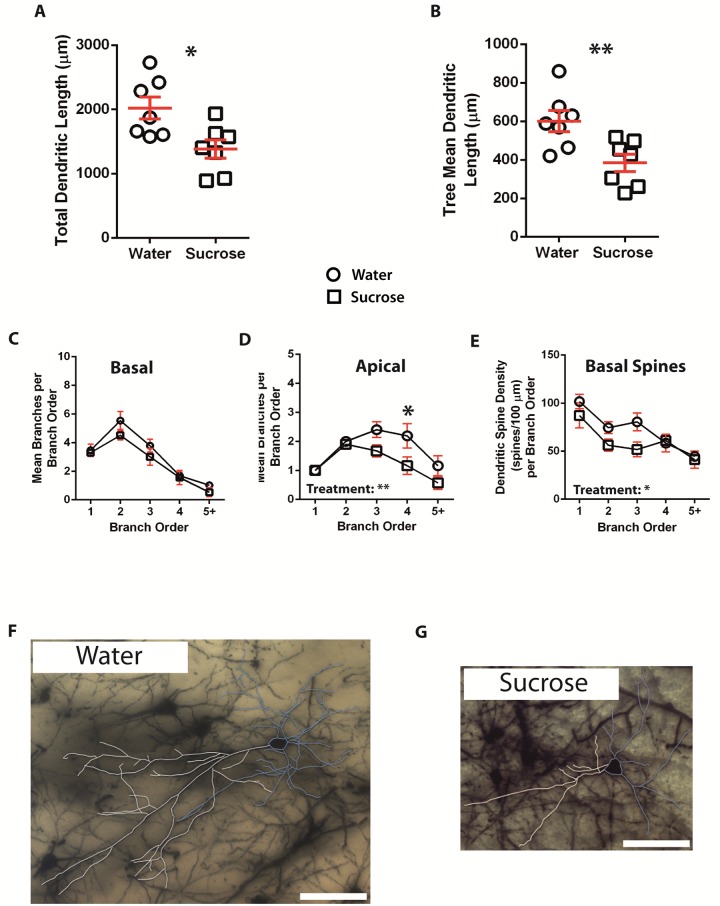
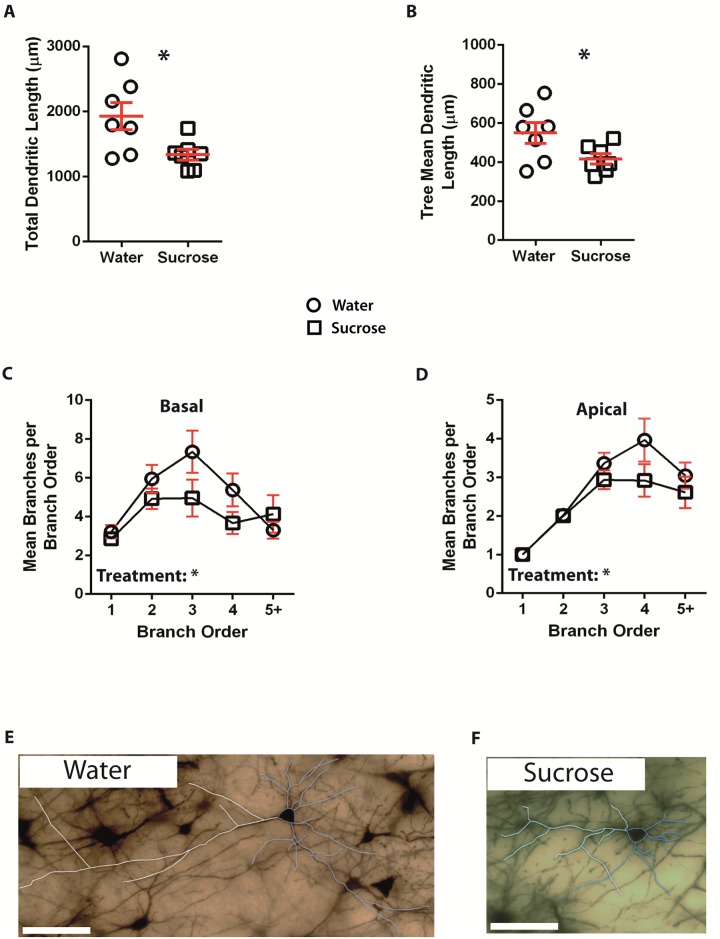
A compelling body of evidence suggests that the worldwide obesity epidemic is underpinned by excessive sugar consumption, typified by the modern western diet. Furthermore, evidence is beginning to emerge of maladaptive changes in the mesolimbic reward pathway of the brain in relation to excess sugar consumption that highlights the importance of examining this neural circuitry in an attempt to understand and subsequently mitigate the associated morbidities with obesity. While the basolateral amygdala (BLA) has been shown to mediate the reinforcing properties of drugs of abuse, it has also been shown to play an important role in affective and motivated behaviours and has been shown to undergo maladaptive changes in response to drugs of abuse and stress. Given the overlap in neural circuitry affected by drugs of abuse and sucrose, we sought to examine the effect of short- and long-term binge-like sucrose consumption on the morphology of the BLA principal neurons using an intermittent-access two-bottle choice paradigm. We used Golgi-Cox staining to impregnate principal neurons from the BLA of short- (4 week) and long-term (12 week) sucrose consuming adolescent rats and compared these to age-matched water controls. Our results indicate possibly maladaptive changes to the dendritic architecture of BLA principal neurons, particularly on apical dendrites following long-term sucrose consumption. Specifically, our results show reduced total dendritic arbor length of BLA principal neurons following short- and long-term sucrose consumption. Additionally, we found that long-term binge-like sucrose consumption caused a significant reduction in the length and complexity of apical dendrites. Taken together, our results highlight the differences between short- and long-term binge-like sucrose consumption on BLA principal neuron morphology and are suggestive of a perturbation in the diverse synaptic inputs to these neurons.
大量令人信服的证据表明,全球肥胖流行是由过量的糖消费所支撑,现代西方饮食便是典型代表。此外,有证据开始表明,大脑中脑边缘奖赏通路因过量糖消费而出现适应不良变化,这凸显了研究该神经回路对于理解并随后减轻与肥胖相关疾病的重要性。虽然基底外侧杏仁核(BLA)已被证明可介导滥用药物的强化特性,但它也在情感和动机行为中发挥重要作用,并且已被证明会因滥用药物和压力而发生适应不良变化。鉴于受滥用药物和蔗糖影响的神经回路存在重叠,我们试图使用间歇性获取两瓶选择范式,研究短期和长期类似暴饮暴食的蔗糖消费对BLA主要神经元形态的影响。我们使用高尔基-考克斯染色法,浸染短期(4周)和长期(12周)食用蔗糖的青春期大鼠BLA中的主要神经元,并将其与年龄匹配的饮水对照组进行比较。我们的结果表明,BLA主要神经元的树突结构可能发生了适应不良变化,尤其是长期食用蔗糖后顶端树突的变化。具体而言,我们的结果显示,短期和长期食用蔗糖后,BLA主要神经元的总树突长度减少。此外,我们发现长期类似暴饮暴食的蔗糖消费导致顶端树突的长度和复杂性显著降低。综上所述,我们的结果突出了短期和长期类似暴饮暴食的蔗糖消费对BLA主要神经元形态的差异,并提示这些神经元的多种突触输入受到了干扰。