Lopes Antonio M, Domingues Patricia, Zell Roland, Hale Benjamin G
Institute of Medical Virology, University of Zurich, Zurich, Switzerland.
Institute of Medical Microbiology, Jena University Hospital, Jena, Germany.
J Virol. 2017 Oct 13;91(21). doi: 10.1128/JVI.01081-17. Print 2017 Nov 1.
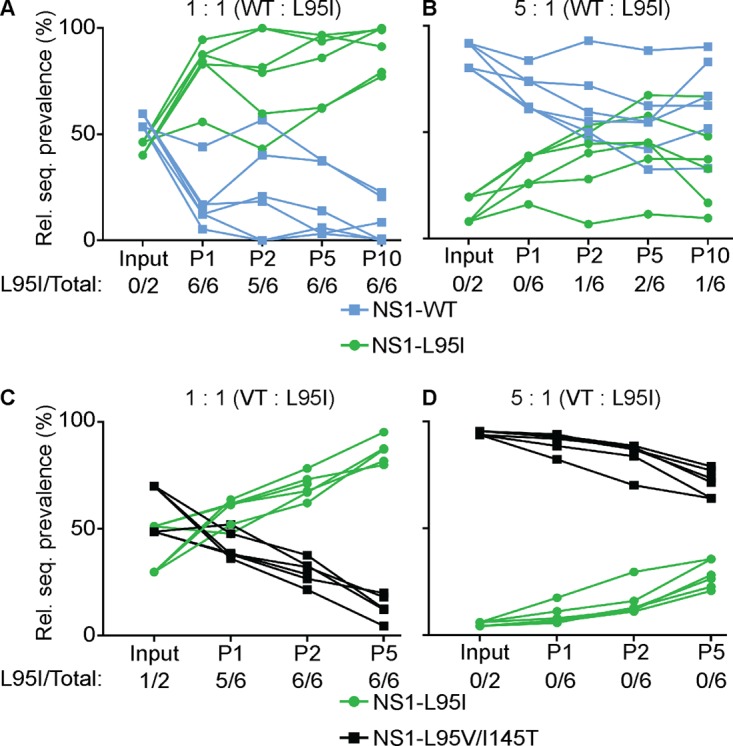
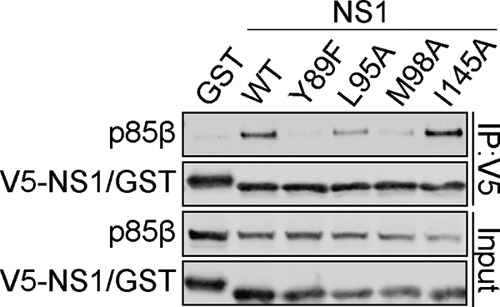
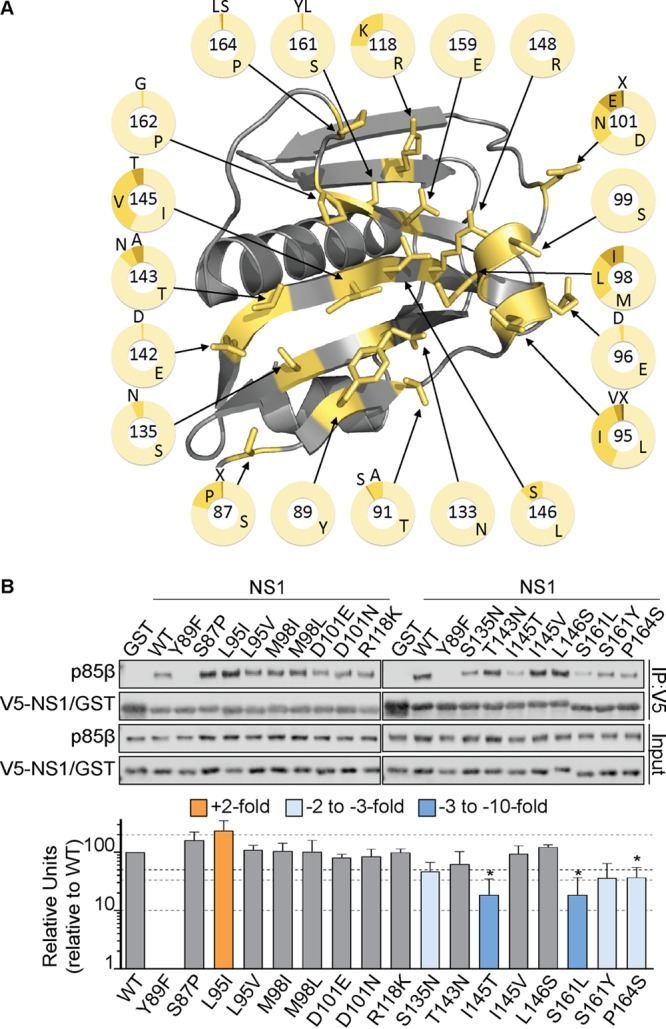
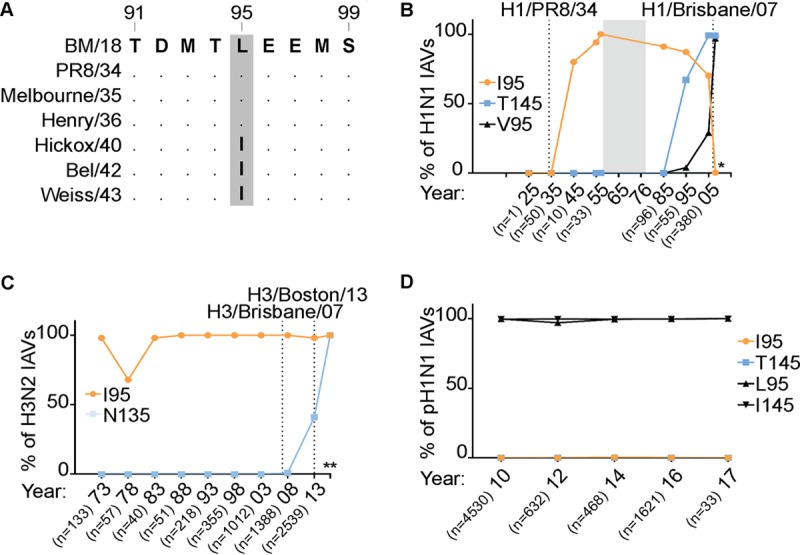
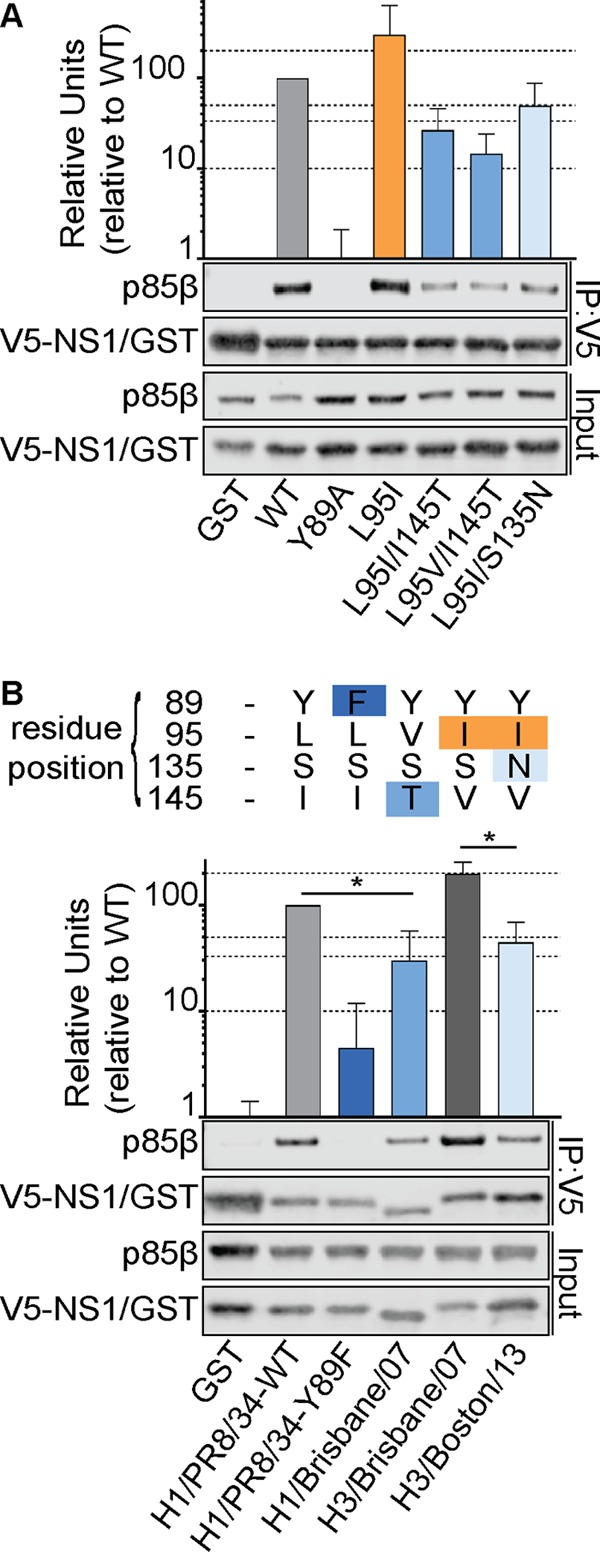
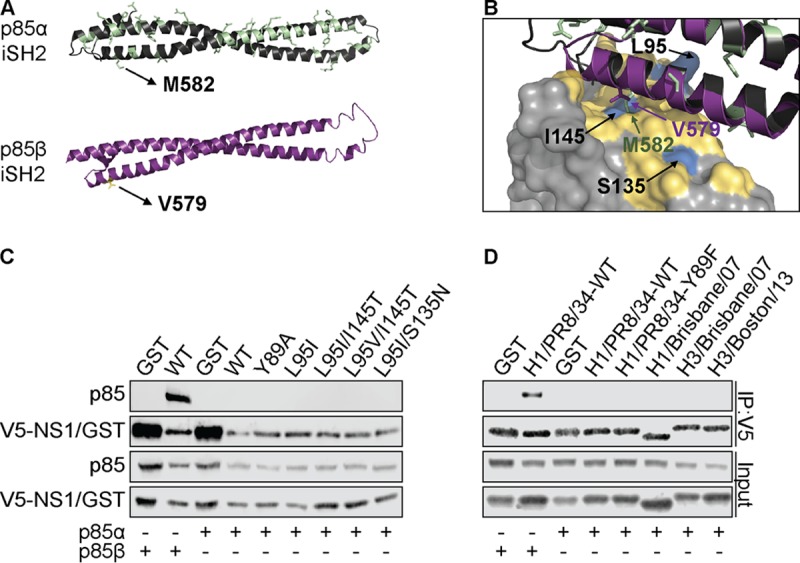
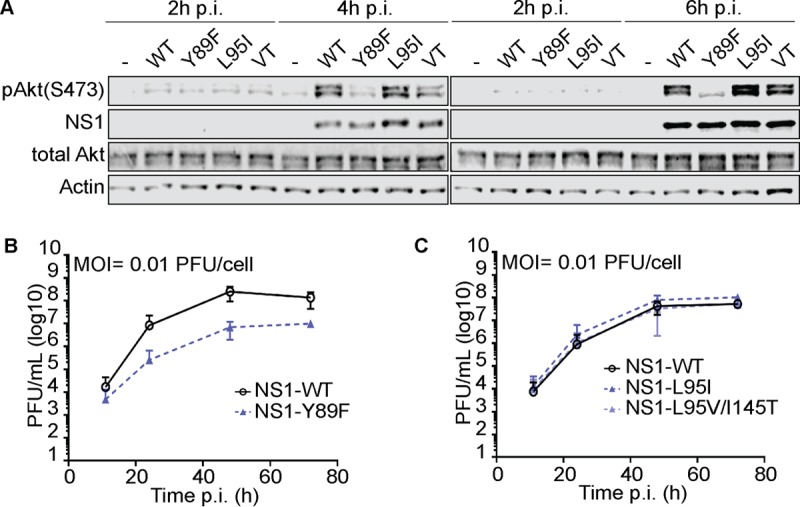
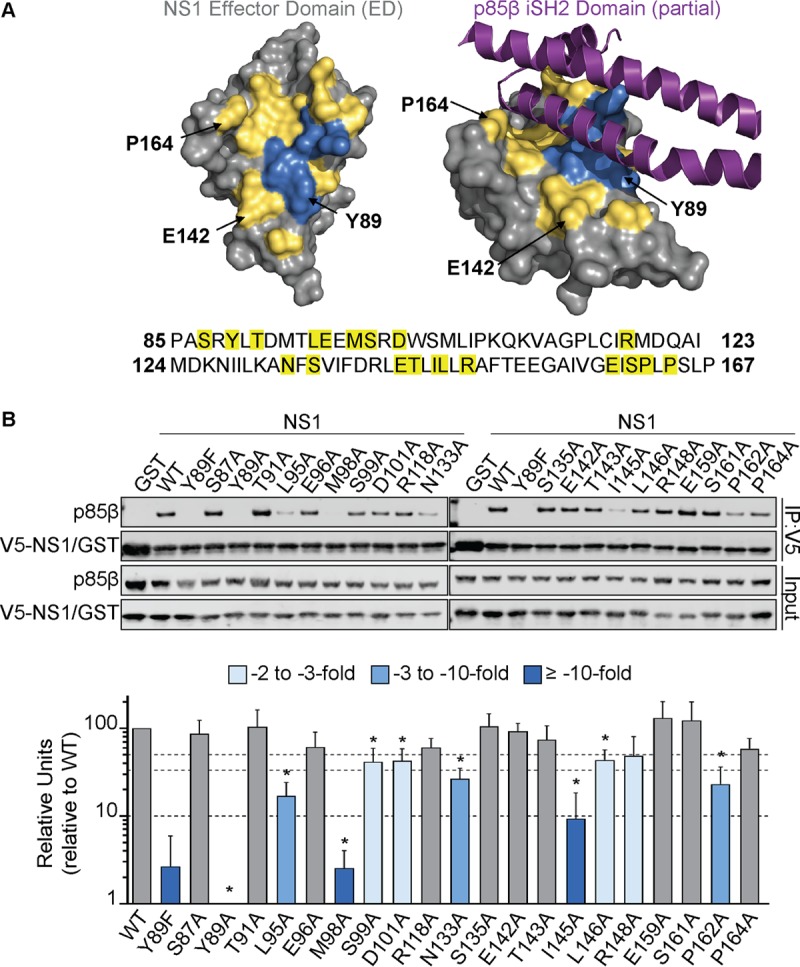
Rational characterization of virulence and host-adaptive markers in the multifunctional influenza A virus NS1 protein is hindered by a lack of comprehensive knowledge about NS1-host protein protein interfaces. Here, we surveyed the impact of amino acid variation in NS1 at its structurally defined binding site for host p85β, a regulator of phosphoinositide 3-kinase (PI3K) signaling. Structure-guided alanine scanning of all viral residues at this interface defined 10 positions contributing to the interaction, with residues 89, 95, 98, 133, 145, and 162 being the most important. A bioinformatic study of >24,000 publicly available NS1 sequences derived from viruses infecting different hosts highlighted several prevalent amino acid variants at the p85β interface that either enhanced (I95) or weakened (N135, T145, L161, Y161, S164) p85β binding. Interestingly, analysis of viruses circulating in humans since the 1918 pandemic revealed the temporal acquisition of functionally relevant variants at this interface. I95 (which enhanced p85β binding) quickly became prevalent in the 1940s and experimentally conferred a fitness advantage to a recombinant 1930s-based H1N1 virus in human lung epithelial cells. Surprisingly, H1N1 and H3N2 viruses recently acquired T145 or N135, respectively, which diminished p85β binding but apparently not the overall fitness in the human population. Evolutionary analyses revealed covariation of the NS1-p85β binding phenotype in humans with functional changes at multiple residues in other viral proteins, suggesting an unexplored compensatory or synergistic interplay between phenotypes Overall, our data provide a resource to understand the consequences of the NS1-p85β binding spectrum of different influenza viruses and highlight the dynamic evolution of this property in viruses circulating in humans. In humans, influenza A viruses are responsible for causing seasonal epidemics and occasional pandemics. These viruses also circulate and evolve in other animal species, creating a reservoir from which novel viruses with distinct properties can emerge. The viral nonstructural protein NS1 is an important host range determinant and virulence factor that exhibits strain-specific interactions with several host factors, although few have been characterized extensively. In the study described here, we comprehensively surveyed the impact of natural and unnatural NS1 variations on the binding of NS1 to host p85β, a subunit of phosphoinositide 3-kinase that regulates intracellular metabolism and contributes to virus replication and virulence. We define the p85β-binding site on NS1 and provide a predictive resource to assess this ability of NS1 in viruses from different hosts. Strikingly, we uncover a spectrum of p85β binding by different NS1 proteins and reveal that viruses evolving in humans have undergone dynamic changes in this NS1 function over the last century.
由于对NS1与宿主蛋白的蛋白界面缺乏全面了解,甲型流感病毒NS1蛋白中毒力和宿主适应性标记的合理表征受到阻碍。在这里,我们研究了NS1中氨基酸变异对其在结构上确定的宿主p85β结合位点的影响,p85β是磷酸肌醇3激酶(PI3K)信号传导的调节剂。对该界面所有病毒残基进行结构导向的丙氨酸扫描确定了10个有助于相互作用的位置,其中89、95、98、133、145和162位残基最为重要。一项对来自感染不同宿主的病毒的超过24000个公开可用NS1序列的生物信息学研究突出了p85β界面上几个常见的氨基酸变体,这些变体要么增强(I95)要么减弱(N135、T145、L161、Y161、S164)p85β结合。有趣的是,对自1918年大流行以来在人类中传播的病毒的分析揭示了该界面上功能相关变体的时间性获得。I95(增强p85β结合)在20世纪40年代迅速变得普遍,并在实验中赋予基于20世纪30年代的重组H1N1病毒在人肺上皮细胞中的适应性优势。令人惊讶的是,H1N1和H3N2病毒最近分别获得了T145或N135,这降低了p85β结合,但显然没有降低在人群中的整体适应性。进化分析揭示了人类中NS1 - p85β结合表型与其他病毒蛋白中多个残基的功能变化的共变,表明表型之间存在未探索的补偿或协同相互作用。总体而言,我们的数据提供了一个资源来理解不同流感病毒的NS1 - p85β结合谱的后果,并突出了该特性在人类中传播的病毒中的动态进化。在人类中,甲型流感病毒导致季节性流行和偶尔的大流行。这些病毒也在其他动物物种中传播和进化,形成了一个库,从中可以出现具有不同特性的新型病毒。病毒非结构蛋白NS1是一个重要的宿主范围决定因素和毒力因子,它与几种宿主因子表现出菌株特异性相互作用,尽管很少有被广泛表征。在本文所述的研究中,我们全面研究了天然和非天然NS1变异对NS1与宿主p85β结合的影响,p85β是磷酸肌醇3激酶的一个亚基,调节细胞内代谢并有助于病毒复制和毒力。我们定义了NS1上的p85β结合位点,并提供了一个预测资源来评估来自不同宿主的病毒中NS1的这种能力。引人注目的是,我们发现了不同NS1蛋白的一系列p85β结合,并揭示在过去一个世纪中,在人类中进化的病毒在这种NS1功能上经历了动态变化。