Department of Biology, Faculty of Science, Kyushu University, 744 Motooka, Nishi-ku, Fukuoka, 819-0395, Japan.
Graduate School of Environmental Science, Hokkaido University, N10W5, Sapporo, 060-0810, Japan.
Sci Rep. 2017 Aug 16;7(1):8305. doi: 10.1038/s41598-017-08325-y.
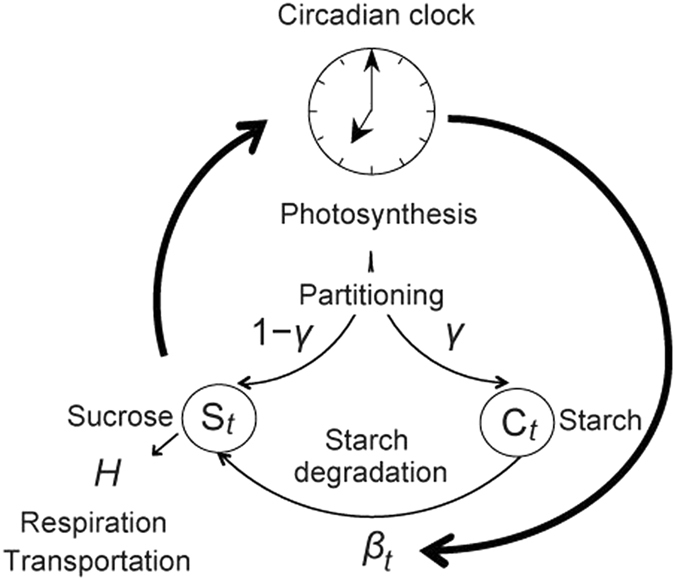
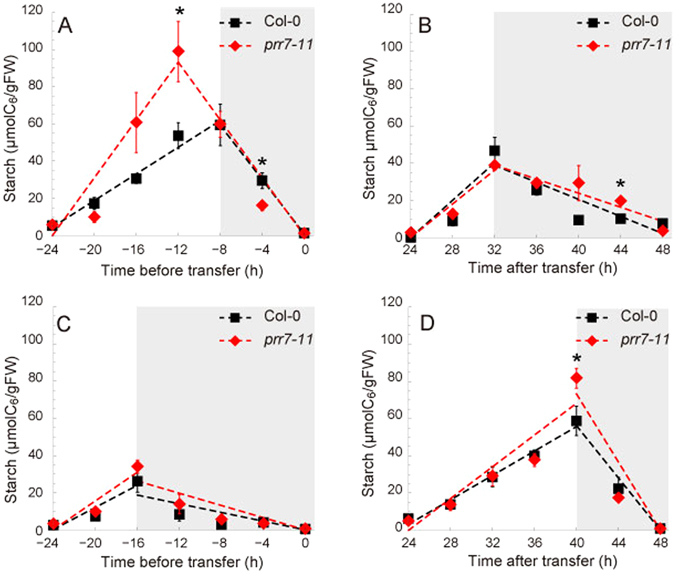
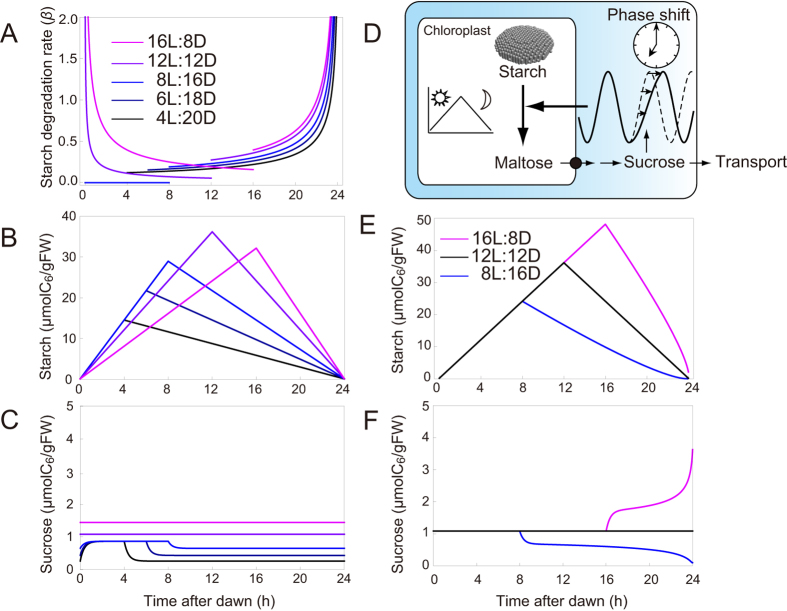
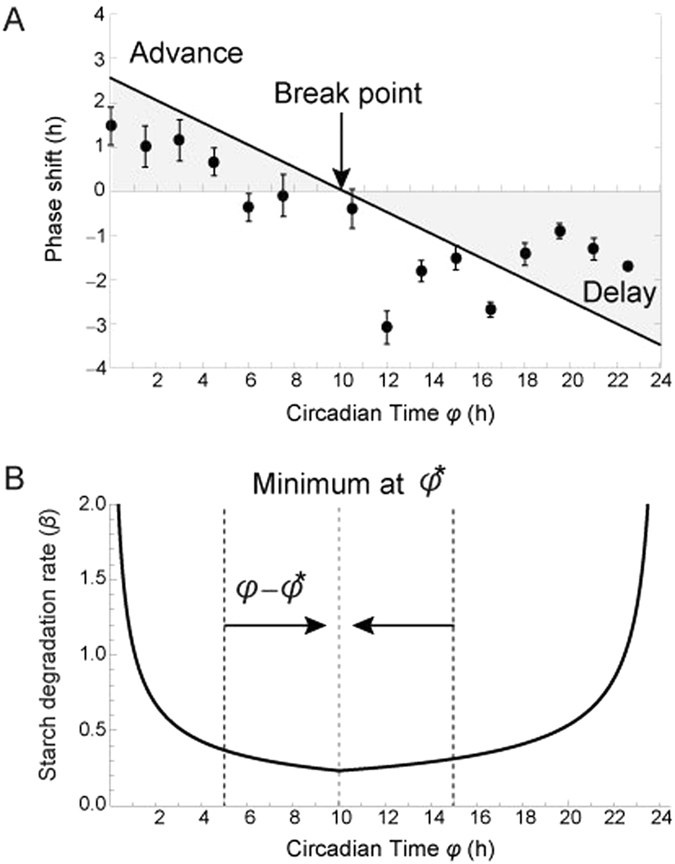
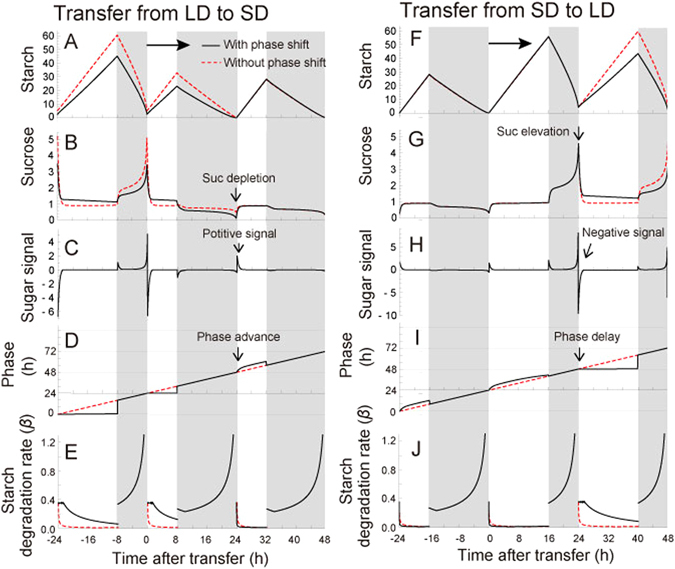
Arabidopsis plants store part of the carbon fixed by photosynthesis as starch to sustain growth at night. Two competing hypotheses have been proposed to explain this diel starch turnover based on either the measurement of starch abundance with respect to circadian time, or the sensing of sugars to feedback to the circadian oscillator to dynamically adjust the timing of starch turnover. We report a phase oscillator model that permitted derivation of the ideal responses of the circadian regulation of starch breakdown to maintain sucrose homeostasis. Testing the model predictions using a sugar-unresponsive mutant of Arabidopsis demonstrated that the dynamics of starch turnover arise from the circadian clock measuring and responding to the rate of change of cellular sucrose. Our theory and experiments suggest that starch turnover is controlled by the circadian clock acting as a dynamic homeostat responding to sucrose signals to maintain carbon homeostasis.
拟南芥植物将光合作用固定的部分碳以淀粉的形式储存起来,以维持夜间的生长。为了解释这种昼夜淀粉周转,有两种相互竞争的假说,一种假说是基于对淀粉丰度随昼夜时间变化的测量,另一种假说是基于对糖的感知来反馈给生物钟振荡器,以动态调整淀粉周转的时间。我们报告了一个相位振荡器模型,该模型允许推导出生物钟对淀粉分解的节律调节的理想反应,以维持蔗糖的稳态。使用拟南芥的一种对糖不敏感的突变体来测试该模型的预测,结果表明淀粉周转的动力学来自于生物钟测量和响应细胞蔗糖变化率的能力。我们的理论和实验表明,淀粉周转是由生物钟作为一个动态的自动调谐器来控制的,它响应蔗糖信号以维持碳的稳态。