Engin H Billur, Carlin Daniel, Pratt Dexter, Carter Hannah
Division of Medical Genetics, Department of Medicine, Universsity of California, San Diego, 9500 Gilman Dr., La Jolla, CA 92093 USA.
BMC Biophys. 2017 Aug 11;10(Suppl 1):5. doi: 10.1186/s13628-017-0037-6. eCollection 2017.
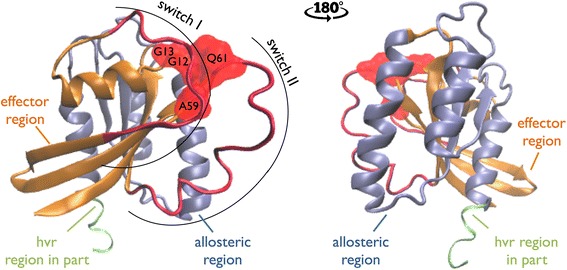
RAS protein interactions have predominantly been studied in the context of the RAF and PI3kinase oncogenic pathways. Structural modeling and X-ray crystallography have demonstrated that RAS isoforms bind to canonical downstream effector proteins in these pathways using the highly conserved switch I and II regions. Other non-canonical RAS protein interactions have been experimentally identified, however it is not clear whether these proteins also interact with RAS via the switch regions.
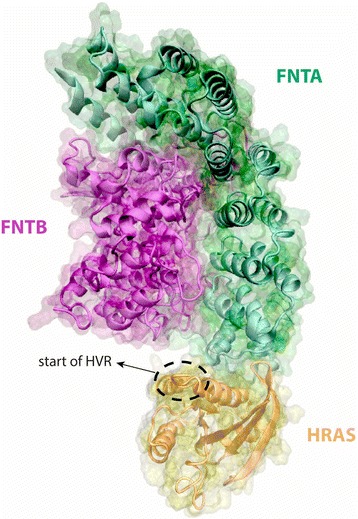
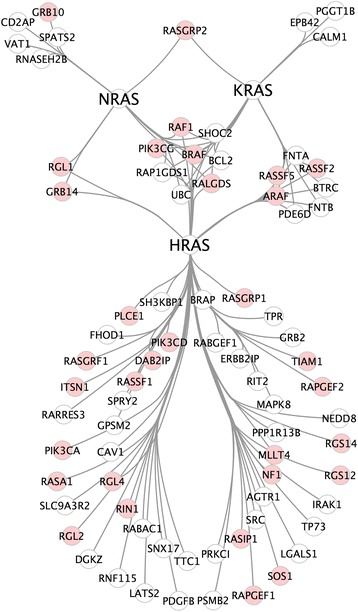
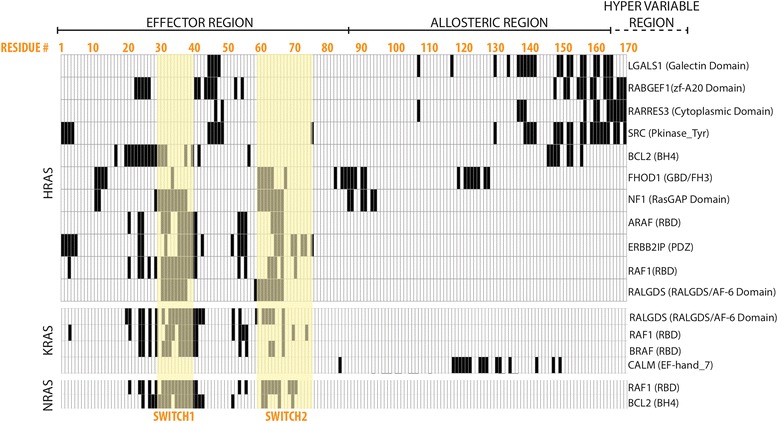
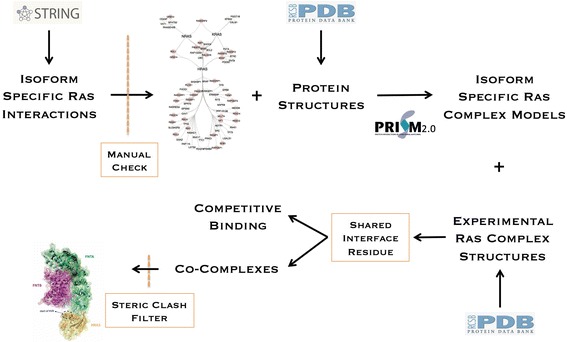
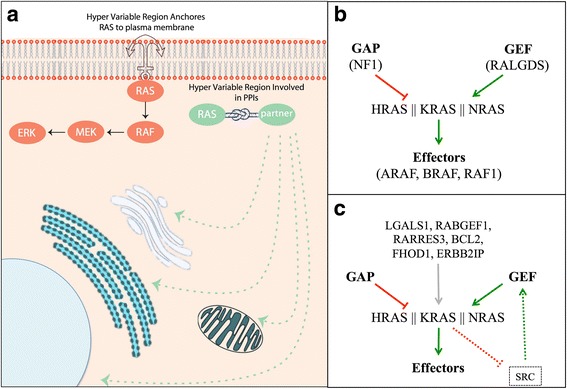
To address this question we constructed a RAS isoform-specific protein-protein interaction network and predicted 3D complexes involving RAS isoforms and interaction partners to identify the most probable interaction interfaces. The resulting models correctly captured the binding interfaces for well-studied effectors, and additionally implicated residues in the allosteric and hyper-variable regions of RAS proteins as the predominant binding site for non-canonical effectors. Several partners binding to this new interface (SRC, LGALS1, RABGEF1, CALM and RARRES3) have been implicated as important regulators of oncogenic RAS signaling. We further used these models to investigate competitive binding and multi-protein complexes compatible with RAS surface occupancy and the putative effects of somatic mutations on RAS protein interactions.
We discuss our findings in the context of RAS localization to the plasma membrane versus within the cytoplasm and provide a list of RAS protein interactions with possible cancer-related consequences, which could help guide future therapeutic strategies to target RAS proteins.
RAS蛋白相互作用主要是在RAF和PI3激酶致癌途径的背景下进行研究的。结构建模和X射线晶体学表明,RAS亚型利用高度保守的开关I和II区域与这些途径中的典型下游效应蛋白结合。其他非典型RAS蛋白相互作用已通过实验确定,但尚不清楚这些蛋白是否也通过开关区域与RAS相互作用。
为了解决这个问题,我们构建了一个RAS亚型特异性蛋白质-蛋白质相互作用网络,并预测了涉及RAS亚型和相互作用伙伴的三维复合物,以确定最可能的相互作用界面。所得模型正确捕捉了已充分研究的效应器的结合界面,此外还表明RAS蛋白变构和高变区域中的残基是非典型效应器的主要结合位点。几个与这个新界面结合的伙伴(SRC、LGALS1、RABGEF1、CALM和RARRES3)被认为是致癌RAS信号传导的重要调节因子。我们进一步使用这些模型来研究与RAS表面占据兼容的竞争性结合和多蛋白复合物,以及体细胞突变对RAS蛋白相互作用的假定影响。
我们在RAS定位于质膜与细胞质内的背景下讨论了我们的发现,并提供了一份RAS蛋白相互作用清单,这些相互作用可能与癌症相关,这有助于指导未来针对RAS蛋白的治疗策略。