Lojek Lisa J, Farrand Allison J, Wisecaver Jennifer H, Blaby-Haas Crysten E, Michel Brian W, Merchant Sabeeha S, Rokas Antonis, Skaar Eric P
Department of Pathology, Microbiology, & Immunology, Vanderbilt University Medical Center, Nashville, Tennessee, USA.
Graduate Program in Microbiology & Immunology, Vanderbilt University, Nashville, Tennessee, USA.
mSphere. 2017 Aug 16;2(4). doi: 10.1128/mSphere.00176-17. eCollection 2017 Jul-Aug.
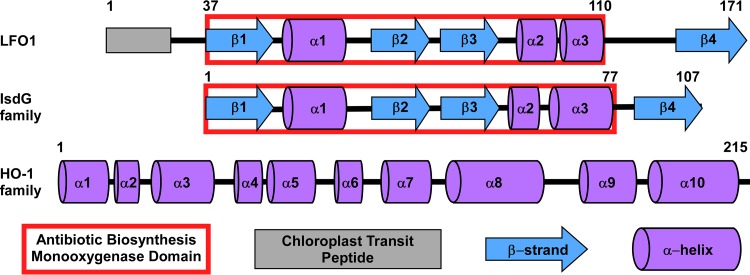
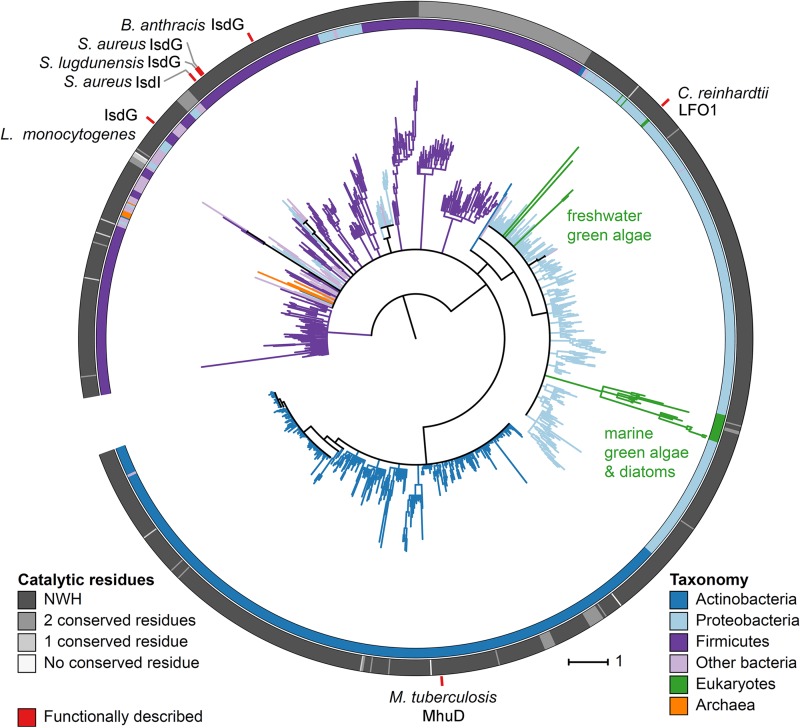
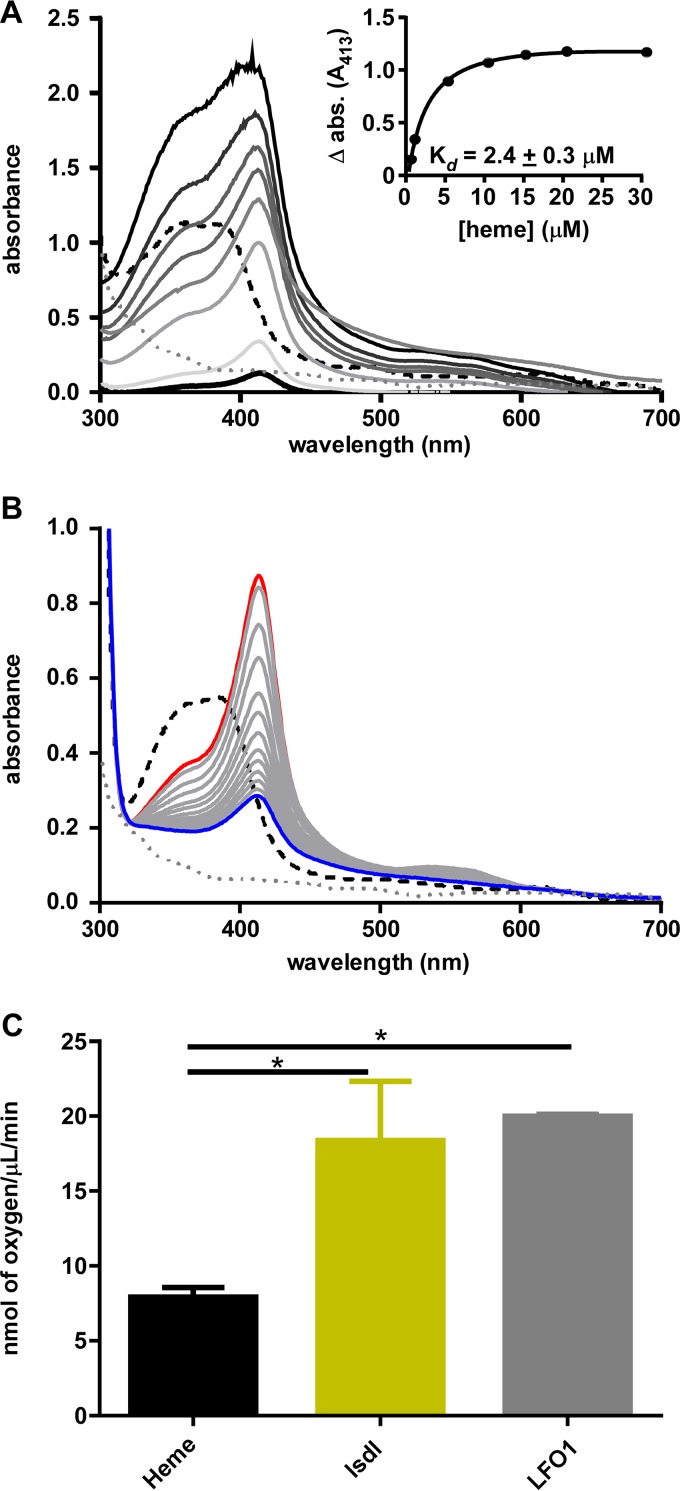
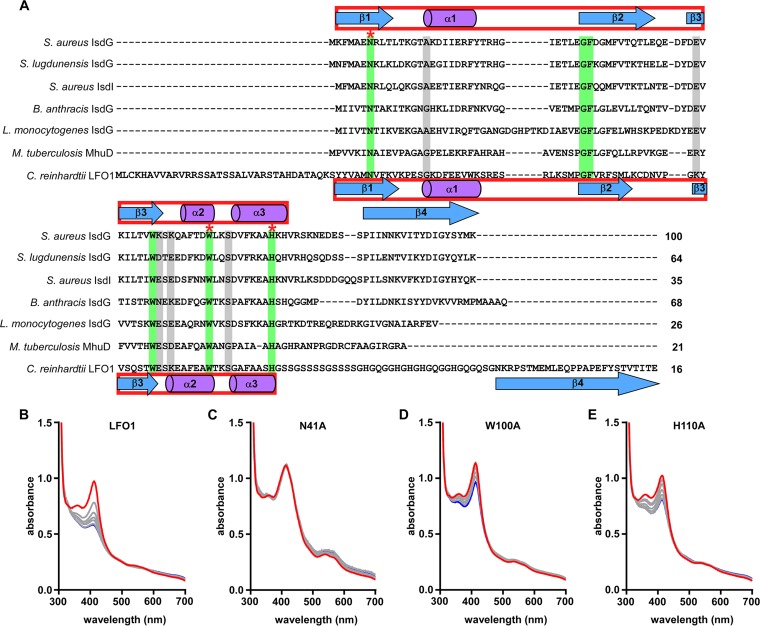
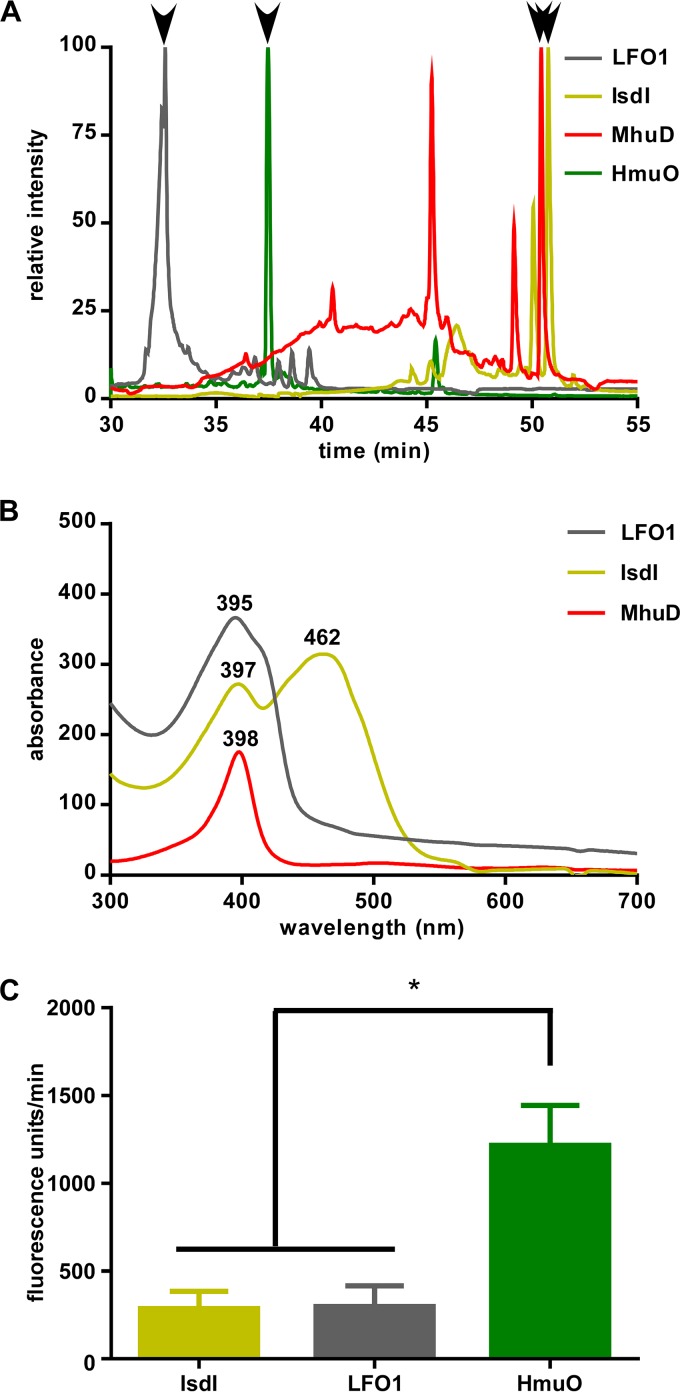
Heme is essential for respiration across all domains of life. However, heme accumulation can lead to toxicity if cells are unable to either degrade or export heme or its toxic by-products. Under aerobic conditions, heme degradation is performed by heme oxygenases, enzymes which utilize oxygen to cleave the tetrapyrrole ring of heme. The HO-1 family of heme oxygenases has been identified in both bacterial and eukaryotic cells, whereas the IsdG family has thus far been described only in bacteria. We identified a hypothetical protein in the eukaryotic green alga , which encodes a protein containing an antibiotic biosynthesis monooxygenase (ABM) domain consistent with those associated with IsdG family members. This protein, which we have named LFO1, degrades heme, contains similarities in predicted secondary structures to IsdG family members, and retains the functionally conserved catalytic residues found in all IsdG family heme oxygenases. These data establish LFO1 as an IsdG family member and extend our knowledge of the distribution of IsdG family members beyond bacteria. To gain further insight into the distribution of the IsdG family, we used the LFO1 sequence to identify 866 IsdG family members, including representatives from all domains of life. These results indicate that the distribution of IsdG family heme oxygenases is more expansive than previously appreciated, underscoring the broad relevance of this enzyme family. This work establishes a protein in the freshwater alga as an IsdG family heme oxygenase. This protein, LFO1, exhibits predicted secondary structure and catalytic residues conserved in IsdG family members, in addition to a chloroplast localization sequence. Additionally, the catabolite that results from the degradation of heme by LFO1 is distinct from that of other heme degradation products. Using LFO1 as a seed, we performed phylogenetic analysis, revealing that the IsdG family is conserved in all domains of life. Additionally, contains two previously identified HO-1 family heme oxygenases, making the first organism shown to contain two families of heme oxygenases. These data indicate that may have unique mechanisms for regulating iron homeostasis within the chloroplast.
血红素对于所有生命领域的呼吸作用都至关重要。然而,如果细胞无法降解或输出血红素及其有毒副产物,血红素积累会导致毒性。在有氧条件下,血红素由血红素加氧酶进行降解,这些酶利用氧气裂解血红素的四吡咯环。血红素加氧酶的HO - 1家族已在细菌和真核细胞中被鉴定出来,而IsdG家族迄今为止仅在细菌中被描述。我们在真核绿藻中鉴定出一种假定蛋白,它编码一种含有抗生素生物合成单加氧酶(ABM)结构域的蛋白,该结构域与IsdG家族成员相关。我们将这种蛋白命名为LFO1,它能降解血红素,在预测的二级结构上与IsdG家族成员相似,并保留了所有IsdG家族血红素加氧酶中功能保守的催化残基。这些数据确立了LFO1为IsdG家族成员,并将我们对IsdG家族成员分布的认识扩展到了细菌之外。为了进一步深入了解IsdG家族的分布,我们利用LFO1序列鉴定出866个IsdG家族成员,包括来自所有生命领域的代表。这些结果表明,IsdG家族血红素加氧酶的分布比之前认为的更为广泛,突出了该酶家族的广泛相关性。这项工作确立了淡水藻中的一种蛋白为IsdG家族血红素加氧酶。这种蛋白LFO1除了具有叶绿体定位序列外,还展现出在IsdG家族成员中保守的预测二级结构和催化残基。此外,LFO1降解血红素产生的分解代谢物与其他血红素降解产物不同。以LFO1为种子,我们进行了系统发育分析,揭示IsdG家族在所有生命领域都是保守的。此外,[具体物种]含有两种先前鉴定出的HO - 1家族血红素加氧酶,使其成为首个被证明含有两个血红素加氧酶家族的生物体。这些数据表明,[具体物种]可能具有独特的机制来调节叶绿体内的铁稳态。