Martenson James S, Yamasaki Tokiwa, Chaudhury Nashid H, Albrecht David, Tomita Susumu
Department of Cellular and Molecular Physiology, Yale University School of Medicine, New Haven, United States.
Department of Neuroscience, Program in Cellular Neuroscience, Neurodegeneration and Repair, Interdepartmental Neuroscience Program, Yale University School of Medicine, New Haven, United States.
Elife. 2017 Aug 17;6:e27443. doi: 10.7554/eLife.27443.
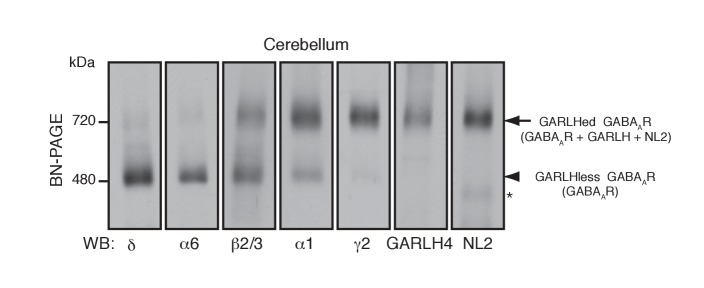
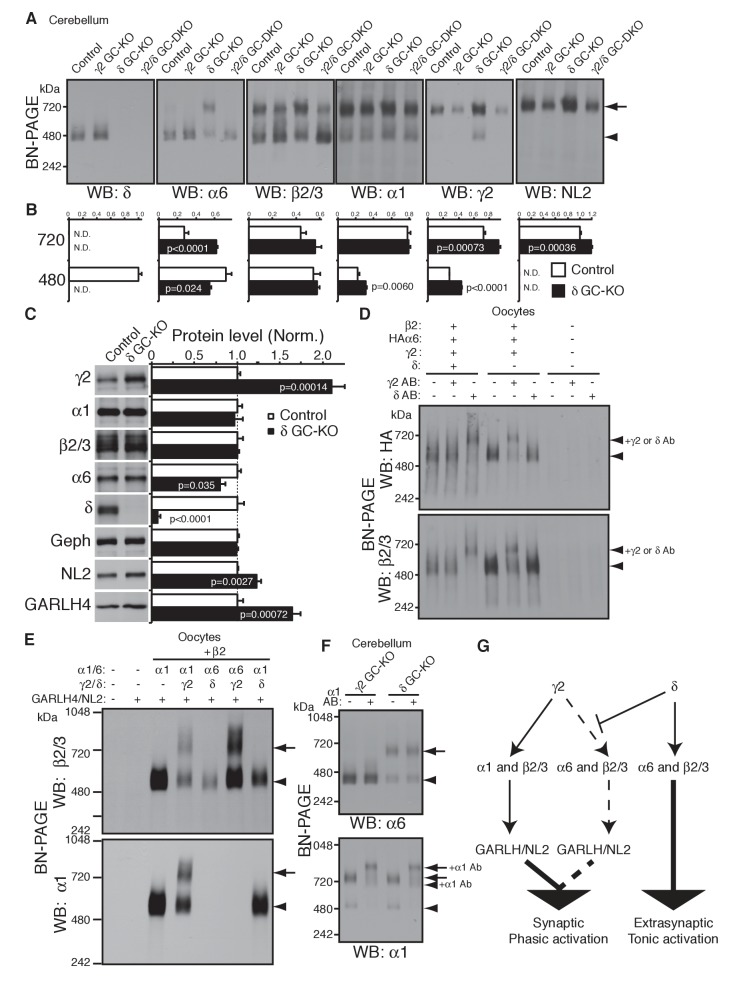
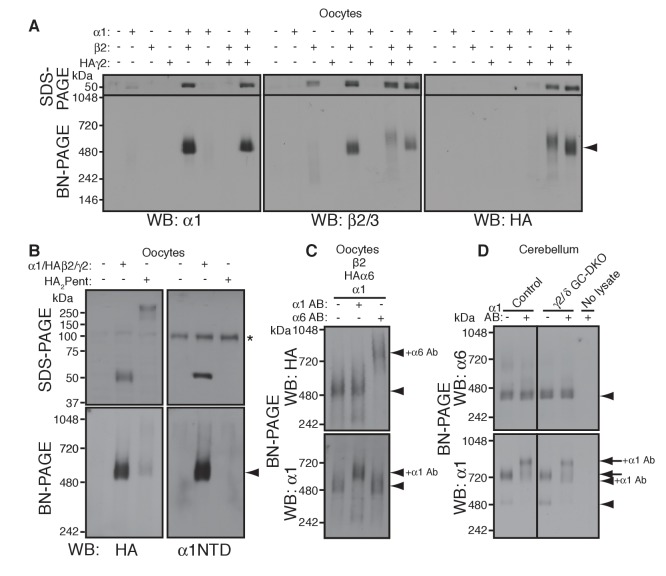
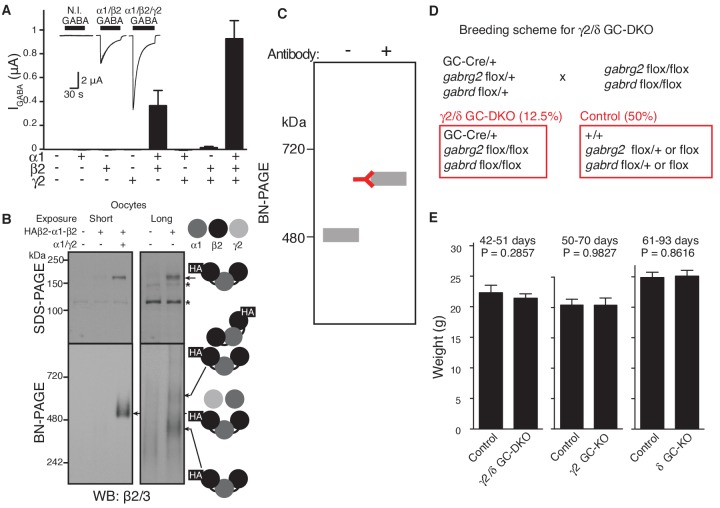
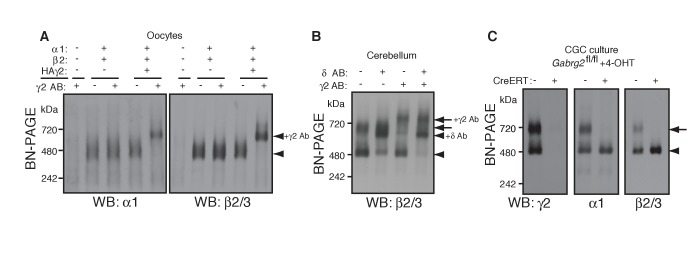
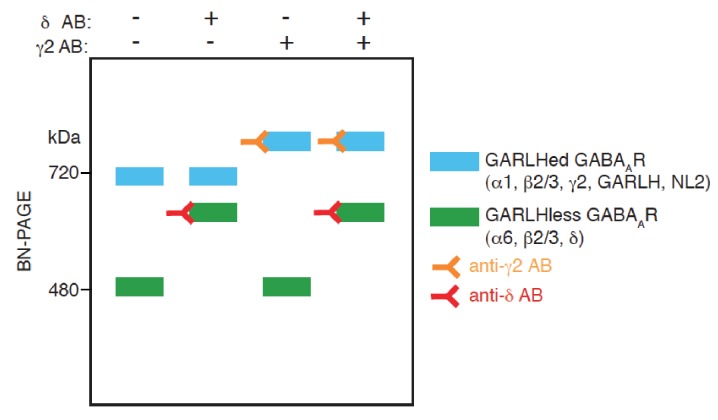
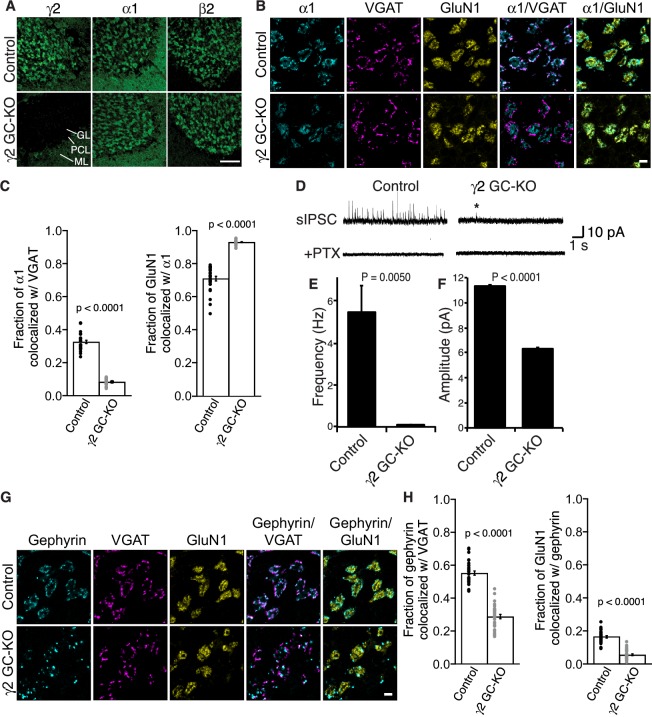
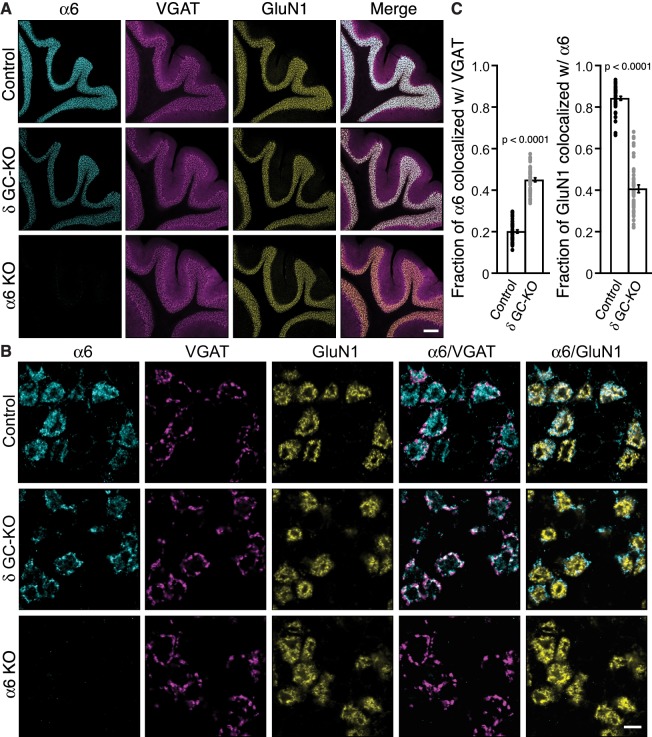
GABA receptor (GABAR) pentamers are assembled from a pool of 19 subunits, and variety in subunit combinations diversifies GABAR functions to tune brain activity. Pentamers with distinct subunit compositions localize differentially at synaptic and non-synaptic sites to mediate phasic and tonic inhibition, respectively. Despite multitudes of theoretical permutations, limited subunit combinations have been identified in the brain. Currently, no molecular model exists for combinatorial GABAR assembly in vivo. Here, we reveal assembly rules of native GABAR complexes that explain GABAR subunit subcellular distributions using mice and oocytes. First, α subunits possess intrinsic signals to segregate into distinct pentamers. Second, γ2 is essential for GABAR assembly with Neuroligin-2 (NL2) and GARLHs, which localize GABARs at synapses. Third, δ suppresses α6 synaptic localization by preventing assembly with GARLHs/NL2. These findings establish the first molecular model for combinatorial GABAR assembly in vivo and reveal an assembly pathway regulating GABAR synaptic localization.
γ-氨基丁酸受体(GABAR)五聚体由19种亚基组成,亚基组合的多样性使GABAR功能多样化,从而调节大脑活动。具有不同亚基组成的五聚体分别定位于突触和非突触部位,分别介导相位性抑制和紧张性抑制。尽管存在大量理论上的排列组合,但在大脑中已鉴定出的亚基组合有限。目前,尚无体内组合型GABAR组装的分子模型。在此,我们利用小鼠和卵母细胞揭示了天然GABAR复合物的组装规则,这些规则解释了GABAR亚基的亚细胞分布。首先,α亚基具有内在信号,可分离成不同的五聚体。其次,γ2对于GABAR与神经连接蛋白-2(NL2)和GARLHs的组装至关重要,后者将GABAR定位于突触。第三,δ通过阻止与GARLHs/NL2的组装来抑制α6的突触定位。这些发现建立了体内组合型GABAR组装的首个分子模型,并揭示了一条调节GABAR突触定位的组装途径。