Zhu Liya, Kalimuthu Senthilkumar, Gangadaran Prakash, Oh Ji Min, Lee Ho Won, Baek Se Hwan, Jeong Shin Young, Lee Sang-Woo, Lee Jaetae, Ahn Byeong-Cheol
Department of Nuclear Medicine, Kyungpook National University School of Medicine and Hospital, Daegu 700-721, Republic of Korea.
Theranostics. 2017 Jul 7;7(10):2732-2745. doi: 10.7150/thno.18752. eCollection 2017.
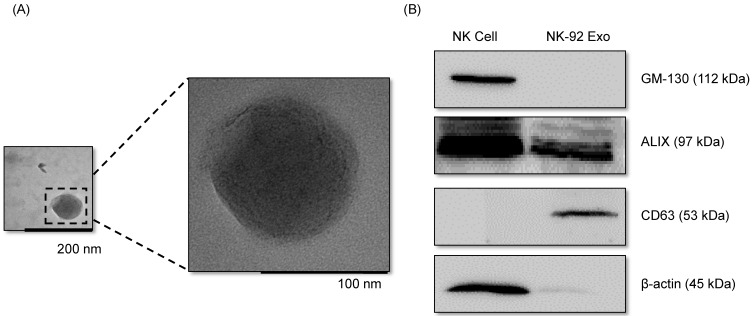
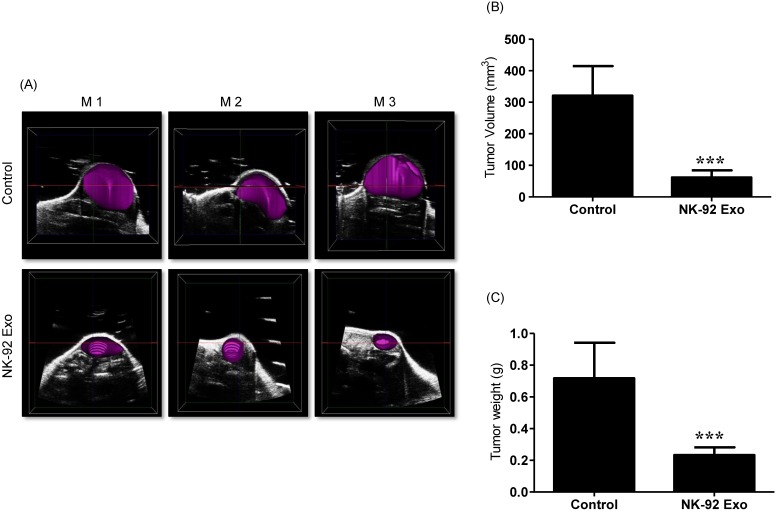
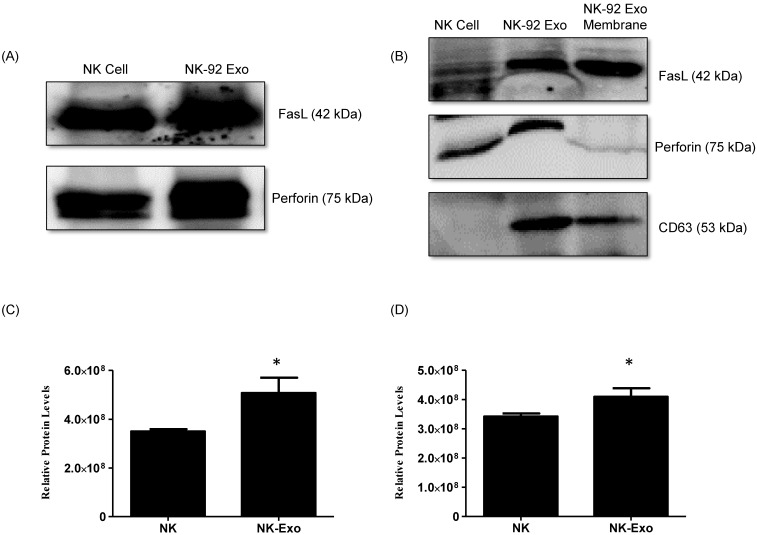
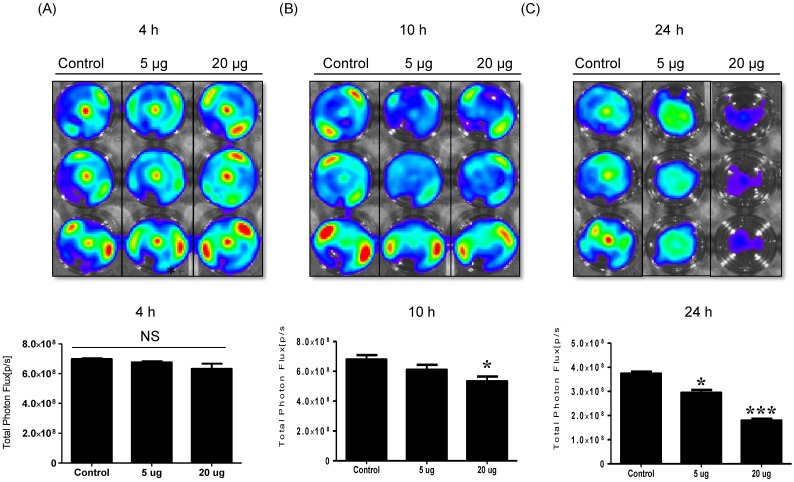
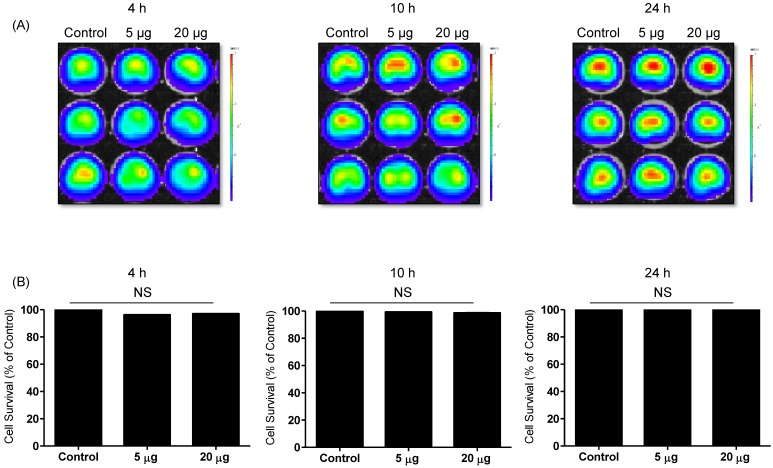
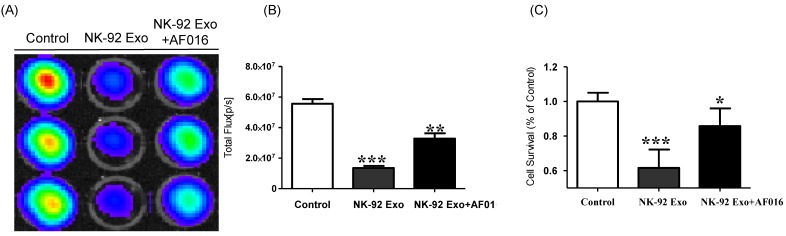
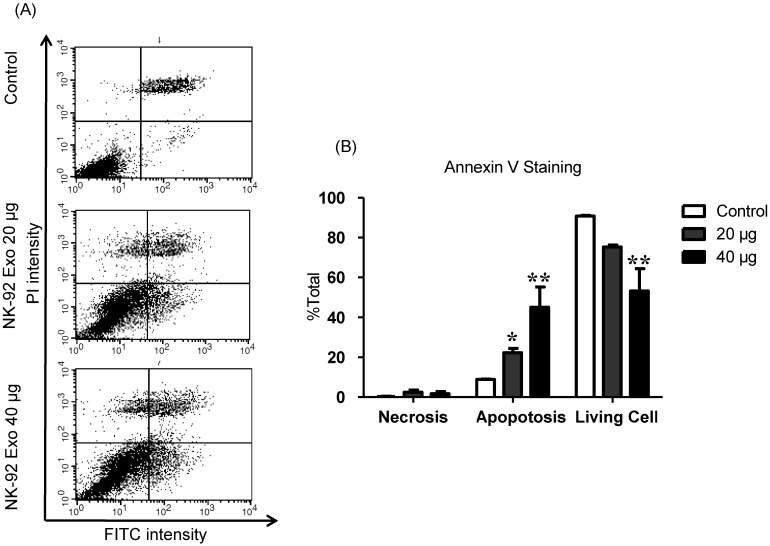
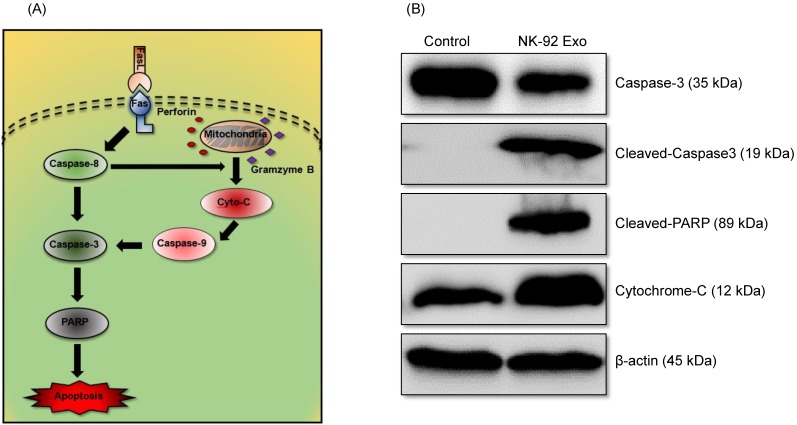
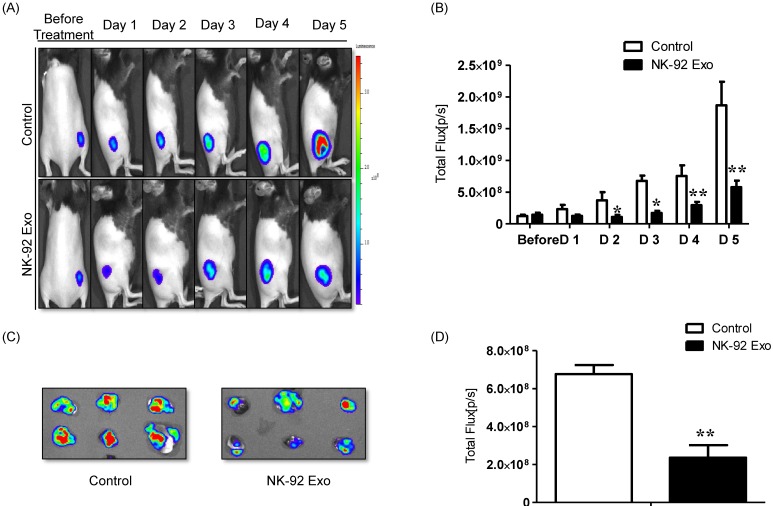
Exosomes are nanovesicles that are released from normal and tumor cells and are detectable in cell culture supernatant and human biological fluids. Although previous studies have explored exosomes released from cancer cells, little is understood regarding the functions of exosomes released by normal cells. Natural killer (NK) cells display rapid immunity to metastatic or hematological malignancies, and efforts have been undertaken to clinically exploit the antitumor properties of NK cells. However, the characteristics and functions of exosomes derived from NK cells remain unknown. In this study, we explored NK cell-derived exosome-mediated antitumor effects against aggressive melanoma and . B16F10 cells were transfected with enhanced firefly luciferase (effluc) and thy1.1 genes, and thy1.1-positive cells were immunoselected using microbeads. The resulting B16F10/effluc cells were characterized using reverse transcriptase polymerase chain reaction (RT-PCR), western blotting, and luciferase activity assays. Exosomes derived from NK-92MI cells (NK-92 Exo) were isolated by ultracentrifugation and density gradient ultracentrifugation. NK-92 Exo were characterized by transmission electron microscopy and western blotting. We also performed an enzyme-linked immunosorbent assay to measure cytokines retained in NK-92 Exo cells. The cytotoxicity of NK-92 Exo against the cancer cells was determined using a bioluminescence imaging system (BLI) and CCK-8 assays. To investigate the possible side effects of NK-92 Exo on healthy cells, we also performed the BLI and CCK-8 assays using the human kidney Phoenix™-Ampho cell line. Flow cytometry and western blotting confirmed that NK-92 Exo induced apoptosis in the B16F10/effluc cells. , we used a B16F10/effluc cell xenograft model to detect the immunotherapeutic effect of NK-92 Exo. We injected NK-92 Exo into tumors, and tumor growth progression was monitored using the IVIS Lumina imaging system and ultrasound imaging. Tumor mass was monitored after experiments. RT-PCR and western blotting confirmed effluc gene expression and protein levels in B16F10/effluc cells. B16F10/effluc activity was found to increase with increasing cell numbers, using BLI assay. For NK-92 Exo characterization, western blotting was performed on both ultracentrifuged and density gradient-isolated exosomes. The results confirmed that NK cell-derived exosomes express two typical exosome proteins, namely CD63 and ALIX. We demonstrated by western blot analysis that NK-92 Exo presented two functional NK proteins, namely perforin and FasL. Moreover, we confirmed the membrane expression of FasL. The enzyme-linked immunosorbent assay results indicated that NK-92 Exo can secrete tumor necrosis factor (TNF)-α, which affected the cell proliferation signaling pathway. The antitumor effect of NK-92 Exo against B16F10/effluc cells was confirmed by BLI ( < 0.001) and CCK-8 assays ( < 0.001). Furthermore, in normal healthy cells, even after 24 h of co-culture, NK-92 Exo did not exhibit significant side effects. In the experiments, tumors in the vehicle control group were significantly increased, compared with those in the NK-92 Exo-treated group ( < 0.05). The results of the current study suggest that exosomes derived from NK cells exert cytotoxic effects on melanoma cells and thus warrant further development as a potential immunotherapeutic strategy for cancer.
外泌体是从正常细胞和肿瘤细胞释放的纳米囊泡,可在细胞培养上清液和人体生物体液中检测到。尽管先前的研究已经探索了癌细胞释放的外泌体,但对于正常细胞释放的外泌体的功能了解甚少。自然杀伤(NK)细胞对转移性或血液系统恶性肿瘤具有快速免疫反应,并且人们已经努力在临床上利用NK细胞的抗肿瘤特性。然而,源自NK细胞的外泌体的特征和功能仍然未知。在本研究中,我们探索了NK细胞衍生的外泌体对侵袭性黑色素瘤的抗肿瘤作用。将B16F10细胞用增强型萤火虫荧光素酶(effluc)和thy1.1基因转染,并用微珠免疫选择thy1.1阳性细胞。使用逆转录聚合酶链反应(RT-PCR)、蛋白质印迹和荧光素酶活性测定对所得的B16F10/effluc细胞进行表征。通过超速离心和密度梯度超速离心分离源自NK-92MI细胞的外泌体(NK-92 Exo)。通过透射电子显微镜和蛋白质印迹对NK-92 Exo进行表征。我们还进行了酶联免疫吸附测定以测量保留在NK-92 Exo细胞中的细胞因子。使用生物发光成像系统(BLI)和CCK-8测定法测定NK-92 Exo对癌细胞的细胞毒性。为了研究NK-92 Exo对健康细胞可能的副作用,我们还使用人肾Phoenix™-Ampho细胞系进行了BLI和CCK-8测定。流式细胞术和蛋白质印迹证实NK-92 Exo诱导B16F10/effluc细胞凋亡。我们使用B16F10/effluc细胞异种移植模型检测NK-92 Exo的免疫治疗效果。我们将NK-92 Exo注射到肿瘤中,并使用IVIS Lumina成像系统和超声成像监测肿瘤生长进展。在实验后监测肿瘤块。RT-PCR和蛋白质印迹证实了B16F10/effluc细胞中effluc基因表达和蛋白质水平。使用BLI测定法发现B16F10/effluc活性随着细胞数量的增加而增加。对于NK-92 Exo表征,对超速离心和密度梯度分离的外泌体都进行了蛋白质印迹。结果证实,NK细胞衍生的外泌体表达两种典型的外泌体蛋白,即CD63和ALIX。我们通过蛋白质印迹分析证明NK-92 Exo呈现两种功能性NK蛋白,即穿孔素和FasL。此外,我们证实了FasL的膜表达。酶联免疫吸附测定结果表明NK-92 Exo可以分泌肿瘤坏死因子(TNF)-α,其影响细胞增殖信号通路。BLI(P<0.001)和CCK-8测定法(P<0.001)证实了NK-92 Exo对B16F10/effluc细胞的抗肿瘤作用。此外,在正常健康细胞中,即使共培养24小时后,NK-92 Exo也未表现出明显的副作用。在实验中,与NK-92 Exo处理组相比,载体对照组中的肿瘤明显增大(P<0.05)。本研究结果表明,源自NK细胞的外泌体对黑色素瘤细胞具有细胞毒性作用,因此作为一种潜在的癌症免疫治疗策略值得进一步开发。