Department of Physical Medicine and Rehabilitation, The 2nd Affiliated Hospital and Yuying Children's Hospital of Wenzhou Medical University, Wenzhou, Zhejiang, China (mainland).
Med Sci Monit. 2017 Aug 19;23:4004-4013. doi: 10.12659/msm.902770.
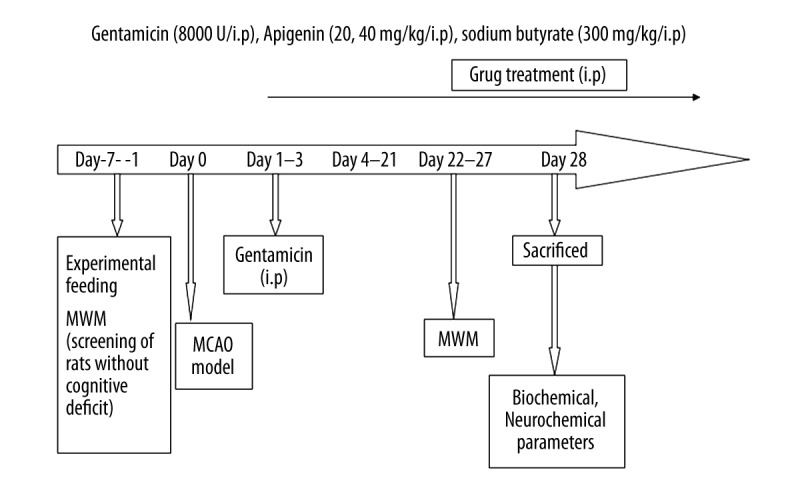
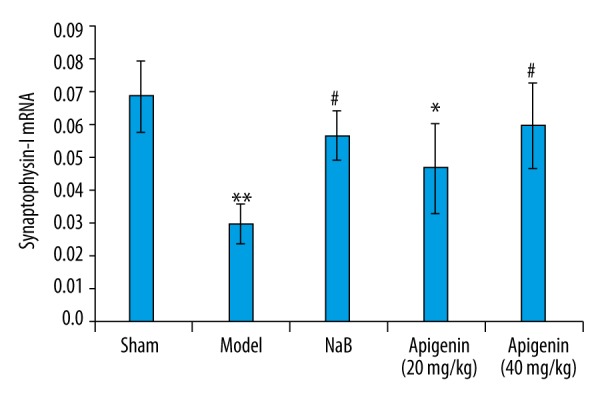
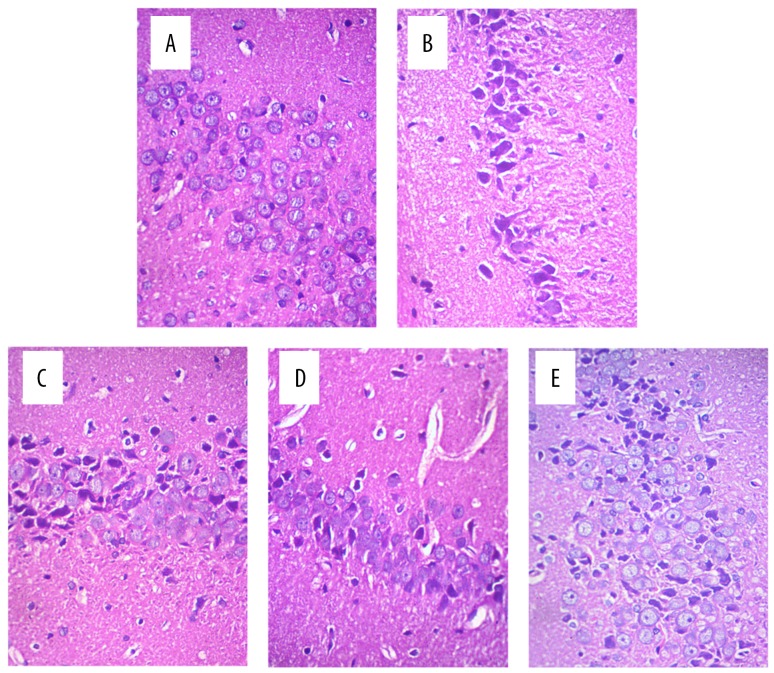
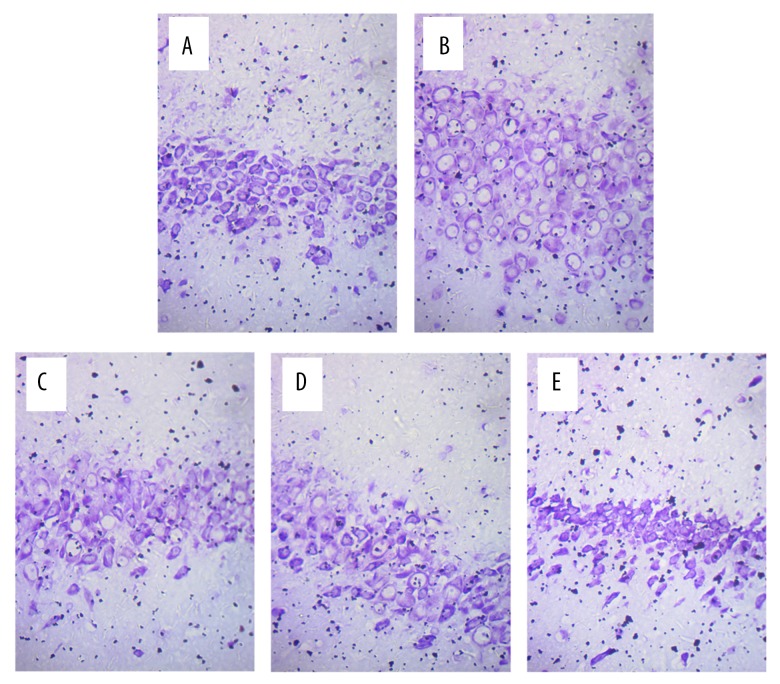
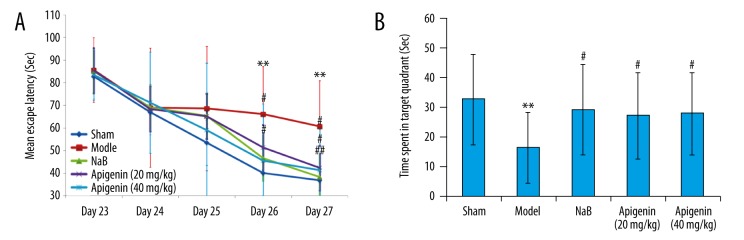
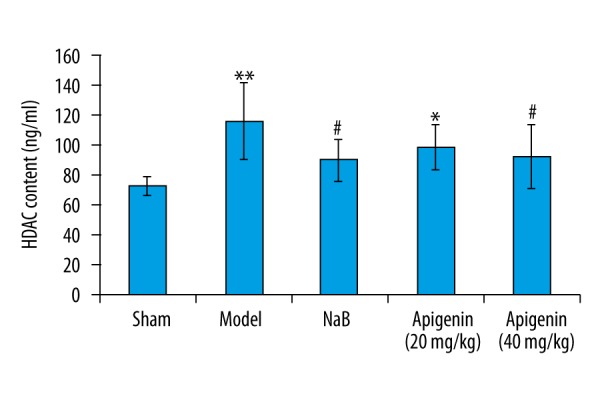
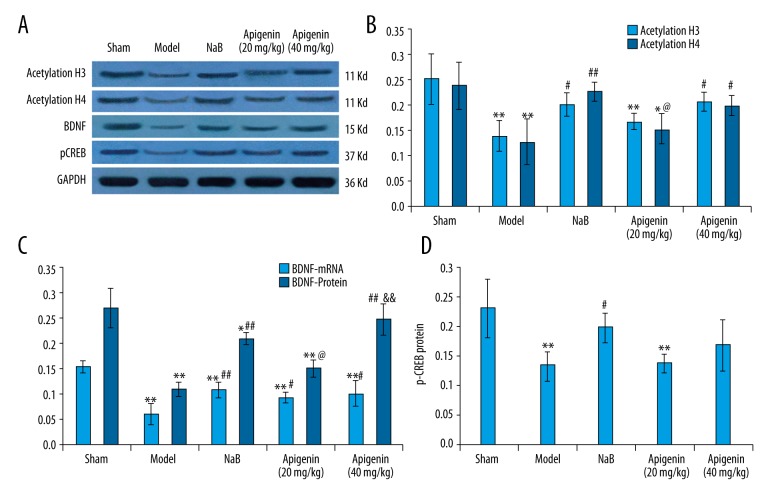
BACKGROUND To identify the effect of apigenin on cognitive deficits of rats after cerebral ischemia and reperfusion injury, and to investigate the potential molecular mechanisms. MATERIAL AND METHODS The rats were given sodium butyrate (NaB) or apigenin (20 or 40 mg/kg) for 28 days. Cognition was investigated by the Morris water maze (MWM) test. On day 28, the rats were euthanized and their hippocampal brain regions were used to identify biochemical and neurochemical alterations. The content of histone deacetylase (HDAC) was measured by enzyme-linked immunosorbent assay (ELISA). Western blot analysis was performed to determine the levels of BDNF, phosphorylated cAMP response element-binding protein (pCREB), acetylated H3, and acetylated H4. The mRNA expressions of brain-derived neurotrophic factor (BDNF) and synapsin-I (Syn-I) were examined by polymerase chain reaction (PCR). RESULTS The rats with chronic administration of apigenin (20 and 40 mg/kg) showed better performance in the MWM task than the model rats; there was no significant difference between the apigenin-treated and NaB-treated rats. At the higher apigenin dose of 40 mg/kg, the HDAC content was decreased, the BDNF level was markedly increased, and acetylated H3 and acetylated H4 expressions and Syn-I expressions in the hippocampus was upregulated compared with the model group. Apigenin at 20 mg/kg did not show reversal of the neurochemical alterations. CONCLUSIONS The improvement effect of apigenin on cognitive impairments after cerebral ischemia and reperfusion injury may involve multiple mechanisms, such as the inhibition of HDAC, induction of BDNF and Syn-I expression, and regulation of histone acetylation.
为了确定芹菜素对脑缺血再灌注损伤后大鼠认知功能障碍的影响,并探讨其潜在的分子机制。
将大鼠给予丁酸钠(NaB)或芹菜素(20 或 40mg/kg)28 天。通过 Morris 水迷宫(MWM)测试评估认知能力。第 28 天,处死大鼠,取海马脑区鉴定生化和神经化学变化。酶联免疫吸附试验(ELISA)测定组蛋白去乙酰化酶(HDAC)含量。Western blot 分析测定脑源性神经营养因子(BDNF)、磷酸化 cAMP 反应元件结合蛋白(pCREB)、乙酰化 H3 和乙酰化 H4 的水平。聚合酶链反应(PCR)检测脑源性神经营养因子(BDNF)和突触素-I(Syn-I)的 mRNA 表达。
慢性给予芹菜素(20 和 40mg/kg)的大鼠在 MWM 任务中的表现优于模型大鼠;芹菜素治疗组和 NaB 治疗组之间无显著差异。在较高剂量的芹菜素(40mg/kg)下,HDAC 含量降低,BDNF 水平显著增加,海马乙酰化 H3 和乙酰化 H4 表达以及 Syn-I 表达上调,与模型组相比。20mg/kg 的芹菜素没有逆转神经化学变化。
芹菜素改善脑缺血再灌注损伤后认知障碍的作用可能涉及多种机制,如抑制 HDAC、诱导 BDNF 和 Syn-I 表达以及调节组蛋白乙酰化。