Chang Kwang-Yu, Hsu Tsung-I, Hsu Che-Chia, Tsai Shan-Yin, Liu Jr-Jiun, Chou Shao-Wen, Liu Ming-Sheng, Liou Jing-Ping, Ko Chiung-Yuan, Chen Kai-Yun, Hung Jan-Jong, Chang Wen-Chang, Chuang Cheng-Keng, Kao Tzu-Jen, Chuang Jian-Ying
National Institute of Cancer Research, National Health Research Institutes, Taiwan; Department of Internal Medicine, National Cheng Kung University Hospital, Taiwan.
Center for Neurotrauma and Neuroregeneration, Taipei Medical University, Taiwan.
Redox Biol. 2017 Oct;13:655-664. doi: 10.1016/j.redox.2017.08.005. Epub 2017 Aug 12.
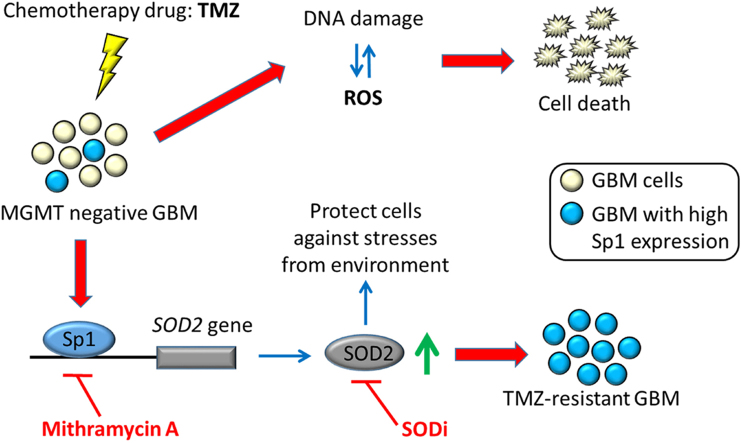
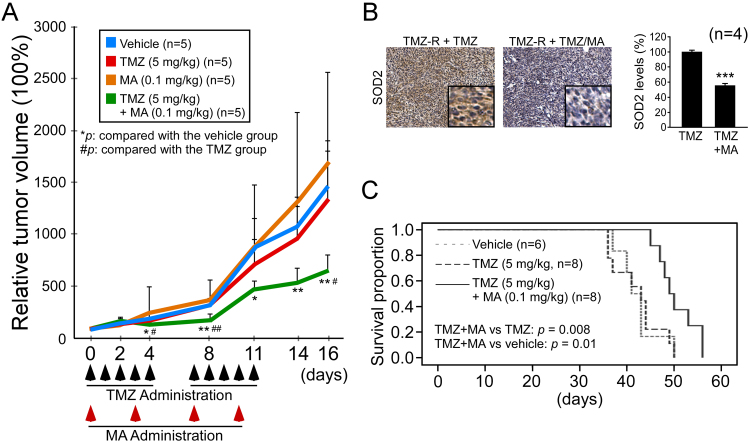
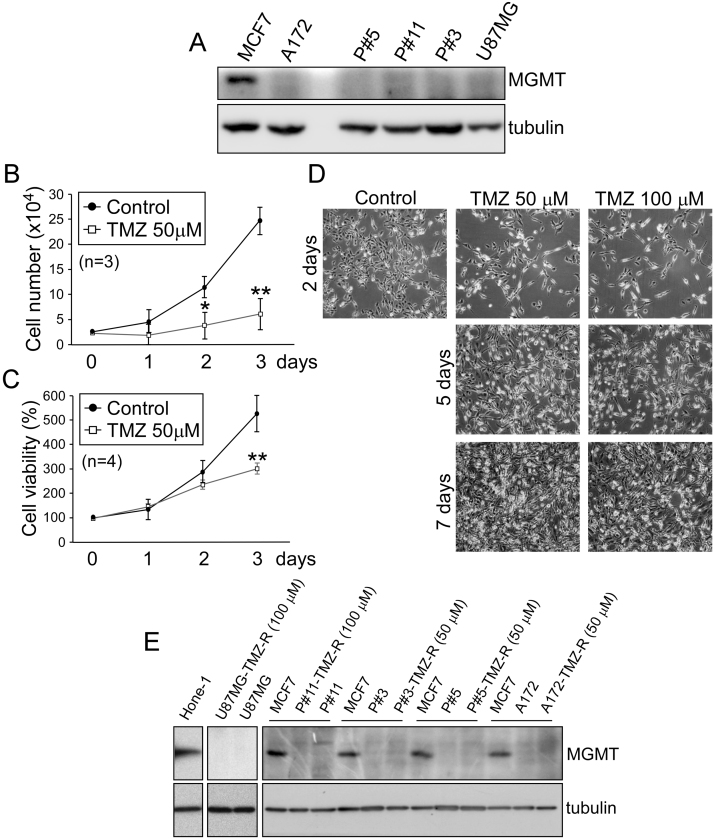
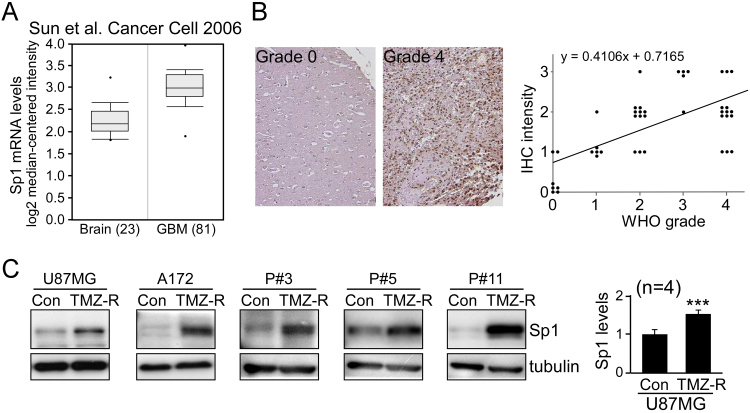
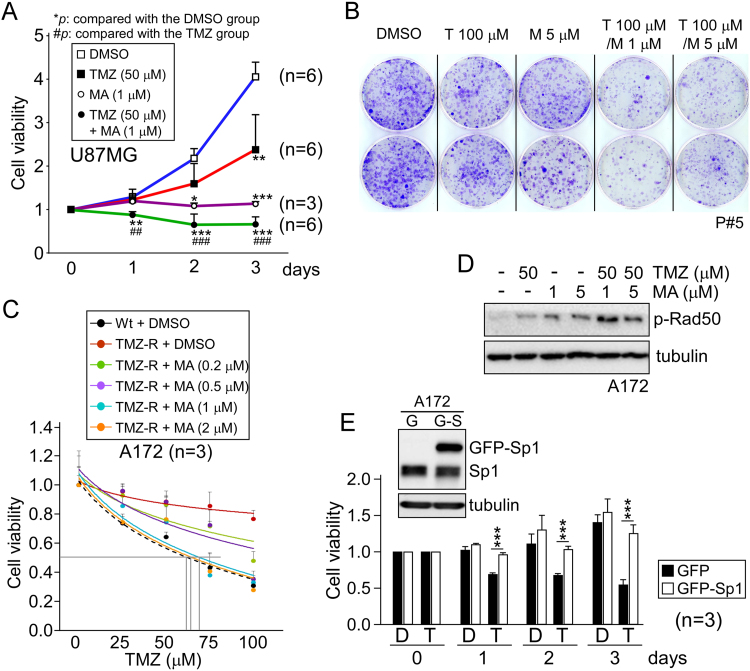
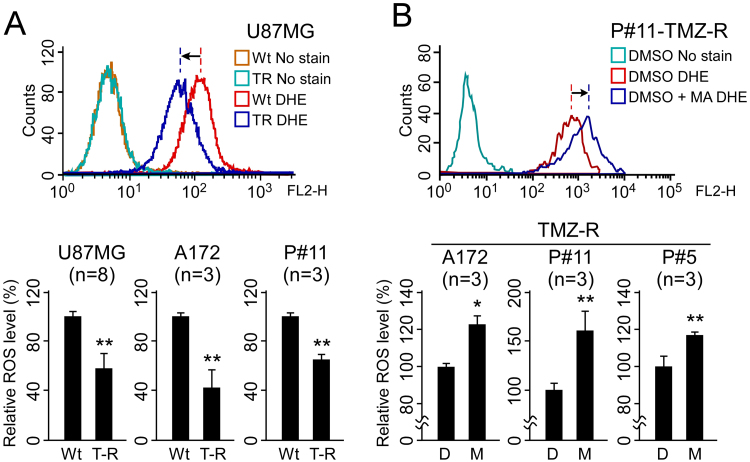
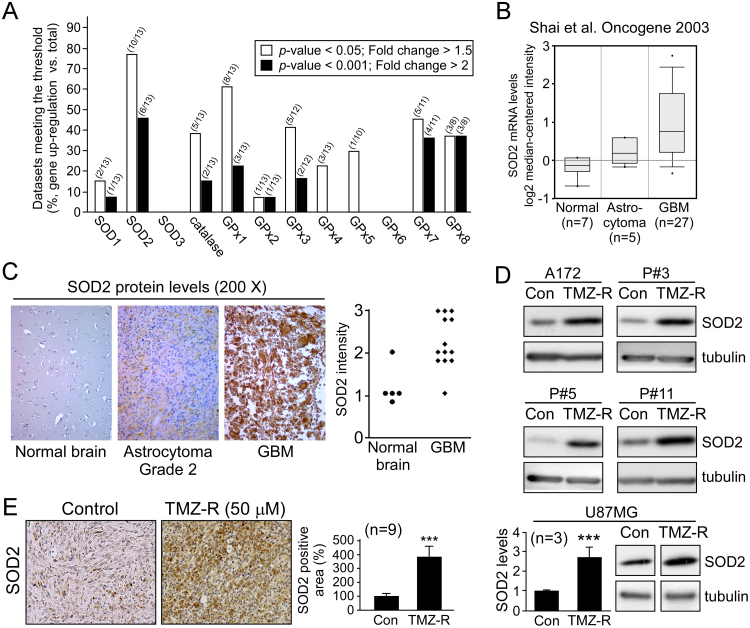
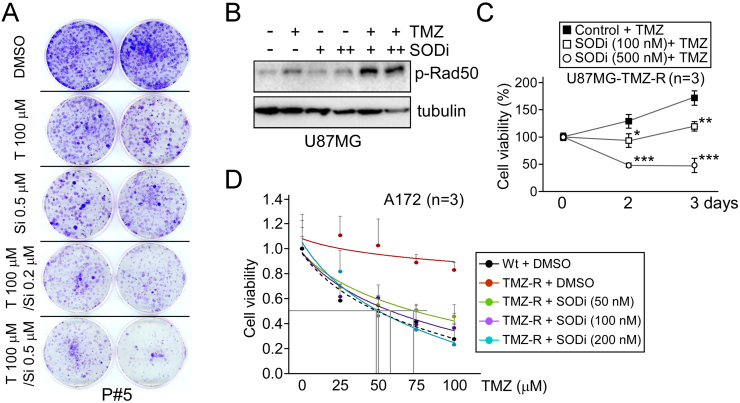
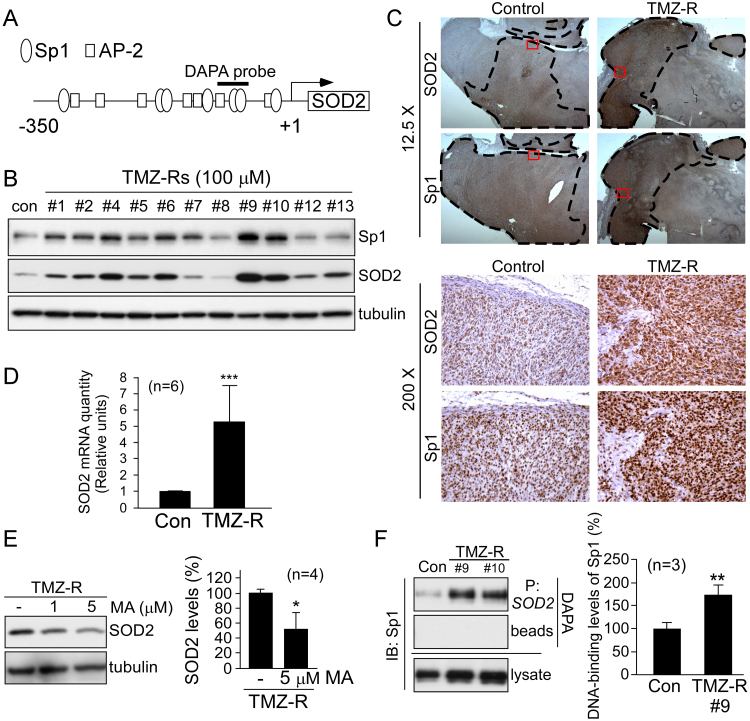
Acquisition of temozolomide (TMZ) resistance is a major factor leading to the failure of glioblastoma (GBM) treatment. The exact mechanism by which GBM evades TMZ toxicity is not always related to the expression of the DNA repair enzyme O-methylguanine-DNA methyltransferase (MGMT), and so remains unclear. In this study, TMZ-resistant variants derived from MGMT-negative GBM clinical samples and cell lines were studied, revealing there to be increased specificity protein 1 (Sp1) expression associated with reduced reactive oxygen species (ROS) accumulation following TMZ treatment. Analysis of gene expression databases along with cell studies identified the ROS scavenger superoxide dismutase 2 (SOD2) as being disease-related. SOD2 expression was also increased, and it was found to be co-expressed with Sp1 in TMZ-resistant cells. Investigation of the SOD2 promoter revealed Sp1 as a critical transcriptional activator that enhances SOD2 gene expression. Co-treatment with an Sp1 inhibitor restored the inhibitory effects of TMZ, and decreased SOD2 levels in TMZ-resistant cells. This treatment strategy restored susceptibility to TMZ in xenograft animals, leading to prolonged survival in an orthotopic model. Thus, our results suggest that Sp1 modulates ROS scavengers as a novel mechanism to increase cancer malignancy and resistance to chemotherapy. Inhibition of this pathway may represent a potential therapeutic target for restoring treatment susceptibility in GBM.
获得替莫唑胺(TMZ)耐药性是导致胶质母细胞瘤(GBM)治疗失败的主要因素。GBM逃避TMZ毒性的确切机制并不总是与DNA修复酶O-甲基鸟嘌呤-DNA甲基转移酶(MGMT)的表达相关,因此仍不清楚。在本研究中,对源自MGMT阴性GBM临床样本和细胞系的TMZ耐药变体进行了研究,结果显示,在TMZ处理后,特异性蛋白1(Sp1)表达增加,同时活性氧(ROS)积累减少。对基因表达数据库的分析以及细胞研究确定ROS清除剂超氧化物歧化酶2(SOD2)与该疾病相关。SOD2表达也增加,并且发现在TMZ耐药细胞中与Sp1共表达。对SOD2启动子的研究表明,Sp1是增强SOD2基因表达的关键转录激活因子。用Sp1抑制剂联合处理可恢复TMZ的抑制作用,并降低TMZ耐药细胞中的SOD2水平。这种治疗策略恢复了异种移植动物对TMZ的敏感性,从而延长了原位模型中的生存期。因此,我们的结果表明,Sp1作为一种新机制调节ROS清除剂,以增加癌症的恶性程度和对化疗的耐药性。抑制该途径可能是恢复GBM治疗敏感性的潜在治疗靶点。