Wang Lu, Norris Emily T, Jordan I K
School of Biological Sciences, Georgia Institute of Technology, AtlantaGA, United States.
PanAmerican Bioinformatics InstituteCali, Colombia.
Front Microbiol. 2017 Aug 2;8:1418. doi: 10.3389/fmicb.2017.01418. eCollection 2017.
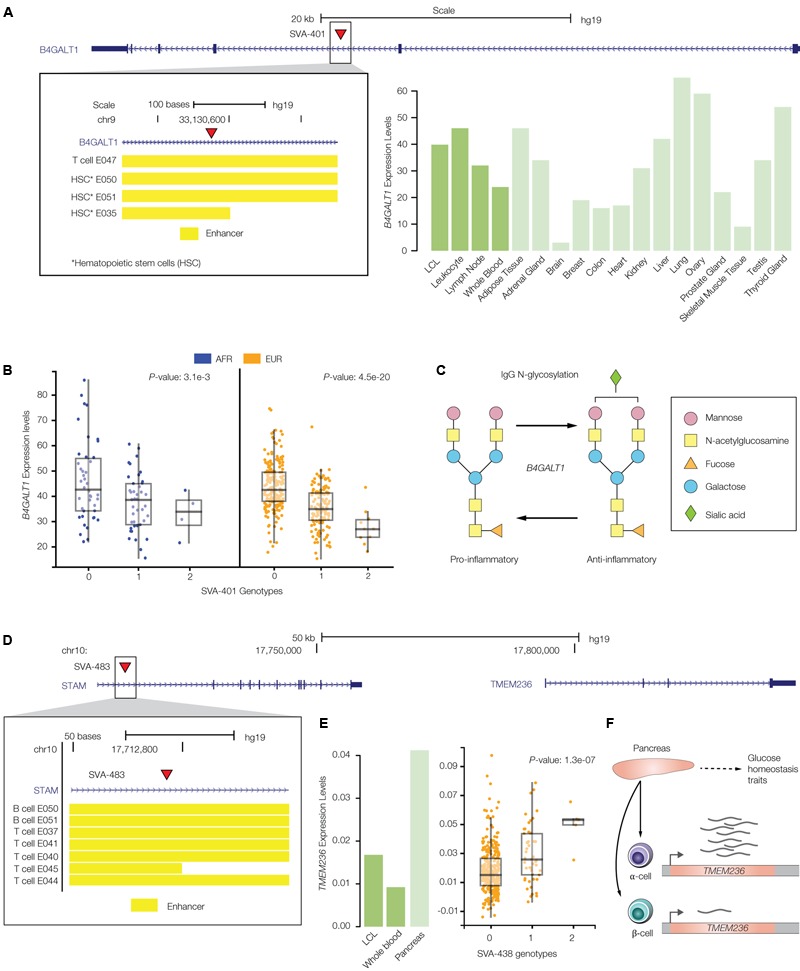
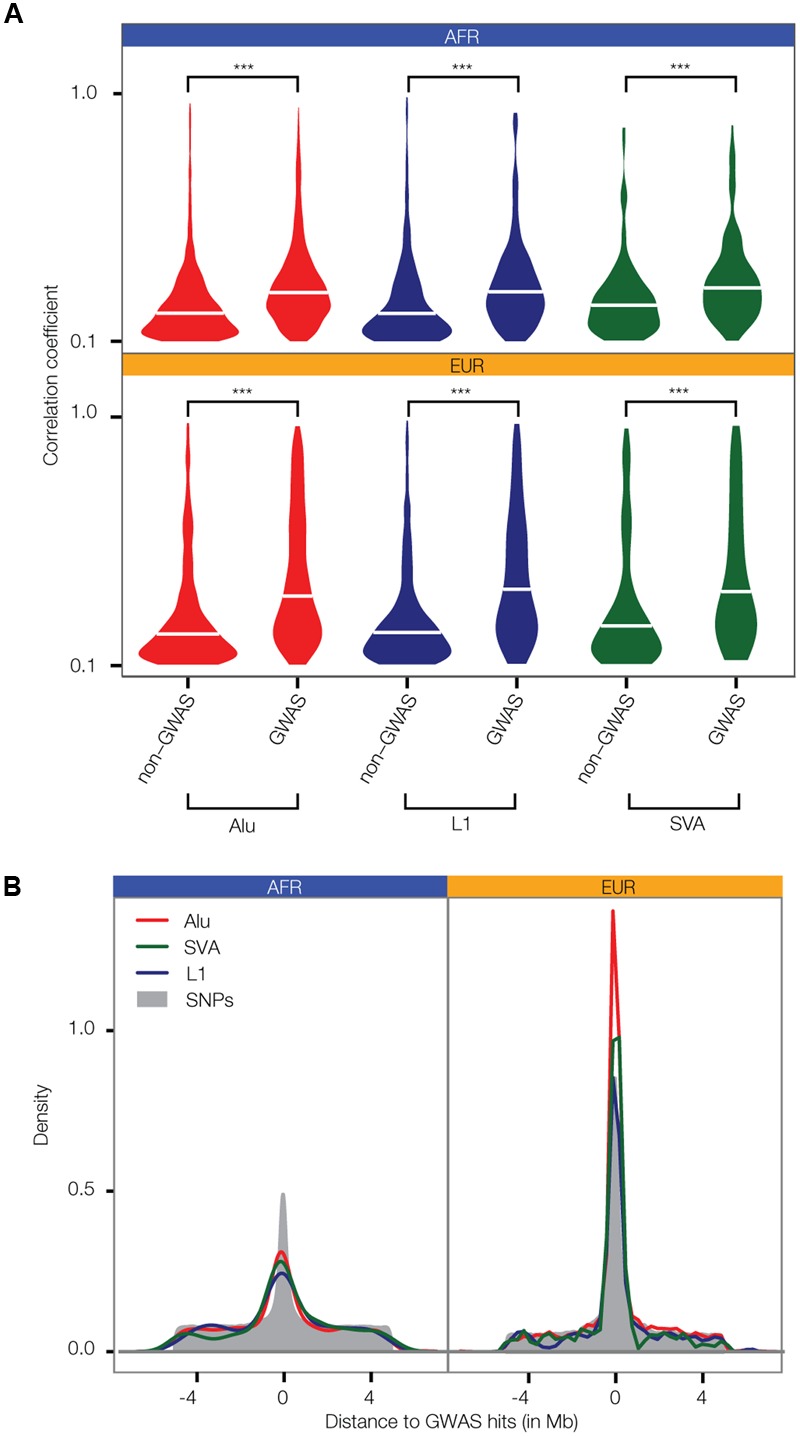
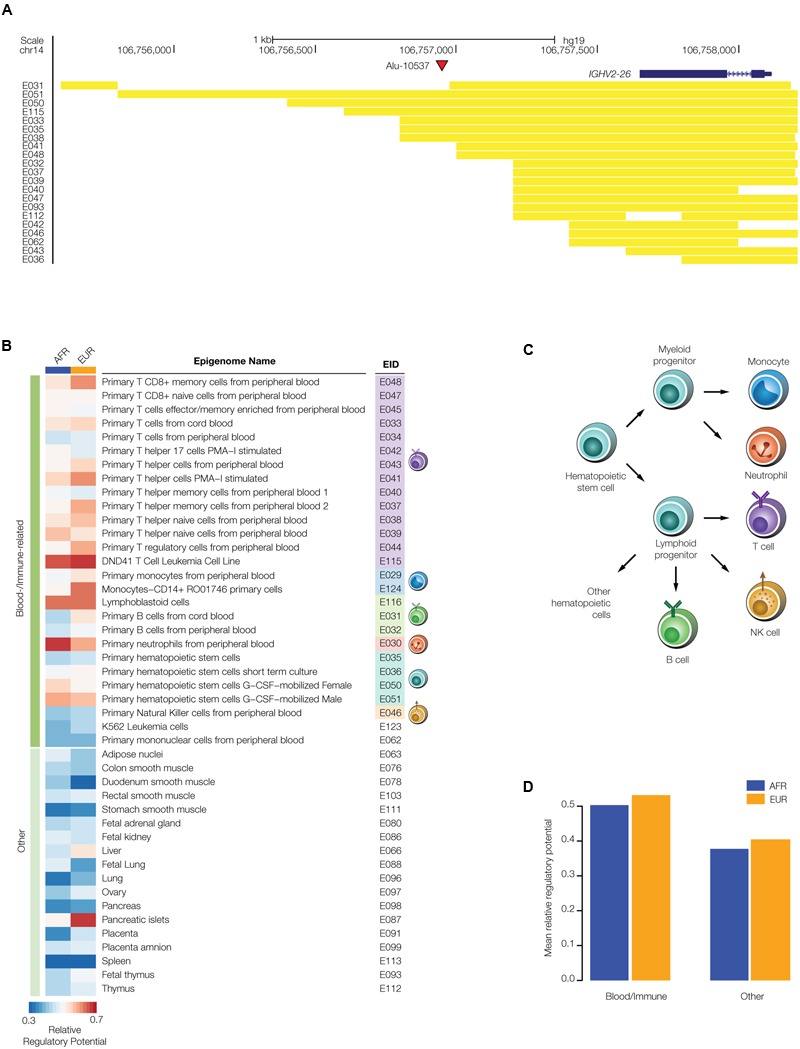
The human genome hosts several active families of transposable elements (TEs), including the Alu, LINE-1, and SVA retrotransposons that are mobilized via reverse transcription of RNA intermediates. We evaluated how insertion polymorphisms generated by human retrotransposon activity may be related to common health and disease phenotypes that have been previously interrogated through genome-wide association studies (GWAS). To address this question, we performed a genome-wide screen for retrotransposon polymorphism disease associations that are linked to TE induced gene regulatory changes. Our screen first identified polymorphic retrotransposon insertions found in linkage disequilibrium (LD) with single nucleotide polymorphisms that were previously associated with common complex diseases by GWAS. We further narrowed this set of candidate disease associated retrotransposon polymorphisms by identifying insertions that are located within tissue-specific enhancer elements. We then performed expression quantitative trait loci analysis on the remaining set of candidates in order to identify polymorphic retrotransposon insertions that are associated with gene expression changes in B-cells of the human immune system. This progressive and stringent screen yielded a list of six retrotransposon insertions as the strongest candidates for TE polymorphisms that lead to disease via enhancer-mediated changes in gene regulation. For example, we found an SVA insertion within a cell-type specific enhancer located in the second intron of the gene. encodes a glycosyltransferase that functions in the glycosylation of the Immunoglobulin G (IgG) antibody in such a way as to convert its activity from pro- to anti-inflammatory. The disruption of the enhancer by the SVA insertion is associated with down-regulation of the gene in B-cells, which would serve to keep the IgG molecule in a pro-inflammatory state. Consistent with this idea, the enhancer SVA insertion is linked to a genomic region implicated by GWAS in both inflammatory conditions and autoimmune diseases, such as systemic lupus erythematosus and Crohn's disease. We explore this example and the other cases uncovered by our genome-wide screen in an effort to illuminate how retrotransposon insertion polymorphisms can impact human health and disease by causing changes in gene expression.
人类基因组中存在几个活跃的转座元件(TE)家族,包括通过RNA中间体逆转录而被激活的Alu、LINE-1和SVA逆转录转座子。我们评估了人类逆转录转座子活性产生的插入多态性如何与先前通过全基因组关联研究(GWAS)研究过的常见健康和疾病表型相关。为了解决这个问题,我们进行了全基因组筛选,以寻找与TE诱导的基因调控变化相关的逆转录转座子多态性疾病关联。我们的筛选首先确定了与单核苷酸多态性处于连锁不平衡(LD)状态的多态性逆转录转座子插入,这些单核苷酸多态性先前已通过GWAS与常见复杂疾病相关联。通过识别位于组织特异性增强子元件内的插入,我们进一步缩小了这组候选疾病相关逆转录转座子多态性的范围。然后,我们对其余的候选基因进行了表达定量性状位点分析,以识别与人类免疫系统B细胞中基因表达变化相关的多态性逆转录转座子插入。这个逐步且严格的筛选产生了一份包含六个逆转录转座子插入的列表,作为通过增强子介导的基因调控变化导致疾病发生的TE多态性的最强候选者。例如,我们在位于 基因第二个内含子中的细胞类型特异性增强子内发现了一个SVA插入。 编码一种糖基转移酶,该酶在免疫球蛋白G(IgG)抗体的糖基化过程中发挥作用,从而将其活性从促炎转变为抗炎。SVA插入对 增强子的破坏与B细胞中该基因的下调相关,这将使IgG分子保持在促炎状态。与这一观点一致, 增强子SVA插入与GWAS在炎症性疾病和自身免疫性疾病(如系统性红斑狼疮和克罗恩病)中涉及的基因组区域相关联。我们探讨了这个例子以及我们全基因组筛选中发现的其他案例,以阐明逆转录转座子插入多态性如何通过引起基因表达变化来影响人类健康和疾病。