Zheng Yingxia, Ge Wensong, Ma Yanhui, Xie Guohua, Wang Weiwei, Han Li, Bian Bingxian, Li Li, Shen Lisong
Department of Laboratory Medicine, Xin Hua Hospital, Shanghai Jiao Tong University School of Medicine, Shanghai, China.
Institute of Biliary Tract Diseases Research, Shanghai Jiao Tong University School of Medicine, Shanghai, China.
Front Immunol. 2017 Aug 3;8:914. doi: 10.3389/fimmu.2017.00914. eCollection 2017.
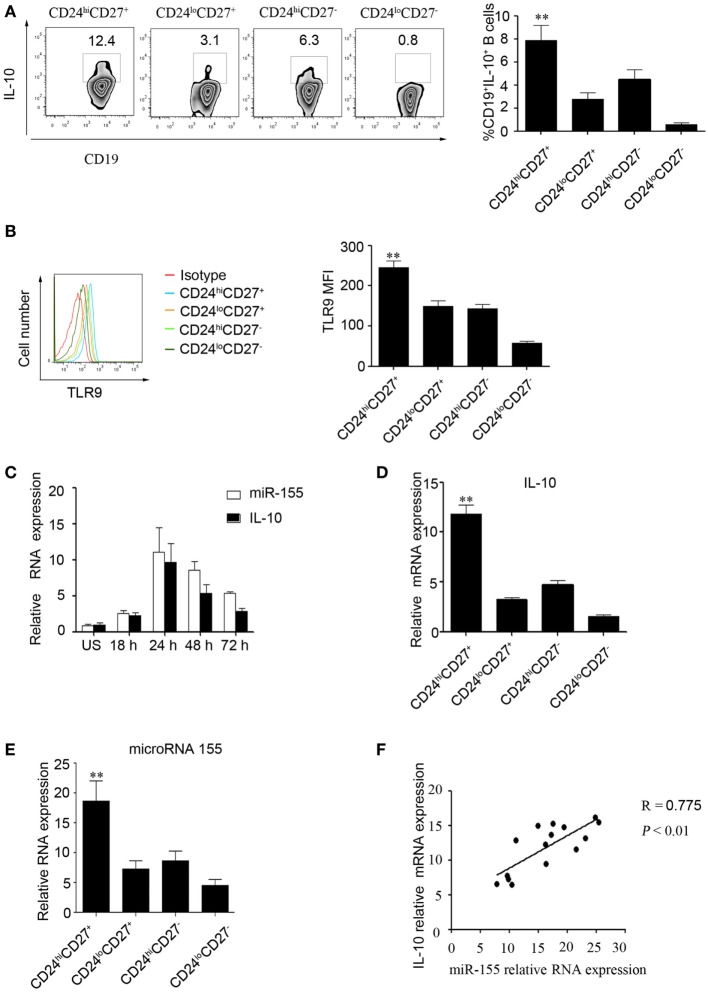
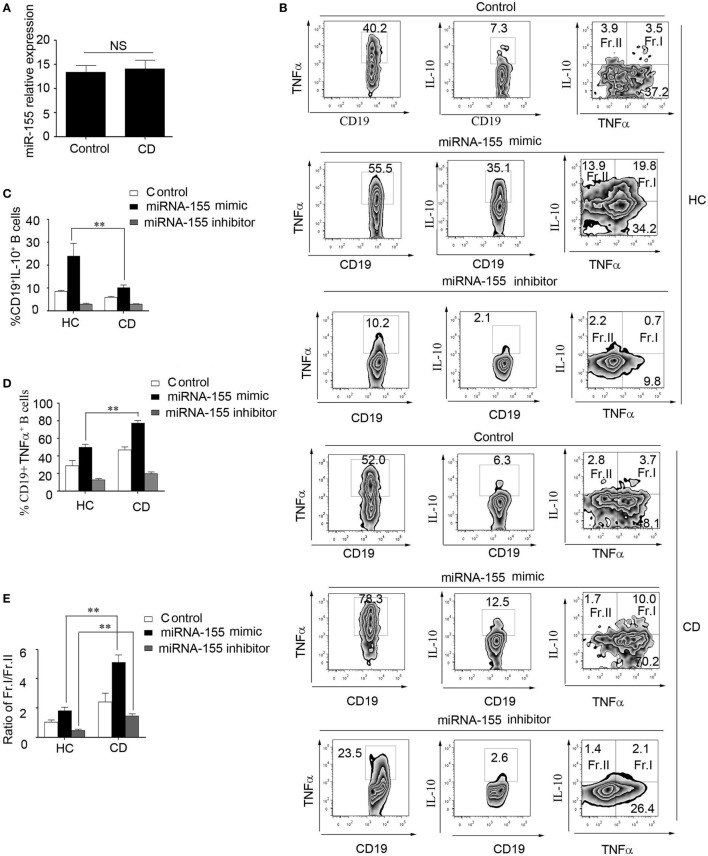
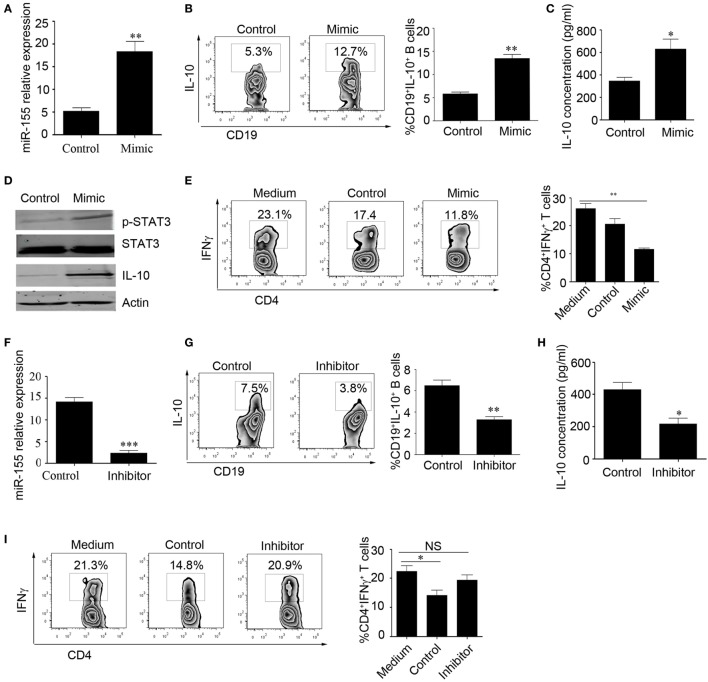
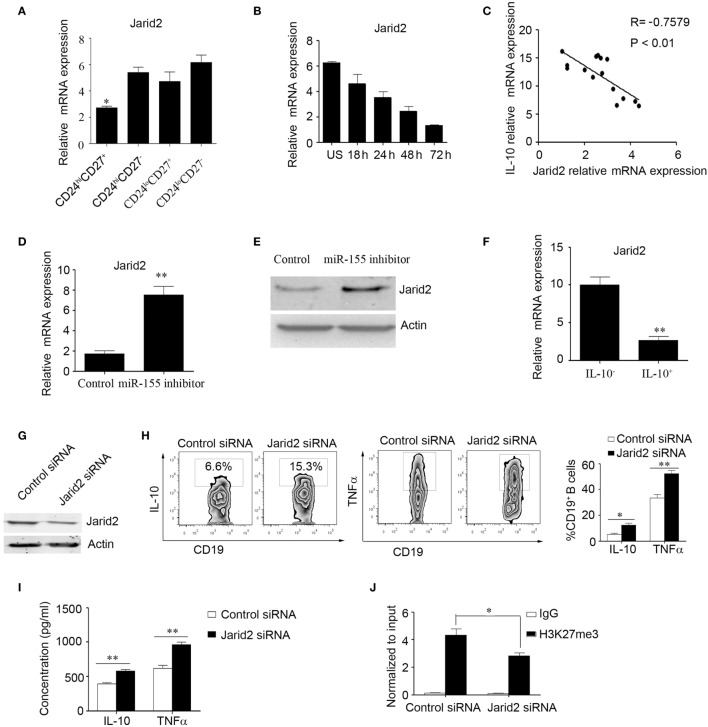
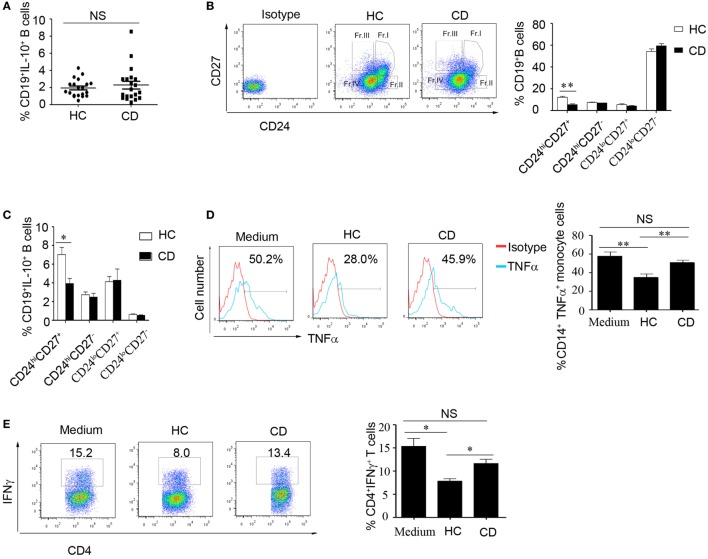
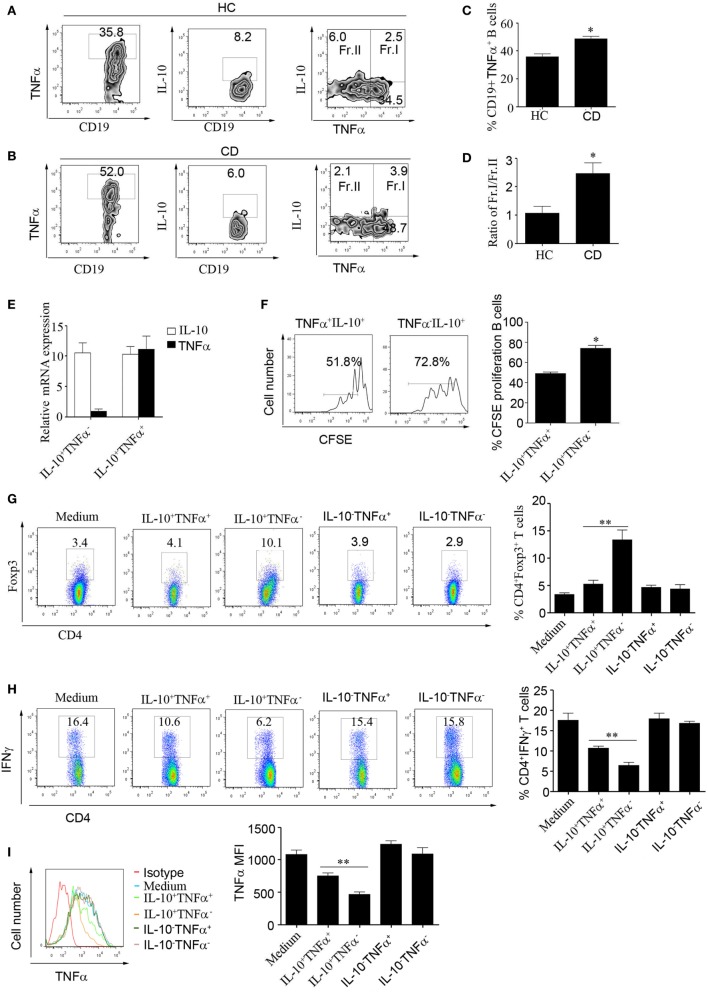
Regulatory interleukin-10 (IL-10)-producing B cells (B10 cells) play a critical role in preventing and curing autoimmune diseases in experimental mouse models. However, the precise cellular and molecular mechanisms of action of B10 cells in humans, especially in patients with Crohn's disease (CD), remain to be determined. miR-155 regulates many physiological and pathological conditions, including inflammation such as that in CD. In this study, we aimed to explore the effect of miRNA-155 on IL-10 production by B cells in healthy controls (HCs) and CD patients. Interestingly, we found that CD24CD27 B cells express high levels of miRNA-155 and IL-10, which are positively correlated. Additionally, CD24CD27 B cells express higher levels of Toll-like receptor 9 than those found in other B cell subsets. Overexpression of miRNA-155 promotes IL-10 production, while inhibition of miRNA-155 decreases IL-10 production. We determined that miR-155 directly inhibits the expression of Jarid2, which reduces H3K27me3 binding to the promoter and increases gene expression. In coculture systems, the CD24CD27 B cells from HCs suppressed the secretion of TNFα and IFNγ by monocytes and T cells, respectively. However, the number and function of CD24CD27 B cells from CD patients were decreased. Moreover, we found that miR-155 induces CD24CD27 B cells to produce higher levels of TNFα instead of IL-10 in CD patients than in the controls and that the increased number of IL-10TNFα B cells reduces the induction of Foxp3 expression and the inhibition of IFNγ production by CD4CD25 T cells, as well as TNFα production by monocytes. Our study demonstrates the critical role of miRNA-155 in the regulation of IL-10 production by B cells and reveals the novel molecular mechanism underlying the functional impairment of B10 cells in CD patients. Our study has the potential to drive the development of B10 cell-based strategies to ameliorate disease progression in CD patients.
调节性白细胞介素10(IL-10)产生性B细胞(B10细胞)在实验小鼠模型中预防和治疗自身免疫性疾病方面发挥着关键作用。然而,B10细胞在人类尤其是克罗恩病(CD)患者体内的确切细胞和分子作用机制仍有待确定。miR-155调节许多生理和病理状况,包括CD中的炎症。在本研究中,我们旨在探究miRNA-155对健康对照(HC)和CD患者B细胞产生IL-10的影响。有趣的是,我们发现CD24CD27 B细胞表达高水平的miRNA-155和IL-10,且二者呈正相关。此外,CD24CD27 B细胞表达的Toll样受体9水平高于其他B细胞亚群。miRNA-155的过表达促进IL-10产生,而抑制miRNA-155则降低IL-10产生。我们确定miR-155直接抑制Jarid2的表达,这会减少H3K27me3与启动子的结合并增加基因表达。在共培养系统中,HC的CD24CD27 B细胞分别抑制单核细胞和T细胞分泌TNFα和IFNγ。然而,CD患者的CD24CD27 B细胞数量和功能有所下降。此外,我们发现与对照组相比,miR-155在CD患者中诱导CD24CD27 B细胞产生更高水平的TNFα而非IL-10,且IL-10+TNFα双阳性B细胞数量增加会降低CD4+CD25 T细胞对Foxp3表达的诱导以及对IFNγ产生的抑制,同时也会降低单核细胞产生TNFα的水平。我们的研究证明了miRNA-155在调节B细胞产生IL-10中的关键作用,并揭示了CD患者中B10细胞功能受损的新分子机制。我们的研究有潜力推动基于B10细胞的策略发展,以改善CD患者的疾病进展。