Pandey Radha Raman, Homolka David, Chen Kuan-Ming, Sachidanandam Ravi, Fauvarque Marie-Odile, Pillai Ramesh S
Department of Molecular Biology, University of Geneva, Geneva, Switzerland.
Department of Oncological Sciences, Icahn School of Medicine at Sinai, New York, New York, United States of America.
PLoS Genet. 2017 Aug 21;13(8):e1006956. doi: 10.1371/journal.pgen.1006956. eCollection 2017 Aug.
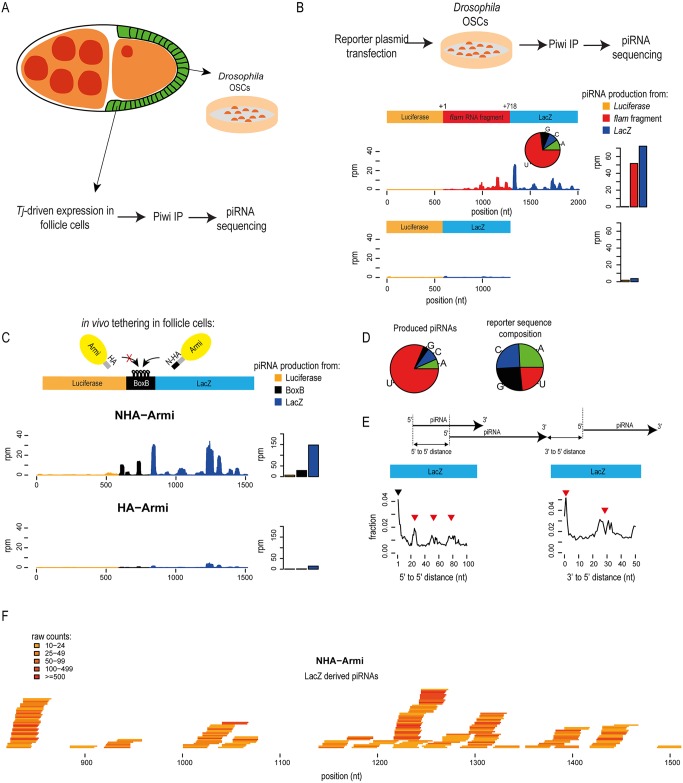
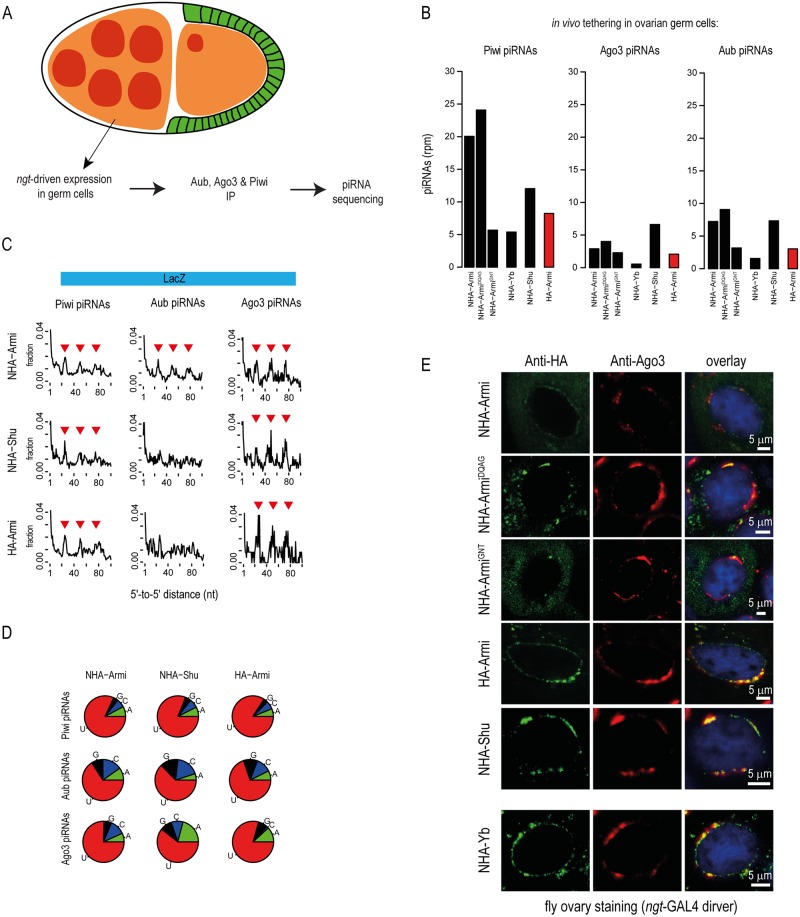
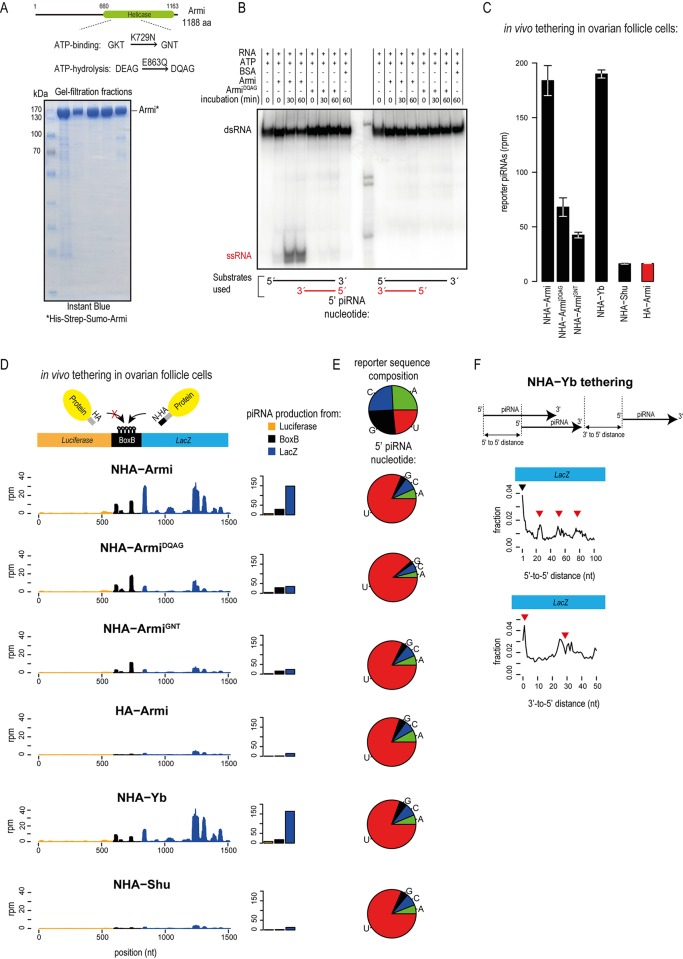
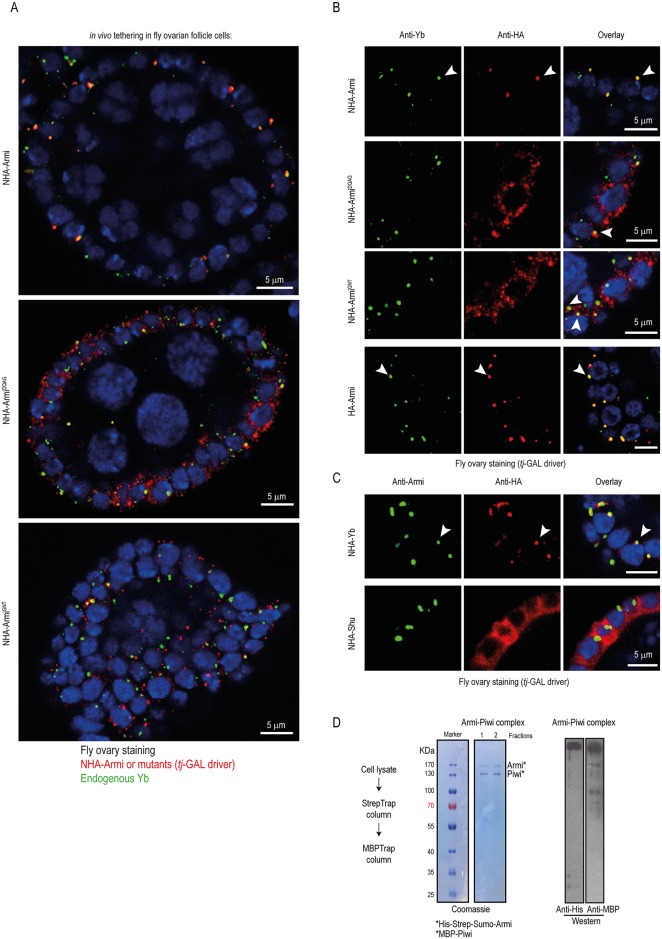
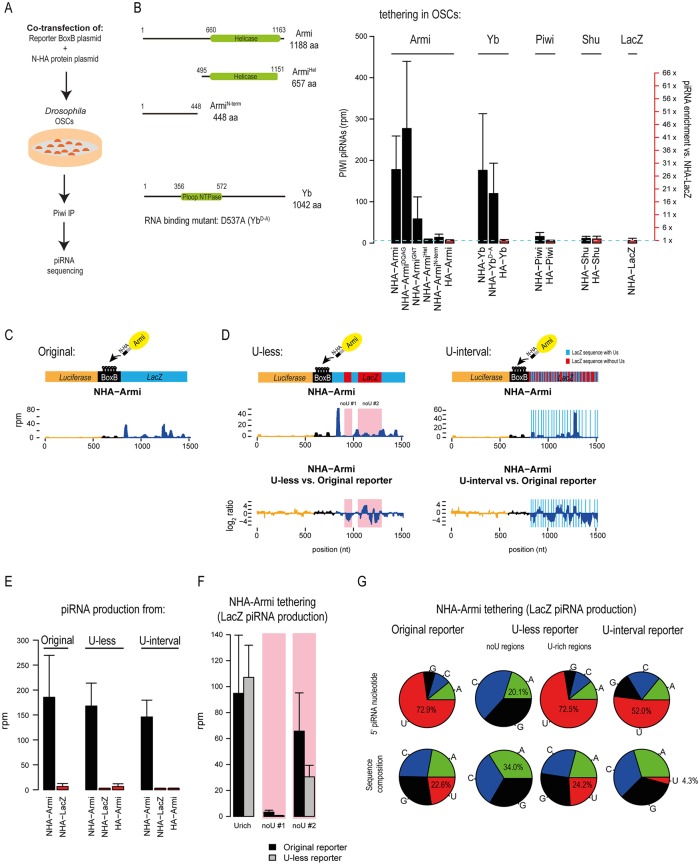
Small RNAs called PIWI -interacting RNAs (piRNAs) are essential for transposon control and fertility in animals. Primary processing is the small RNA biogenesis pathway that uses long single-stranded RNA precursors to generate millions of individual piRNAs, but the molecular mechanisms that identify a transcript as a precursor are poorly understood. Here we demonstrate that artificial tethering of the piRNA biogenesis factor, Armi, to a transcript is sufficient to direct it into primary processing in Drosophila ovaries and in an ovarian cell culture model. In the fly ovarian somatic follicle cells, the transcript becomes cleaved in a stepwise manner, with a 5'→3' directionality, liberating U1-containing ~24 nt piRNAs that are loaded into Piwi. Although uridines are preferred for generation of piRNA 5' ends, processing takes place even in their absence, albeit at a lower efficiency. We show that recombinant Armi has 5'→3' helicase activity, and mutations that abolish this activity also reduce piRNA processing in vivo. Another somatic piRNA pathway factor Yb, an interactor of Armi, is also able to trigger piRNA biogenesis when tethered to a transcript. Tethering-mediated primary piRNA biogenesis is also functional in the fly ovarian germline and loads all the three PIWI proteins present in this environment. Our study finds a broad correlation between piRNA processing and localization of the tethered factors to the cytoplasmic perinuclear ribonucleoprotein granules called germline nuage or somatic Yb bodies. We conclude that transcripts bound by Armi and Yb are identified as piRNA precursors, resulting in localization to cytoplasmic processing granules and their subsequent engagement by the resident piRNA biogenesis machinery.
被称为PIWI相互作用RNA(piRNA)的小RNA对动物转座子控制和生育能力至关重要。初级加工是一种小RNA生物发生途径,它利用长单链RNA前体产生数百万个单独的piRNA,但将转录本识别为前体的分子机制却知之甚少。在这里,我们证明了将piRNA生物发生因子Armi人工拴系到转录本上足以使其在果蝇卵巢和卵巢细胞培养模型中进入初级加工过程。在果蝇卵巢体细胞卵泡细胞中,转录本以5'→3'的方向性逐步切割,释放出含U1的约24 nt piRNA,这些piRNA被装载到Piwi中。虽然尿苷是生成piRNA 5'末端的首选,但即使没有尿苷,加工过程也会发生,尽管效率较低。我们表明重组Armi具有5'→3'解旋酶活性,消除这种活性的突变也会降低体内piRNA的加工。另一种体细胞piRNA途径因子Yb是Armi的相互作用蛋白,当拴系到转录本上时也能够触发piRNA生物发生。拴系介导的初级piRNA生物发生在果蝇卵巢生殖系中也起作用,并装载了该环境中存在的所有三种PIWI蛋白。我们的研究发现piRNA加工与拴系因子定位于称为生殖系核周体或体细胞Yb体的细胞质核周核糖核蛋白颗粒之间存在广泛的相关性。我们得出结论,被Armi和Yb结合的转录本被识别为piRNA前体,导致其定位于细胞质加工颗粒,并随后被驻留的piRNA生物发生机制所作用。