Bacciotti Sarita, Baxter-Jones Adam, Gaya Adroaldo, Maia José
CIFI2D, Kinanthropometry Lab, Faculty of Sport, University of Porto, Porto, Portugal.
CAPES Foundation, Ministry of Education of Brazil, Brasília-DF, Brazil.
J Hum Kinet. 2017 Aug 1;58:247-259. doi: 10.1515/hukin-2017-0075. eCollection 2017 Sep.
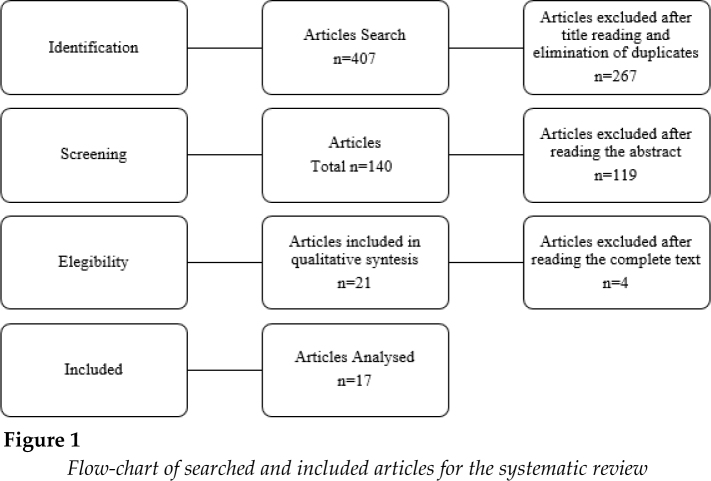
It has been suggested that successful young gymnasts are a highly select group in terms of the physique. This review summarizes the available literature on elite female gymnasts' anthropometric characteristics, somatotype, body composition and biological maturation. The main aims were to identify: (i) a common physique and (ii) the differences, if any, among competitive/performance levels. A systematic search was conducted online using five different databases. Of 407 putative papers, 17 fulfilled all criteria and were included in the review. Most studies identified similar physiques based on: physical traits (small size and low body mass), a body type (predominance of ecto-mesomorphy), body composition (low fat mass), and maturity status (late skeletal maturity as well as late age-at-menarche). However, there was no consensus as to whether these features predicted competitive performance, or even differentiated between gymnasts within distinctive competitive levels. In conclusion, gymnasts, as a group, have unique pronounced characteristics. These characteristics are likely due to selection for naturally-occurring inherited traits. However, data available for world class competitions were mostly outdated and sample sizes were small. Thus, it was difficult to make any conclusions about whether physiques differed between particular competitive levels.
有人认为,从体格方面来看,成功的年轻体操运动员是一个经过高度筛选的群体。本综述总结了关于精英女性体操运动员人体测量特征、体型、身体成分和生物成熟度的现有文献。主要目的是确定:(i)一种共同的体格;(ii)不同竞技/表现水平之间的差异(如果有的话)。使用五个不同的数据库进行了在线系统检索。在407篇推定论文中,17篇符合所有标准并被纳入综述。大多数研究基于以下方面确定了相似的体格:身体特征(身材矮小和体重轻)、体型(外胚层-中胚层体型占主导)、身体成分(低脂肪量)和成熟状态(骨骼成熟较晚以及初潮年龄较晚)。然而,对于这些特征是否能预测竞技表现,甚至能否区分不同竞技水平的体操运动员,并没有达成共识。总之,体操运动员作为一个群体,具有独特的显著特征。这些特征可能是由于对自然遗传特征的选择。然而,可获得的关于世界级比赛的数据大多过时,样本量也很小。因此,很难就特定竞技水平之间的体格是否存在差异得出任何结论。