Kranawetter Clayton, Brady Samantha, Sun Lizhen, Schroeder Mark, Chen Shi-Jie, Heng Xiao
Department of Biochemistry, University of Missouri , Columbia, Missouri 65211, United States.
Department of Physics, Department of Biochemistry, and Informatics Institute, University of Missouri , Columbia, Missouri 65211, United States.
Biochemistry. 2017 Sep 19;56(37):4972-4984. doi: 10.1021/acs.biochem.7b00573. Epub 2017 Sep 6.
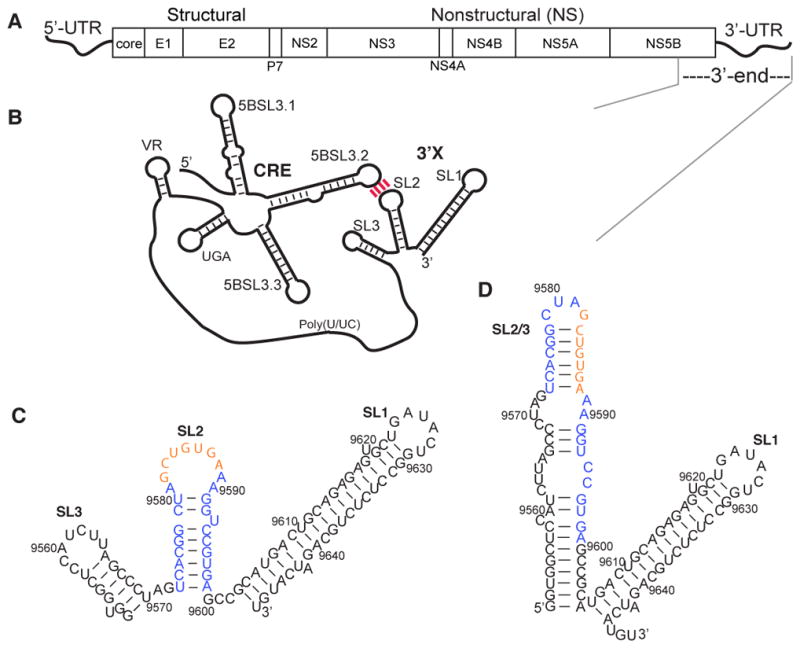
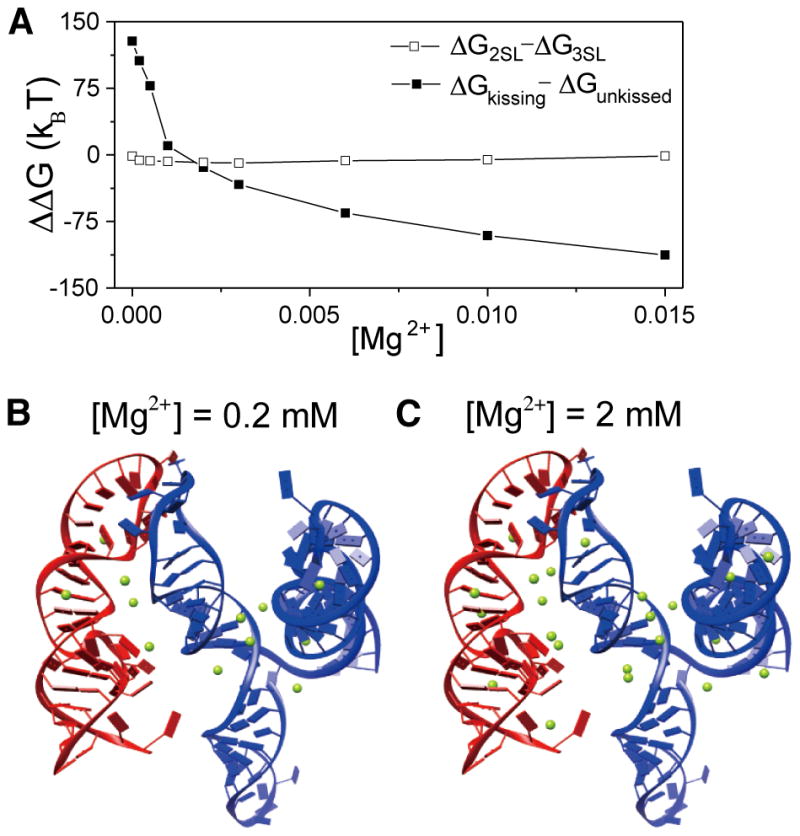
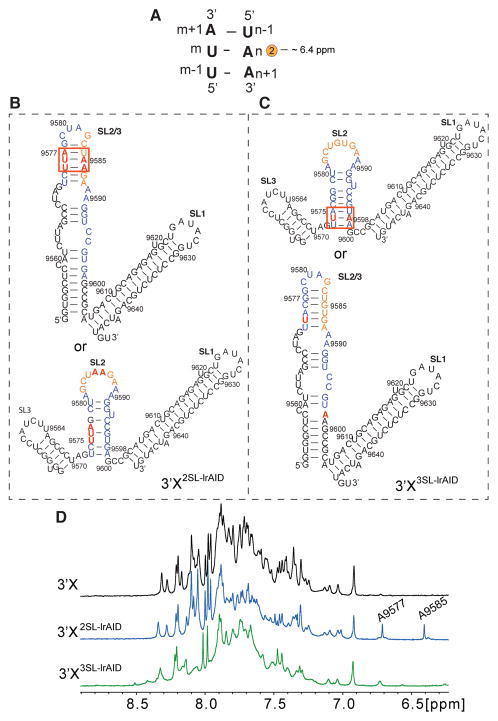
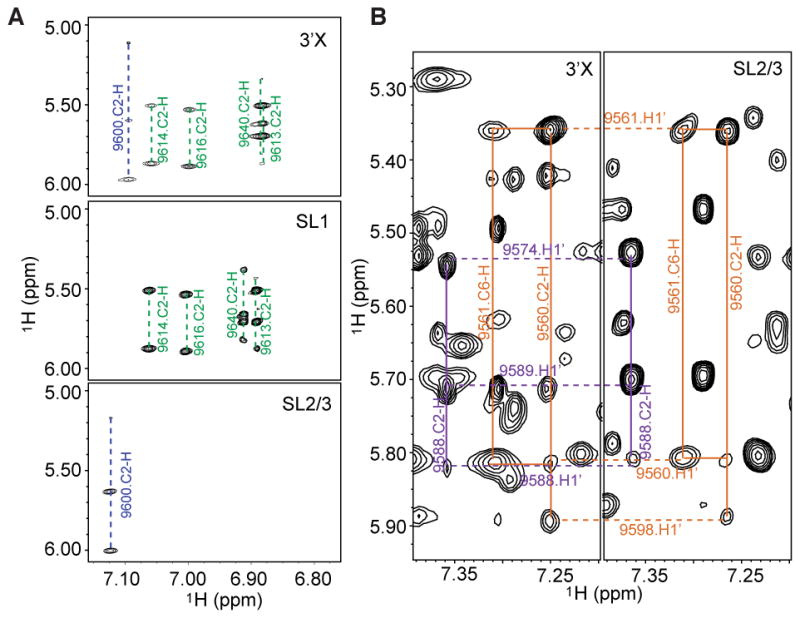
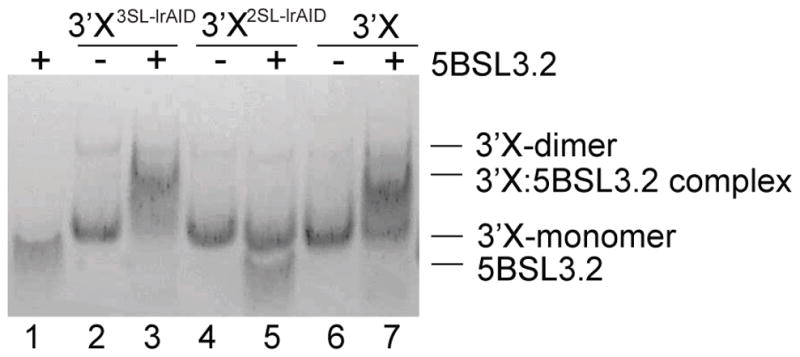
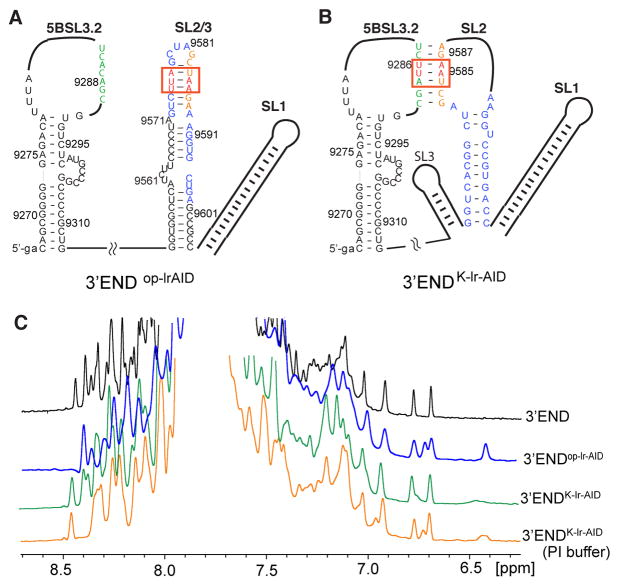
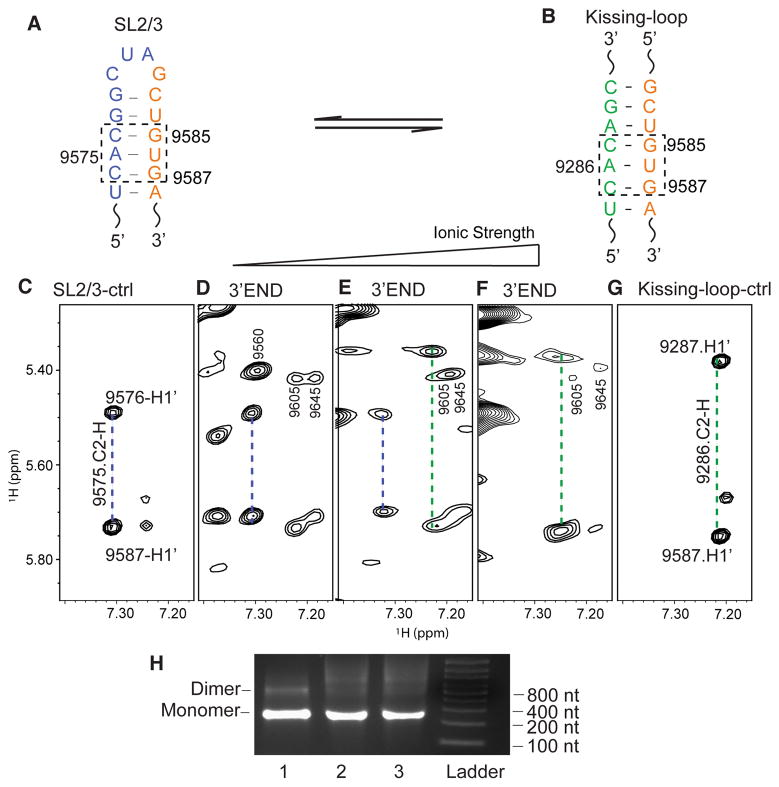
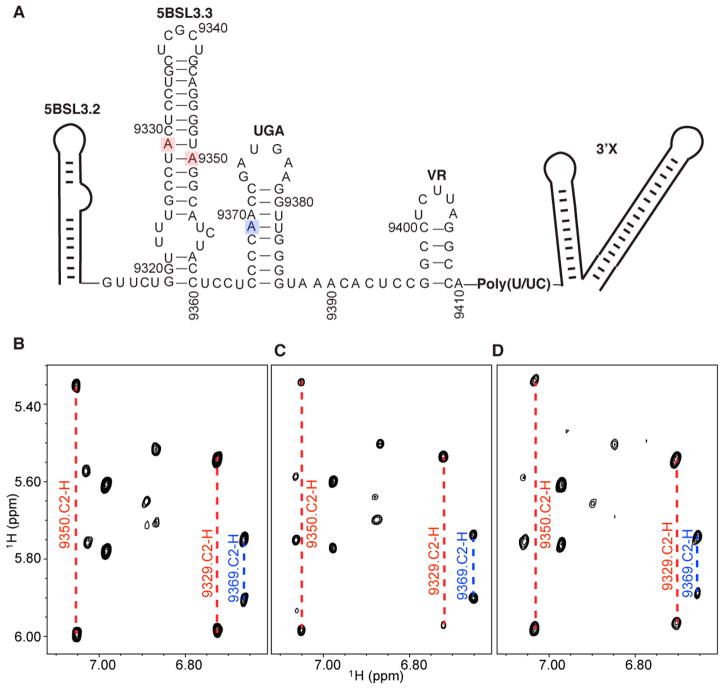
The 3'-end of the genomic RNA of the hepatitis C virus (HCV) embeds conserved elements that regulate viral RNA synthesis and protein translation by mechanisms that have yet to be elucidated. Previous studies with oligo-RNA fragments have led to multiple, mutually exclusive secondary structure predictions, indicating that HCV RNA structure may be context-dependent. Here we employed a nuclear magnetic resonance (NMR) approach that involves long-range adenosine interaction detection, coupled with site-specific H labeling, to probe the structure of the intact 3'-end of the HCV genome (385 nucleotides). Our data reveal that the 3'-end exists as an equilibrium mixture of two conformations: an open conformation in which the 98 nucleotides of the 3'-tail (3'X) form a two-stem-loop structure with the kissing-loop residues sequestered and a closed conformation in which the 3'X rearranges its structure and forms a long-range kissing-loop interaction with an upstream cis-acting element 5BSL3.2. The long-range kissing species is favored under high-Mg conditions, and the intervening sequences do not affect the equilibrium as their secondary structures remain unchanged. The open and closed conformations are consistent with the reported function regulation of viral RNA synthesis and protein translation, respectively. Our NMR detection of these RNA conformations and the structural equilibrium in the 3'-end of the HCV genome support its roles in coordinating various steps of HCV replication.
丙型肝炎病毒(HCV)基因组RNA的3'末端嵌入了保守元件,这些元件通过尚未阐明的机制调节病毒RNA合成和蛋白质翻译。先前对寡聚RNA片段的研究导致了多种相互排斥的二级结构预测,表明HCV RNA结构可能依赖于上下文。在这里,我们采用了一种核磁共振(NMR)方法,该方法涉及远程腺苷相互作用检测,并结合位点特异性H标记,以探测HCV基因组完整3'末端(385个核苷酸)的结构。我们的数据表明,3'末端以两种构象的平衡混合物形式存在:一种开放构象,其中3'尾(3'X)的98个核苷酸形成一个双茎环结构,其中亲吻环残基被隔离;另一种封闭构象,其中3'X重新排列其结构并与上游顺式作用元件5BSL3.2形成远程亲吻环相互作用。远程亲吻物种在高镁条件下更受青睐,中间序列不影响平衡,因为它们的二级结构保持不变。开放和封闭构象分别与报道的病毒RNA合成和蛋白质翻译的功能调节一致。我们通过NMR检测到这些RNA构象以及HCV基因组3'末端的结构平衡,支持了其在协调HCV复制各个步骤中的作用。