Romero-López Cristina, Berzal-Herranz Alfredo
Instituto de Parasitología y Biomedicina "López-Neyra", Consejo Superior de Investigaciones Científicas (IPBLN-CSIC), Granada, Spain.
Front Microbiol. 2017 Oct 31;8:2093. doi: 10.3389/fmicb.2017.02093. eCollection 2017.
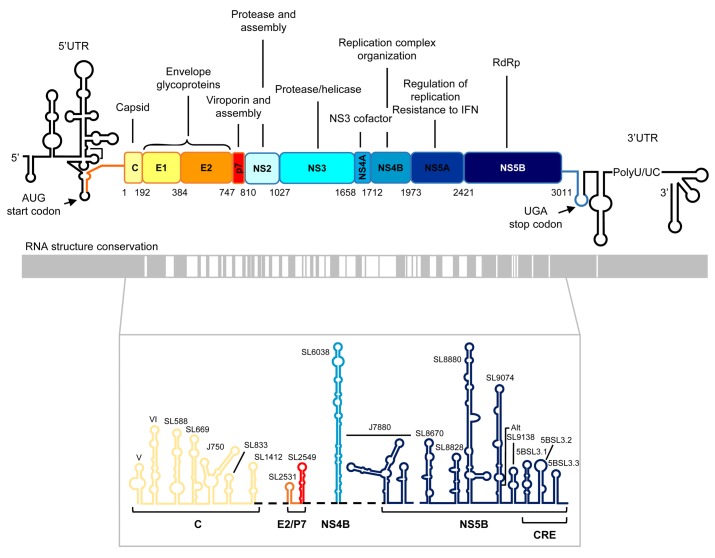
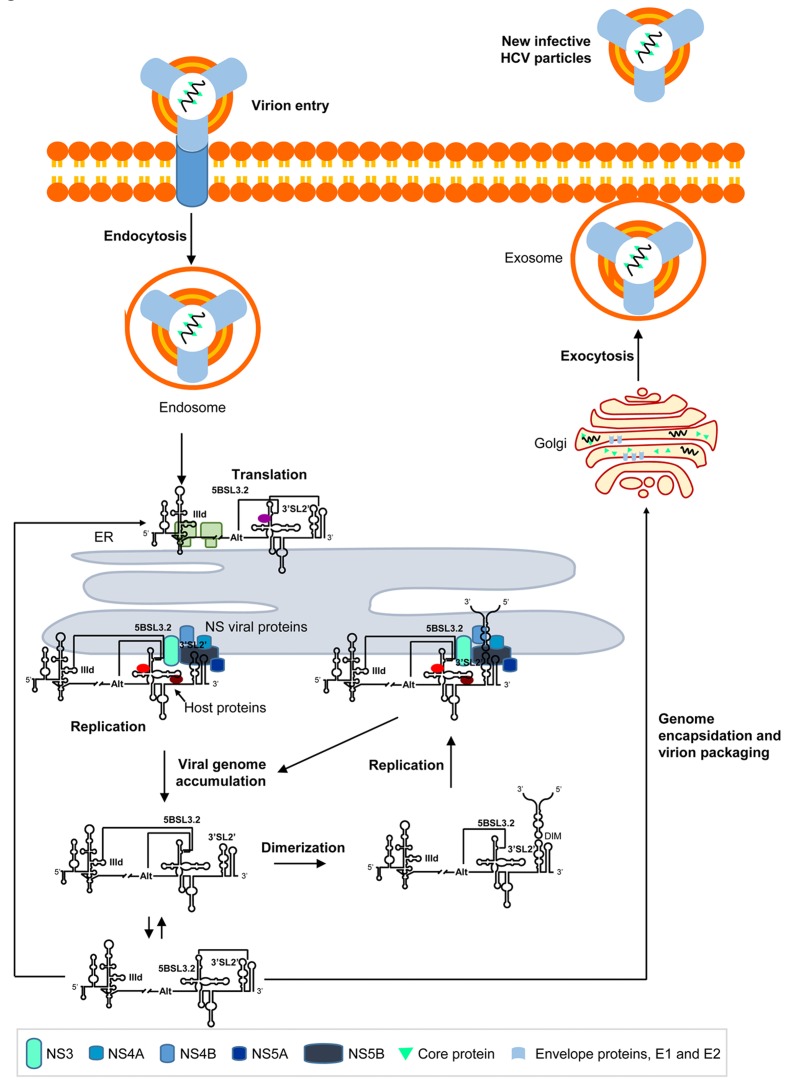
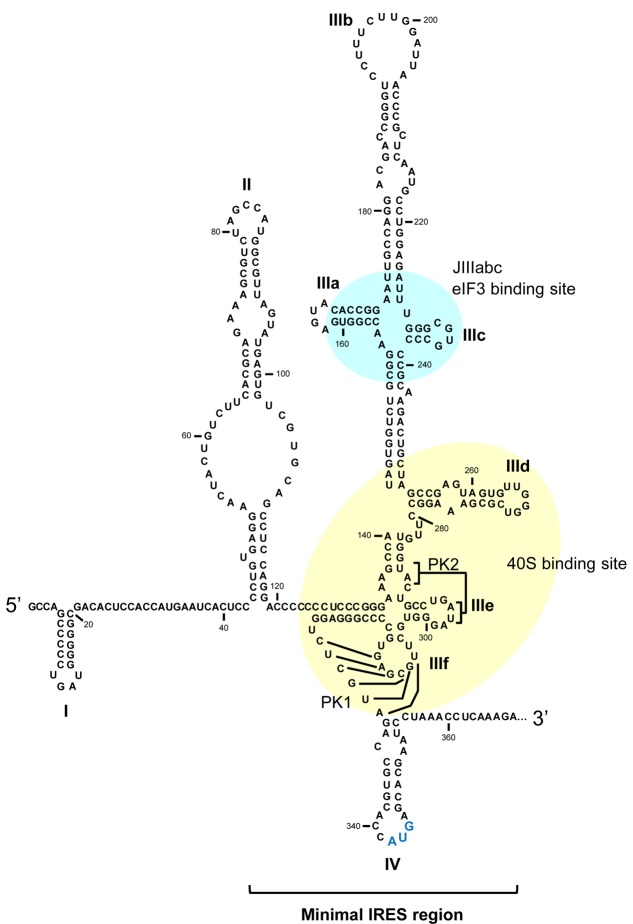
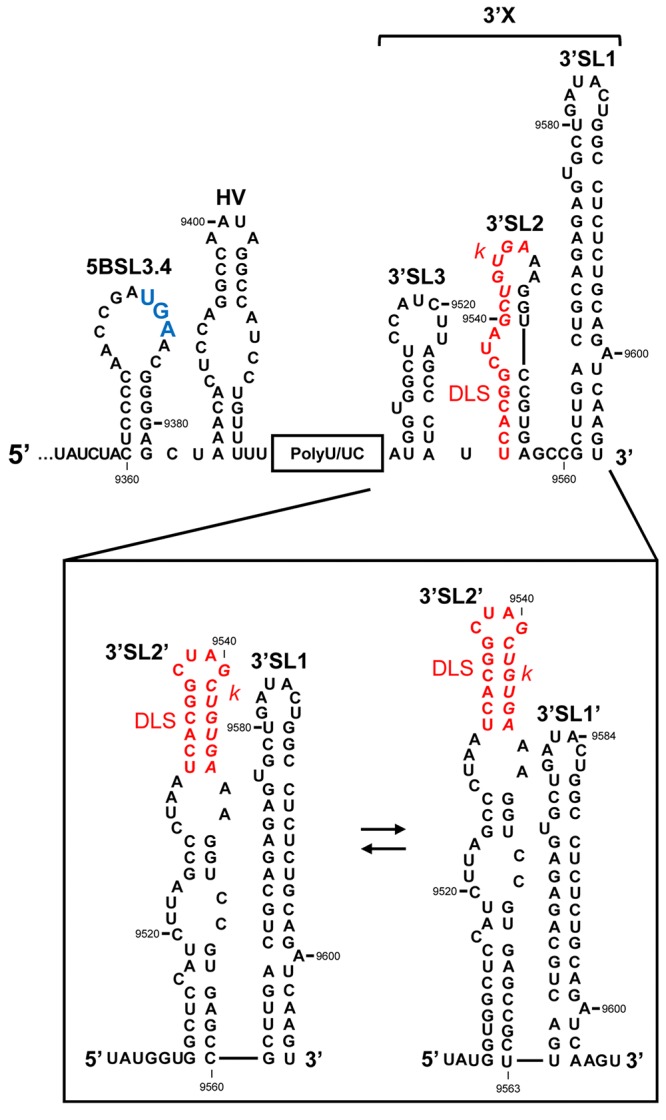
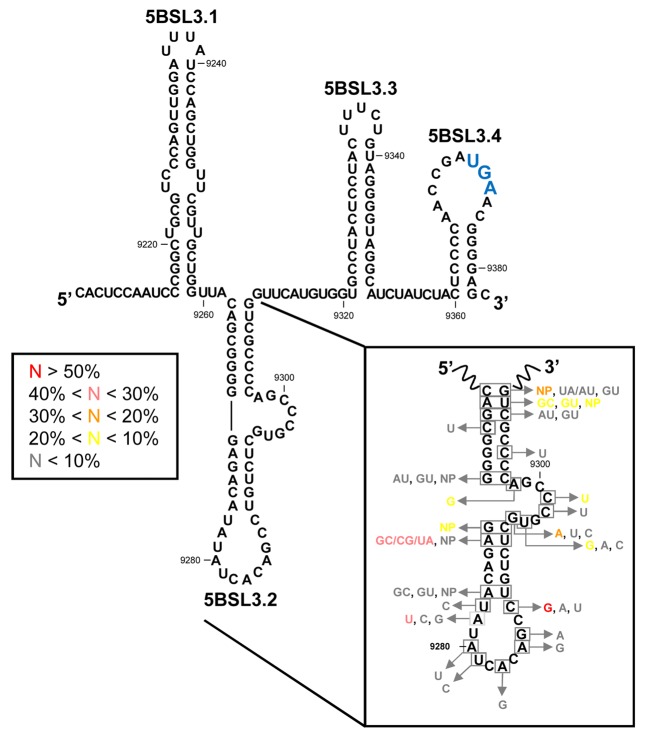
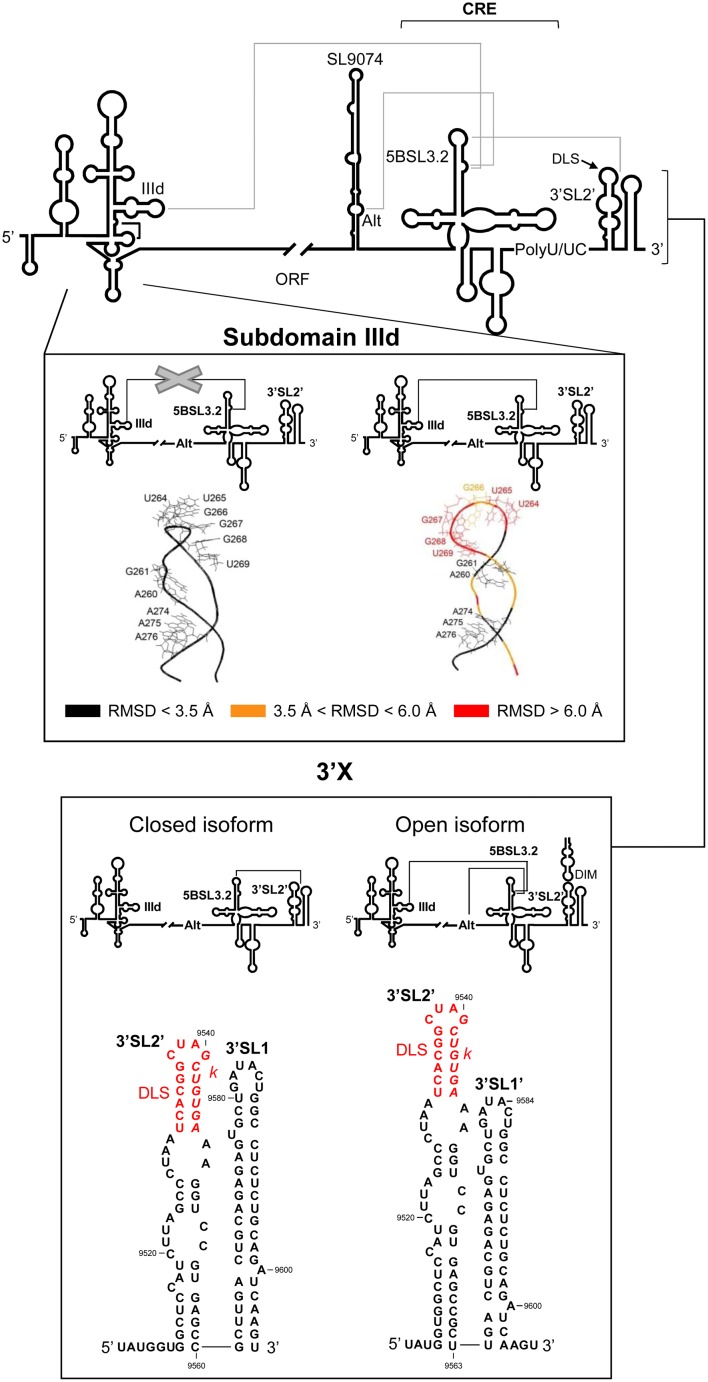
Viral genomes are complexly folded entities that carry all the information required for the infective cycle. The nucleotide sequence of the RNA virus genome encodes proteins and functional information contained in discrete, highly conserved structural units. These so-called functional RNA domains play essential roles in the progression of infection, which requires their preservation from one generation to the next. Numerous functional RNA domains exist in the genome of the hepatitis C virus (HCV). Among them, the 5BSL3.2 domain in the -acting replication element (CRE) at the 3' end of the viral open reading frame has become of particular interest given its role in HCV RNA replication and as a regulator of viral protein synthesis. These functionalities are achieved via the establishment of a complex network of long-distance RNA-RNA contacts involving (at least as known to date) the highly conserved 3'X tail, the apical loop of domain IIId in the internal ribosome entry site, and/or the so-called Alt region upstream of the CRE. Changing contacts promotes the execution of different stages of the viral cycle. The 5BSL3.2 domain thus operates at the core of a system that governs the progression of HCV infection. This review summarizes our knowledge of the long-range RNA-RNA interaction network in the HCV genome, with special attention paid to the structural and functional consequences derived from the establishment of different contacts. The potential implications of such interactions in switching between the different stages of the viral cycle are discussed.
病毒基因组是复杂折叠的实体,携带感染周期所需的所有信息。RNA病毒基因组的核苷酸序列编码蛋白质以及包含在离散的、高度保守的结构单元中的功能信息。这些所谓的功能性RNA结构域在感染进程中发挥着重要作用,而感染进程需要它们代代相传得以保留。丙型肝炎病毒(HCV)基因组中存在众多功能性RNA结构域。其中,病毒开放阅读框3'端的顺式作用复制元件(CRE)中的5BSL3.2结构域因其在HCV RNA复制中的作用以及作为病毒蛋白合成的调节因子而备受关注。这些功能是通过建立一个复杂的长距离RNA-RNA相互作用网络来实现的,该网络(至少就目前所知)涉及高度保守的3'X尾、内部核糖体进入位点中结构域IIId的顶端环以及/或CRE上游的所谓Alt区域。改变这些相互作用会促进病毒周期不同阶段的进行。因此,5BSL3.2结构域在一个控制HCV感染进程的系统核心发挥作用。本综述总结了我们对HCV基因组中长距离RNA-RNA相互作用网络的认识,特别关注了不同相互作用的建立所产生的结构和功能后果。还讨论了这种相互作用在病毒周期不同阶段转换中的潜在影响。