Sydney School of Public Health, The University of Sydney, Edward Ford Building (A27), Fisher Road, Camperdown, NSW, 2006, Australia.
Centre for Kidney Research, Westmead Institute for Medical Research, 179 Hawkesbury Rd, Westmead, NSW, 2145, Australia.
Int J Equity Health. 2017 Aug 23;16(1):153. doi: 10.1186/s12939-017-0652-5.
Indigenous children living in high income countries have a consistently high prevalence of mental health problems. We aimed to identify psychosocial risk and protective factors for mental health in this setting.
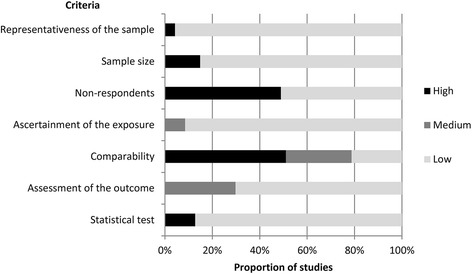
A systematic review of studies published between 1996 and 2016 that quantitatively evaluated the association between psychosocial variables and mental health among Indigenous children living in high income countries was conducted. Psychosocial variables were grouped into commonly occurring domains. Individual studies were judged to provide evidence for an association between a domain and either good mental health, poor mental health, or a negligible or inconsistent association. The overall quality of evidence across all studies for each domain was assessed using the Grades of Recommendation, Assessment, Development, and Evaluation (GRADE) guidelines.
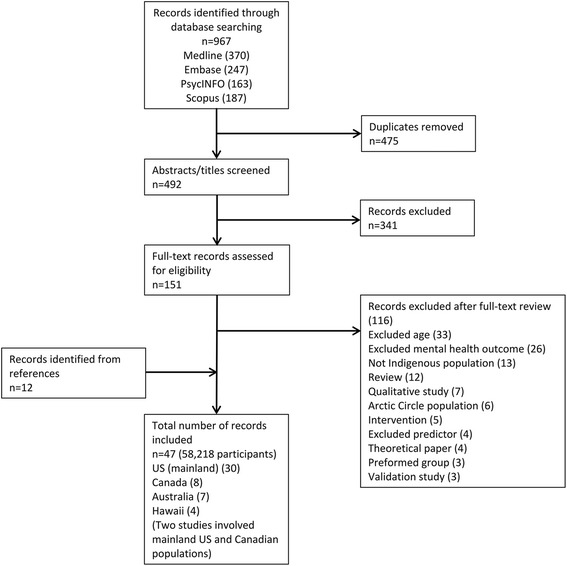
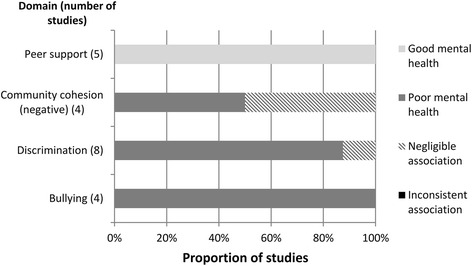
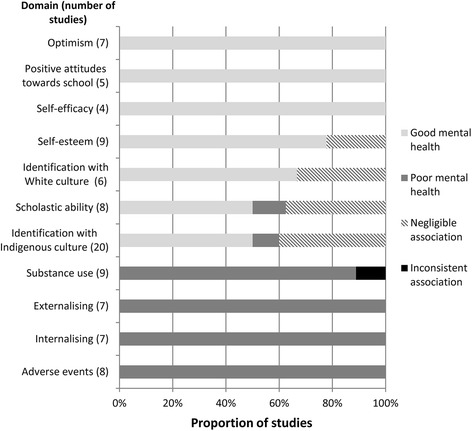
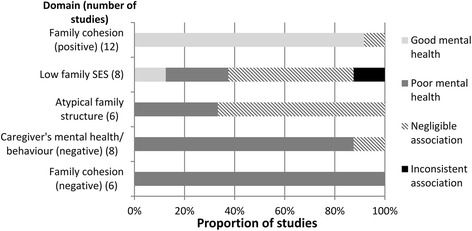
Forty-seven papers were eligible (mainland US 30 [64%], Canada 8 [17%], Australia 7 [15%], Hawaii 4 [9%]), including 58,218 participants aged 4-20 years. Most papers were cross-sectional (39, 83%) and measured negative mental health outcomes (41, 87%). Children's negative cohesion with their families and the presence of adverse events appeared the most reliable predictors of increased negative mental health outcomes. Children's substance use, experiences of discrimination, comorbid internalising symptoms, and negative parental behaviour also provided evidence of associations with negative mental health outcomes. Positive family and peer relationships, high self-esteem and optimism were associated with increased positive mental health outcomes.
Quantitative research investigating Indigenous children's mental health is largely cross-sectional and focused upon negative outcomes. Indigenous children living in high income countries share many of the same risk and protective factors associated with mental health. The evidence linking children's familial environment, psychological traits, substance use and experiences of discrimination with mental health outcomes highlights key targets for more concerted efforts to develop initiatives to improve the mental health of Indigenous children.
生活在高收入国家的土著儿童普遍存在较高的心理健康问题。我们旨在确定这种环境下心理健康的社会心理风险和保护因素。
对 1996 年至 2016 年间发表的、定量评估生活在高收入国家的土著儿童心理变量与心理健康之间关系的研究进行了系统回顾。社会心理变量被分为常见的领域。个别研究被判断为提供了一个领域与良好的心理健康、较差的心理健康或微不足道或不一致的关联之间的关联的证据。使用推荐评估开发和评估(GRADE)指南对所有研究中每个领域的整体证据质量进行评估。
有 47 篇论文符合条件(美国大陆 30 篇[64%],加拿大 8 篇[17%],澳大利亚 7 篇[15%],夏威夷 4 篇[9%]),包括 58218 名 4-20 岁的参与者。大多数论文是横断面的(39 篇,83%),并测量了负面的心理健康结果(41 篇,87%)。儿童与其家庭的负面凝聚力以及不良事件的存在似乎是增加负面心理健康结果的最可靠预测因素。儿童的物质使用、歧视经历、合并的内部症状以及负面的父母行为也提供了与负面心理健康结果相关的证据。积极的家庭和同伴关系、高自尊和乐观主义与积极的心理健康结果相关。
定量研究调查了土著儿童的心理健康,主要是横断面研究,并集中在负面结果上。生活在高收入国家的土著儿童具有许多与心理健康相关的相同风险和保护因素。将儿童的家庭环境、心理特征、物质使用和歧视经历与心理健康结果联系起来的证据突出了为制定更协调的举措以改善土著儿童心理健康而重点努力的关键目标。