Chen Jian, Yang Yi-Feng, Chen Jun, Zhou Xiaohui, Dong Zhaoguang, Chen Tianyue, Yang Yu, Zou Peng, Jiang Biao, Hu Yunwen, Lu Lu, Zhang Xiaoyan, Liu Jia, Xu Jianqing, Zhu Tongyu
Scientific Research Center, Shanghai Public Health Clinical Center, Fudan University, Shanghai 201508, China.
Shanghai Institute for Advanced Immunochemical Studies, ShanghaiTech University, Shanghai 201210, China.
Emerg Microbes Infect. 2017 Aug 23;6(8):e77. doi: 10.1038/emi.2017.67.
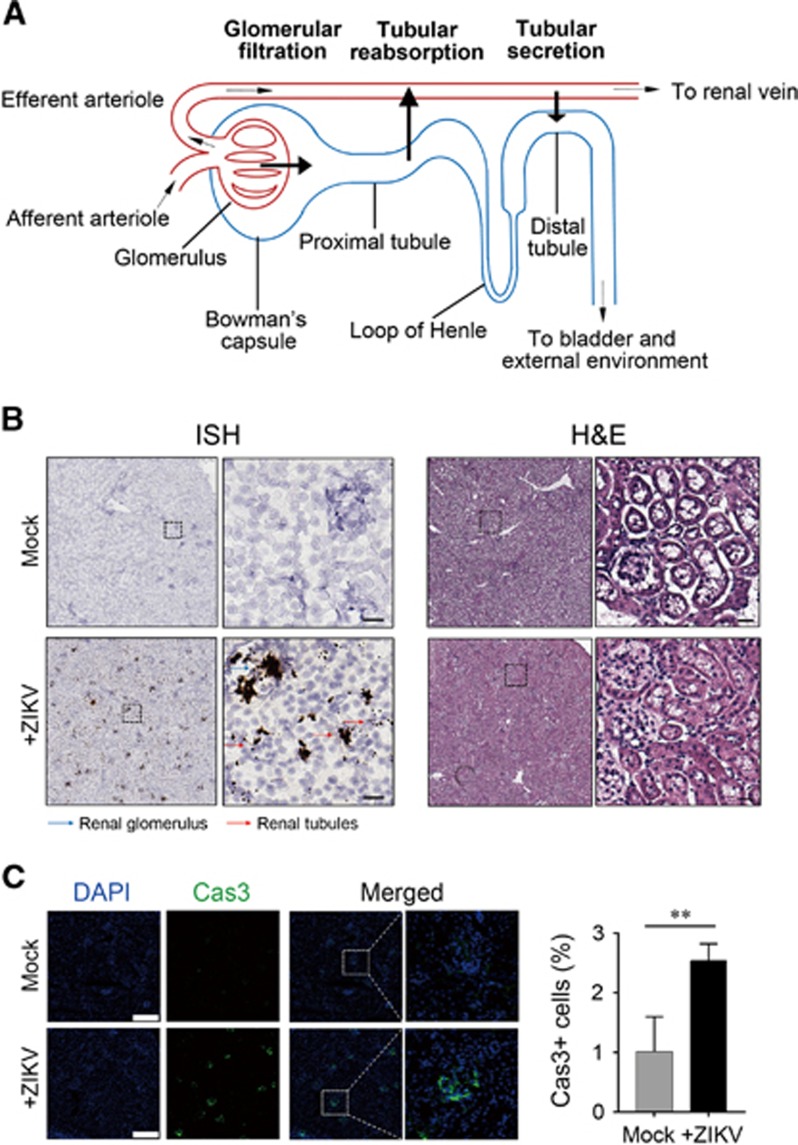
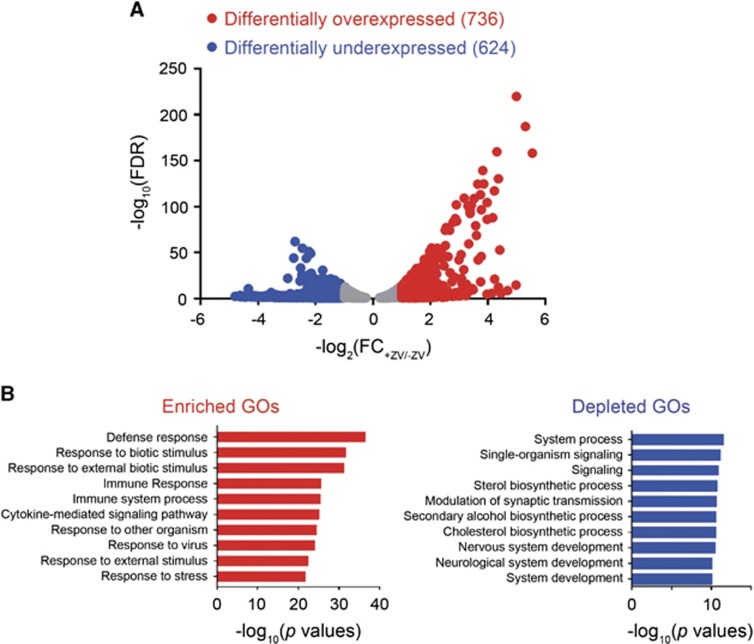
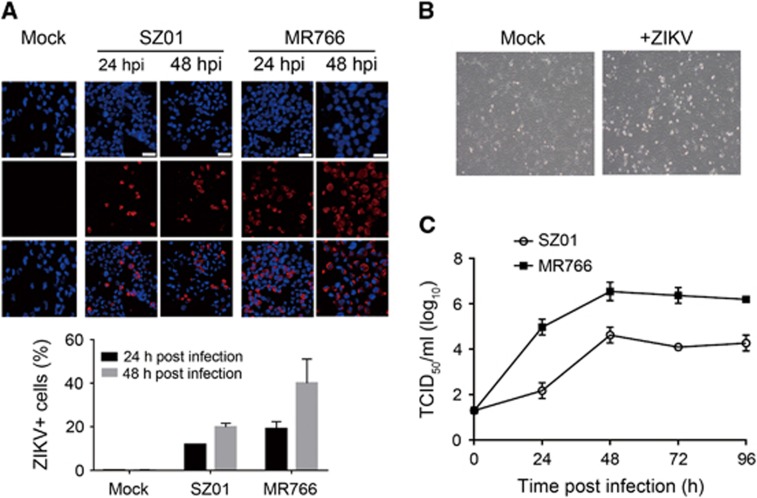
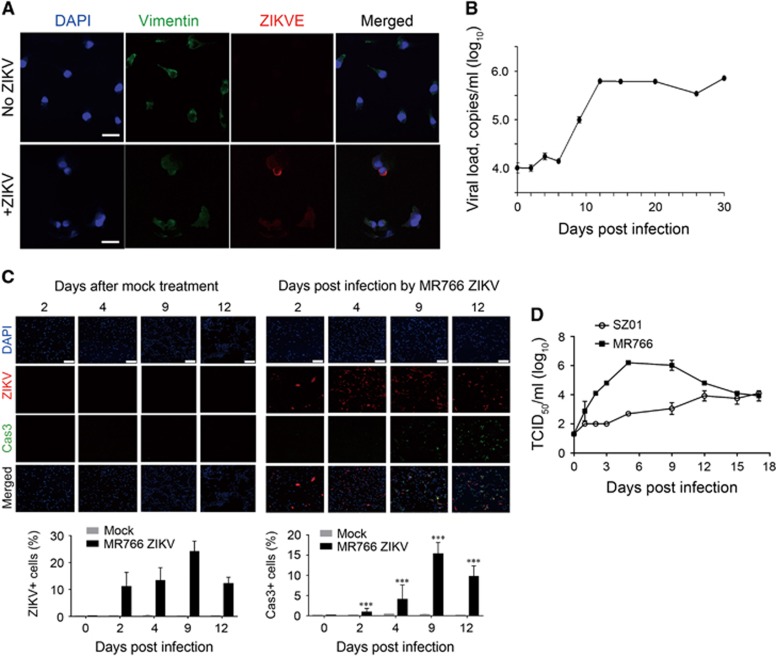
Zika virus (ZIKV) infection can cause fetal developmental abnormalities and Guillain-Barré syndrome in adults. Although progress has been made in understanding the link between ZIKV infection and microcephaly, the pathology of ZIKV, particularly the viral reservoirs in human, remains poorly understood. Several studies have shown that compared to serum samples, patients' urine samples often have a longer duration of ZIKV persistency and higher viral load. This finding suggests that an independent viral reservoir may exist in the human urinary system. Despite the clinical observations, the host cells of ZIKV in the human urinary system are poorly characterized. In this study, we demonstrate that ZIKV can infect renal proximal tubular epithelial cells (RPTEpiCs) in immunodeficient mice in vivo and in both immortalized and primary human renal proximal tubular epithelial cells (hRPTEpiCs) in vitro. Importantly, ZIKV infection in mouse kidneys caused caspase-3-mediated apoptosis of renal cells. Similarly, in vitro infection of immortalized and primary hRPTEpiCs resulted in notable cytopathic effects. Consistent with the clinical observations, we found that ZIKV infection can persist with prolonged duration in hRPTEpiCs. RNA-Seq analyses of infected hRPTEpiCs revealed a large number of transcriptional changes in response to ZIKV infection, including type I interferon signaling genes and anti-viral response genes. Our results suggest that hRPTEpiCs are a potential reservoir of ZIKV in the human urinary system, providing a possible explanation for the prolonged persistency of ZIKV in patients' urine.
寨卡病毒(ZIKV)感染可导致胎儿发育异常以及成人患吉兰-巴雷综合征。尽管在理解ZIKV感染与小头畸形之间的联系方面已取得进展,但ZIKV的病理学,尤其是人类体内的病毒储存库,仍知之甚少。多项研究表明,与血清样本相比,患者的尿液样本中ZIKV持续存在的时间往往更长,病毒载量也更高。这一发现表明,人类泌尿系统中可能存在独立的病毒储存库。尽管有临床观察结果,但ZIKV在人类泌尿系统中的宿主细胞特征尚不明确。在本研究中,我们证明ZIKV可在体内感染免疫缺陷小鼠的肾近端小管上皮细胞(RPTEpiCs),并可在体外感染永生化和原代人肾近端小管上皮细胞(hRPTEpiCs)。重要的是,小鼠肾脏中的ZIKV感染导致肾细胞发生caspase-3介导的凋亡。同样,永生化和原代hRPTEpiCs的体外感染也导致了明显的细胞病变效应。与临床观察结果一致,我们发现ZIKV感染可在hRPTEpiCs中持续较长时间。对受感染的hRPTEpiCs进行的RNA测序分析揭示了大量响应ZIKV感染的转录变化,包括I型干扰素信号基因和抗病毒反应基因。我们的结果表明,hRPTEpiCs是人类泌尿系统中ZIKV的潜在储存库,这为ZIKV在患者尿液中持续存在较长时间提供了一种可能的解释。