Danobeitia Juan S, Ziemelis Martynas, Ma Xiaobo, Zitur Laura J, Zens Tiffany, Chlebeck Peter J, Van Amersfoort Edwin S, Fernandez Luis A
Department of Surgery, Division of Transplantation, University of Wisconsin-Madison, Madison, WI, United States of America.
Pharming Technologies BV, Leiden, the Netherlands.
PLoS One. 2017 Aug 23;12(8):e0183701. doi: 10.1371/journal.pone.0183701. eCollection 2017.
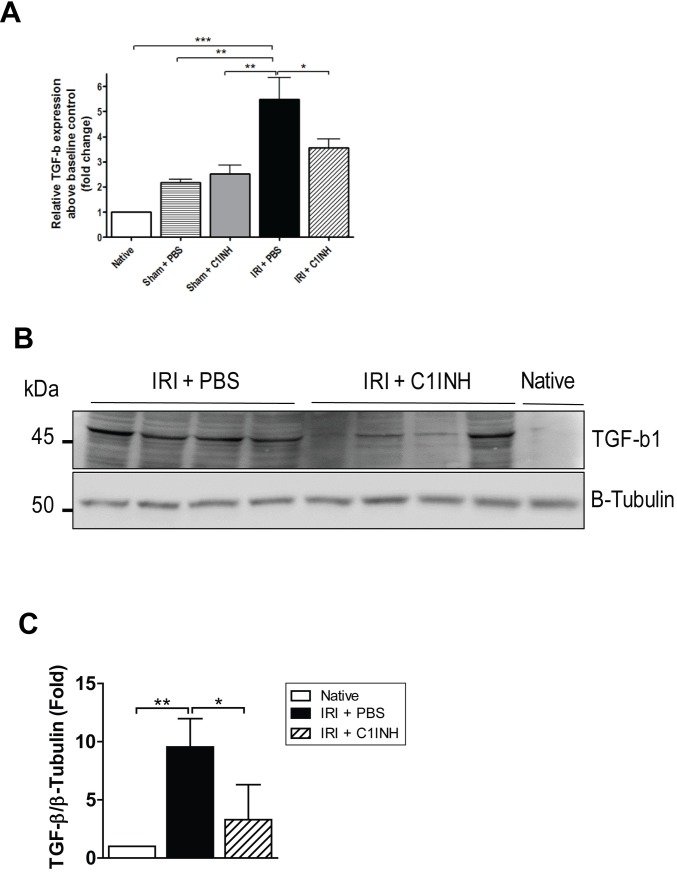
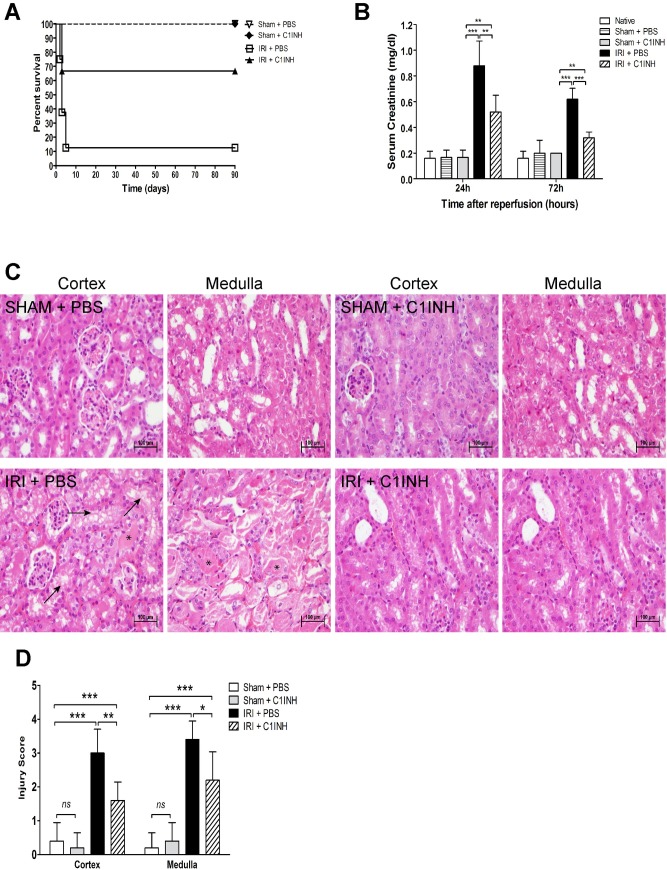
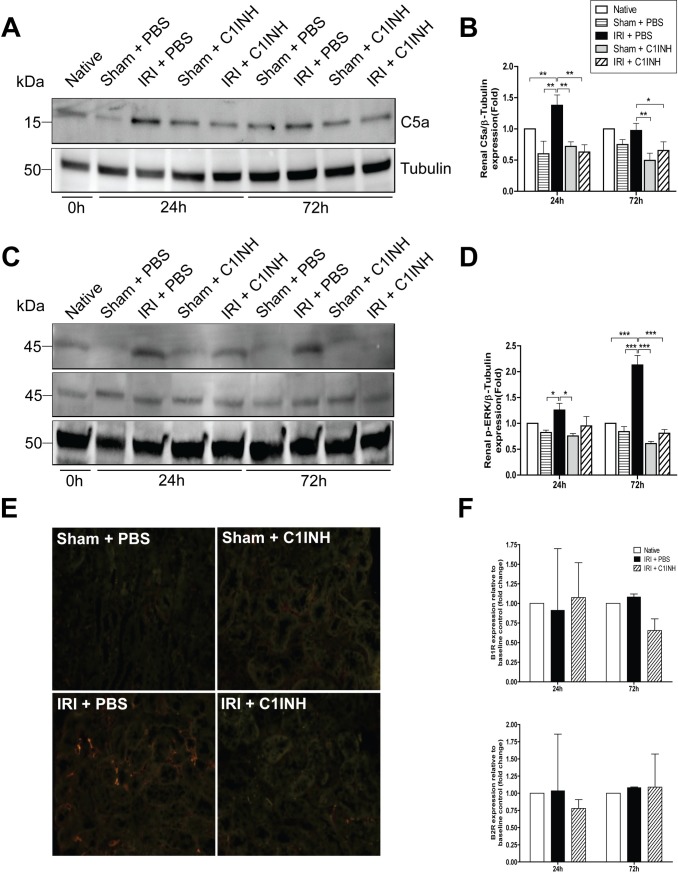
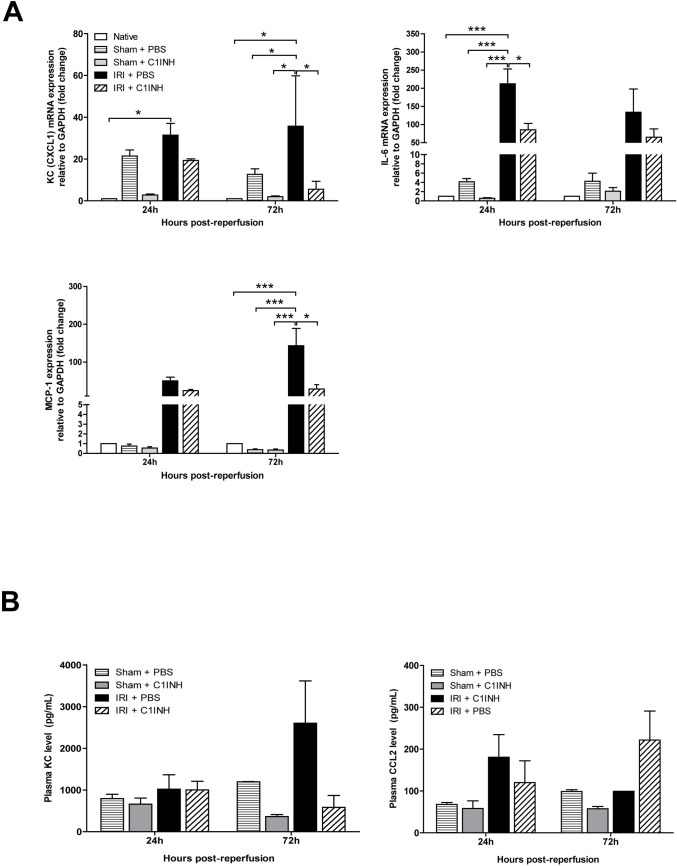
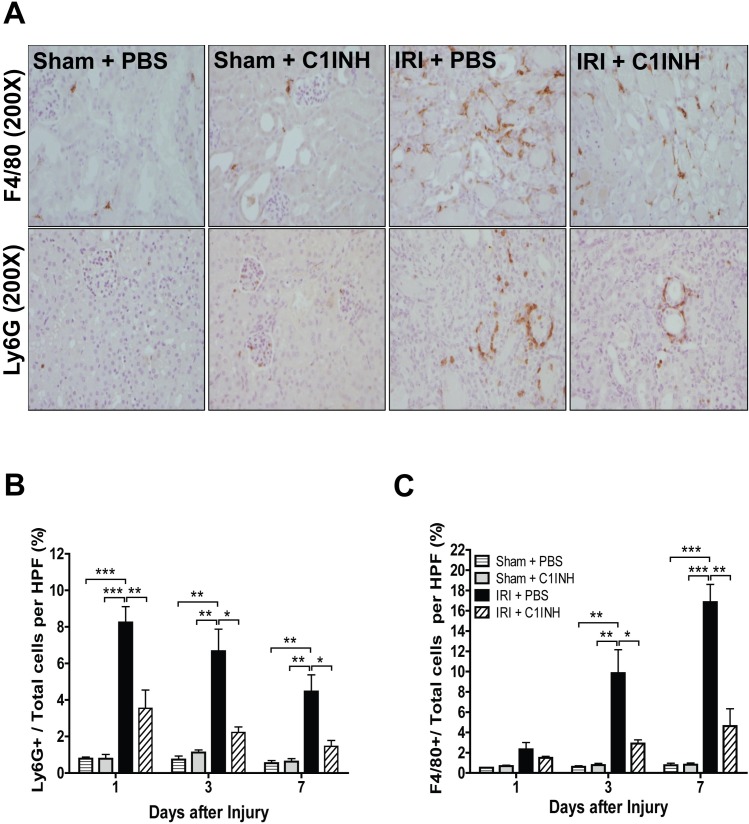
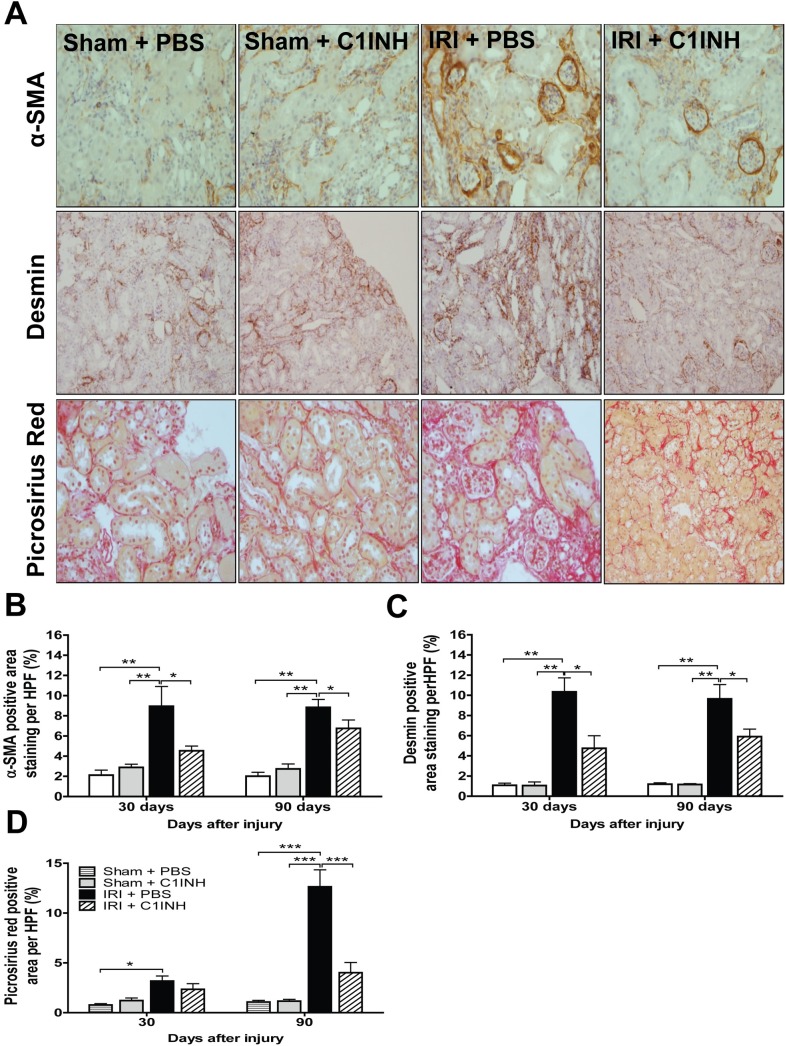
The complement system is an essential component of innate immunity and plays a major role in the pathogenesis of ischemia-reperfusion injury (IRI). In this study, we investigated the impact of human C1-inhibitor (C1INH) on the early inflammatory response to IRI and the subsequent progression to fibrosis in mice. We evaluated structural damage, renal function, acute inflammatory response, progression to fibrosis and overall survival at 90-days post-injury. Animals receiving C1INH prior to reperfusion had a significant improvement in survival rate along with superior renal function when compared to vehicle (PBS) treated counterparts. Pre-treatment with C1INH also prevented acute IL-6, CXCL1 and MCP-1 up-regulation, C5a release, C3b deposition and infiltration by neutrophils and macrophages into renal tissue. This anti-inflammatory effect correlated with a significant reduction in the expression of markers of fibrosis alpha smooth muscle actin, desmin and picrosirius red at 30 and 90 days post-IRI and reduced renal levels of TGF-β1 when compared to untreated controls. Our findings indicate that intravenous delivery of C1INH prior to ischemic injury protects kidneys from inflammatory injury and subsequent progression to fibrosis. We conclude that early complement blockade in the context of IRI constitutes an effective strategy in the prevention of fibrosis after ischemic acute kidney injury.
补体系统是固有免疫的重要组成部分,在缺血再灌注损伤(IRI)的发病机制中起主要作用。在本研究中,我们调查了人C1抑制剂(C1INH)对小鼠IRI早期炎症反应以及随后纤维化进展的影响。我们评估了损伤后90天时的结构损伤、肾功能、急性炎症反应、纤维化进展和总体存活率。与接受载体(PBS)治疗的对照动物相比,再灌注前接受C1INH的动物存活率显著提高,肾功能也更优。C1INH预处理还可防止急性白细胞介素-6、CXC趋化因子配体1和单核细胞趋化蛋白-1上调、C5a释放、C3b沉积以及中性粒细胞和巨噬细胞浸润到肾组织中。与未治疗的对照组相比,这种抗炎作用与IRI后30天和90天时纤维化标志物α平滑肌肌动蛋白、结蛋白和天狼星红染色的表达显著降低以及肾组织中转化生长因子-β1水平降低相关。我们的研究结果表明,在缺血性损伤前静脉注射C1INH可保护肾脏免受炎症损伤以及随后的纤维化进展。我们得出结论,在IRI背景下早期补体阻断是预防缺血性急性肾损伤后纤维化的有效策略。