Kawakami Fumi, Sircar Kanishka, Rodriguez-Canales Jaime, Fellman Bryan M, Urbauer Diana L, Tamboli Pheroze, Tannir Nizar M, Jonasch Eric, Wistuba Ignacio I, Wood Christopher G, Karam Jose A
Department of Translational Molecular Pathology, The University of Texas MD Anderson Cancer Center, Houston, Texas.
Department of Pathology, The University of Texas MD Anderson Cancer Center, Houston, Texas.
Cancer. 2017 Dec 15;123(24):4823-4831. doi: 10.1002/cncr.30937. Epub 2017 Aug 22.
The immune profile of sarcomatoid renal cell carcinoma (sRCC), including the programmed cell death ligand 1 (PD-L1) and programmed cell death 1 (PD-1) status, has not been well characterized.
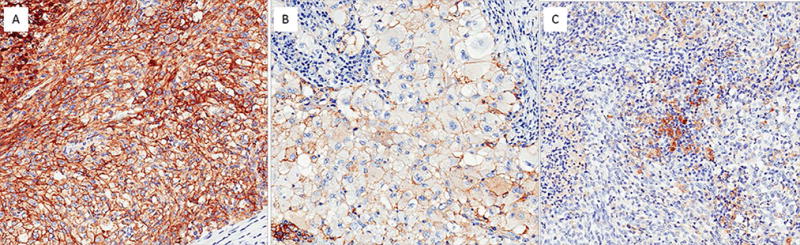
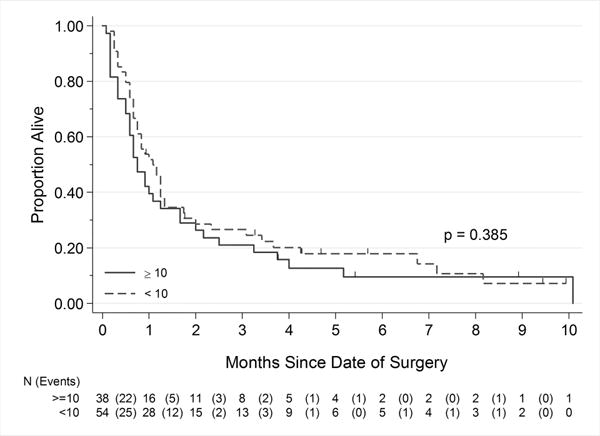
An immunohistochemical digital analysis of PD-L1, PD-1, CD4, and CD8 was performed on nephrectomy specimens from 118 sRCC patients and 92 nonsarcomatoid clear cell renal cell carcinoma (ccRCC) patients. The clinical characteristics of the population were compared between sRCC and ccRCC. Overall survival was estimated, and comparisons were made between PD-L1-positive and PD-L1-negative groups as well as tumor-infiltrating lymphocyte (TIL)-high and TIL-low groups.
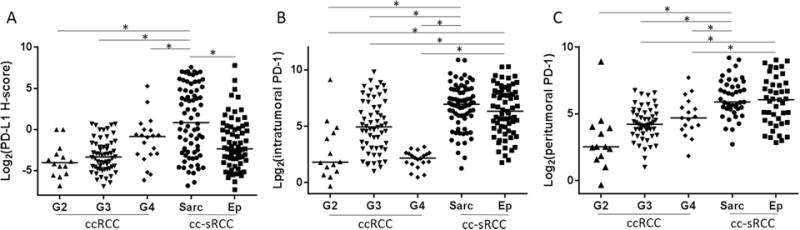
The PD-L1 H-score of sRCC (mean, 3.7; range, 0-192.1) was significantly higher than the score of grade 4 ccRCC (P = .001), and 41.3% of sRCC cases showed a PD-L1 H-score ≥ 10. The PD-1-positive cell density was significantly higher in sRCC versus ccRCC within the tumor and at the invasive front. The intratumoral CD8-positive cell density was significantly higher in sRCC versus ccRCC. Forty-one percent in the sarcomatoid component of sRCC and 8% in the epithelioid component of sRCC had an adaptive immune resistance phenotype (PD-L1-positive and TIL-positive), whereas only 1% in ccRCC had the type I phenotype.
sRCC showed higher PD-L1 expression and higher PD-1- and CD8-positive cell density than grade 4 ccRCC. The results indicate a notable immunosuppressive environment in sRCC. Despite advances in the treatment of advanced-stage renal cell carcinoma, sRCC still has a poor prognosis. This work describes highly immunosuppressive characteristics of sRCC in comparison with an appropriate ccRCC control. The results suggest PD-1/PD-L1 blockade therapy as a potential therapeutic approach for sRCC. Cancer 2017;123:4823-31. © 2017 American Cancer Society.
肉瘤样肾细胞癌(sRCC)的免疫特征,包括程序性细胞死亡配体1(PD-L1)和程序性细胞死亡1(PD-1)状态,尚未得到充分表征。
对118例sRCC患者和92例非肉瘤样透明细胞肾细胞癌(ccRCC)患者的肾切除标本进行PD-L1、PD-1、CD4和CD8的免疫组织化学数字分析。比较sRCC和ccRCC患者群体的临床特征。估计总生存期,并比较PD-L1阳性组和PD-L1阴性组以及肿瘤浸润淋巴细胞(TIL)高组和TIL低组。
sRCC的PD-L1 H评分(平均值为3.7;范围为0 - 192.1)显著高于4级ccRCC的评分(P = 0.001),41.3%的sRCC病例显示PD-L1 H评分≥10。在肿瘤内部和浸润前沿,sRCC中PD-1阳性细胞密度显著高于ccRCC。sRCC中瘤内CD8阳性细胞密度显著高于ccRCC。sRCC的肉瘤样成分中有41%以及上皮样成分中有8%具有适应性免疫抵抗表型(PD-L1阳性且TIL阳性),而ccRCC中只有1%具有I型表型。
与4级ccRCC相比,sRCC显示出更高的PD-L1表达以及更高的PD-1和CD8阳性细胞密度。结果表明sRCC存在显著的免疫抑制环境。尽管晚期肾细胞癌的治疗取得了进展,但sRCC的预后仍然很差。这项工作描述了与合适的ccRCC对照相比,sRCC具有高度免疫抑制的特征。结果表明PD-1/PD-L1阻断疗法可能是sRCC的一种治疗方法。《癌症》2017年;123:4823 - 31。©2017美国癌症协会。