Miao Cai-Yun, Li Yong, Yang Jie, Mao Run-Li
College of Forestry, Henan Agricultural University, Zhengzhou, 450002, China.
BMC Evol Biol. 2017 Aug 23;17(1):202. doi: 10.1186/s12862-017-1055-3.
The adaptive evolution of species response to environment are the key issues in molecular ecology and evolutionary biology. The direction of adaptive differentiation of species in regions lacking strong selection pressure is usually diverse. However, the driving mechanism of the diverse adaptive differentiation for regional species is still undetermined to date. In this study, we used landscape genomics modelling to infer the adaptive evolution of Cotinus coggygria in China's warm-temperate zone.
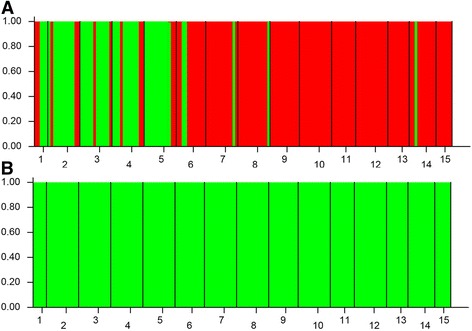
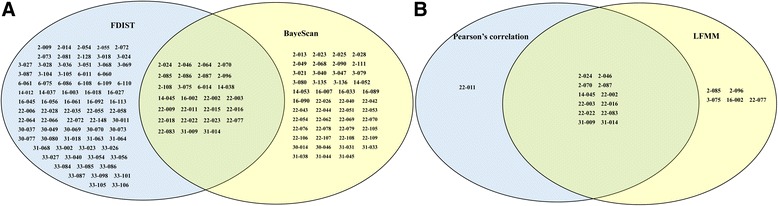
Using fifteen natural populations and nine start codon targeted (SCoT) markers, a total of 1131 unambiguous loci were yielded. Our results showed two genetic groups existed in the fifteen natural populations of C. coggygria, which is due to the divergent selection driven by six environmental factors. Environmental association analyses revealed the environmental variables related to precipitation were associated with high numbers of environment-associated loci.
Our results indicated that the ecological characters of C. coggygria, i.e. avoiding wetness and tolerating drought, determine its adaptive evolution. This study provides a reference that ecological character determines the adaptive evolution of species in regions lacking strong selection pressure.
物种对环境的适应性进化是分子生态学和进化生物学的关键问题。在缺乏强选择压力的区域,物种适应性分化的方向通常是多样的。然而,区域物种多样适应性分化的驱动机制至今仍未确定。在本研究中,我们使用景观基因组学模型来推断中国暖温带地区黄栌的适应性进化。
利用15个自然种群和9个起始密码子靶向(SCoT)标记,共获得1131个明确的位点。我们的结果表明,黄栌的15个自然种群中存在两个遗传组,这是由六个环境因子驱动的分歧选择所致。环境关联分析表明,与降水相关的环境变量与大量环境关联位点相关。
我们的结果表明,黄栌避湿耐旱的生态特性决定了其适应性进化。本研究为生态特性决定缺乏强选择压力区域物种的适应性进化提供了参考。