Innovation Platform of Molecular Biology, College of Forestry, Henan Agricultural University, No.95, Wenhua Road, Zhengzhou, 450002, China.
Guangdong Provincial Key Laboratory of Plant Resources, School of Life Sciences, Sun Yat-Sen University, No.135, Xingang Xi Road, Guangzhou, 510275, China.
BMC Plant Biol. 2018 Nov 27;18(1):306. doi: 10.1186/s12870-018-1524-x.
The investigation of the genetic basis of local adaptation in non-model species is an interesting focus of evolutionary biologists and molecular ecologists. Identifying these adaptive genetic variabilities on the genome responsible can provide insight into the genetic mechanism of local adaptation.
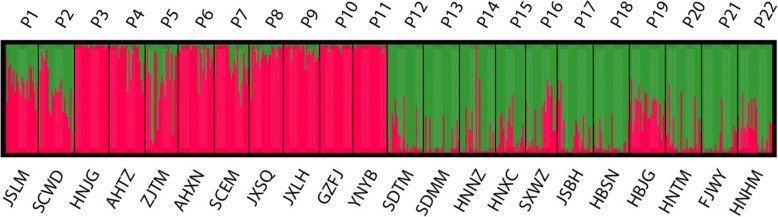
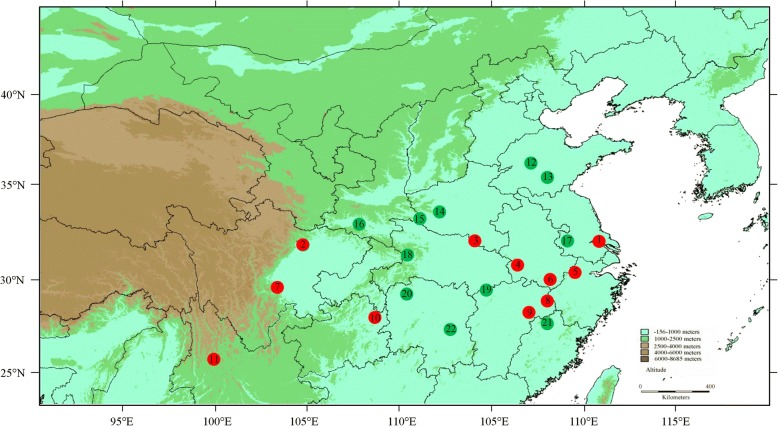
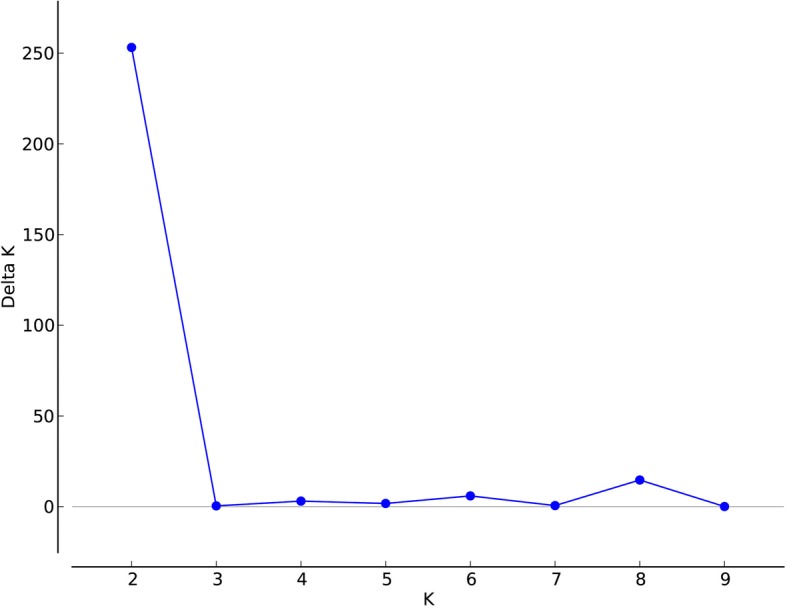
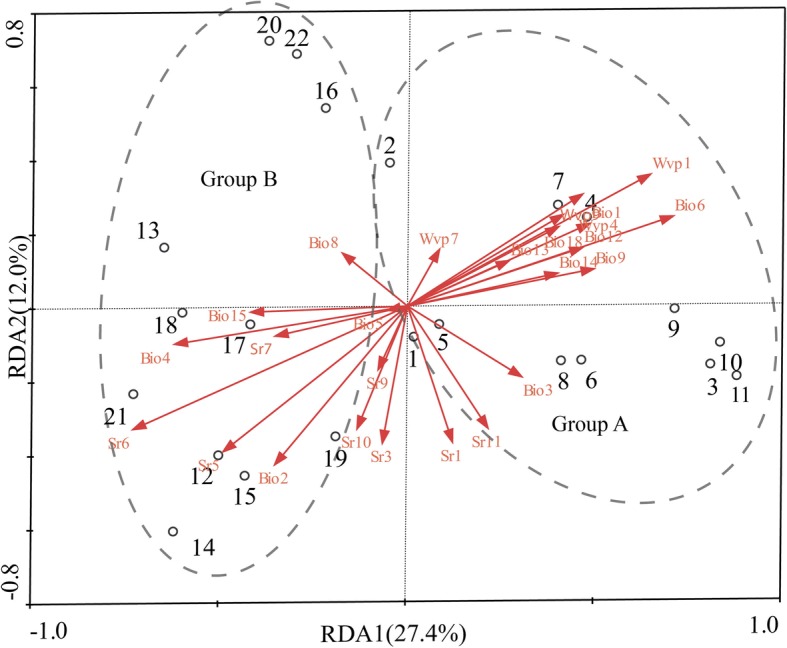
We investigated the spatial distribution of genetic variation in 22 natural populations of Pterocarya stenoptera across its distribution area in China to provide insights into the complex interplay between multiple environmental variables and adaptive genetic differentiation. The Bayesian analysis of population structure showed that the 22 populations of P. stenoptera were subdivided into two groups. Redundancy analysis demonstrated that this genetic differentiation was caused by the divergent selection of environmental difference. A total of 44 outlier loci were mutually identified by Arlequin and BayeScan, 43 of which were environment-associated loci (EAL). The results of latent factor mixed model analysis showed that solar radiation in June (Sr6), minimum temperature of the coldest month (Bio6), temperature seasonality (Bio4), and water vapor pressure in January (Wvp1) were associated with the highest numbers of EAL. Sr6 was associated with the ecological habitat of "prefered light", and Bio6 and Wvp1 were associated with the ecological habitat of "warm and humid environment".
Our results provided empirical evidence that environmental variables related to the ecological habitats of species play key roles in driving adaptive differentiation of species genome.
非模式物种的遗传基础与局部适应的研究是进化生物学家和分子生态学家关注的热点。确定基因组中这些适应性遗传变异性可以深入了解局部适应的遗传机制。
我们调查了中国枫杨分布区 22 个自然种群的遗传变异的空间分布,以深入了解多种环境变量与适应性遗传分化之间的复杂相互作用。种群结构的贝叶斯分析表明,22 个枫杨种群分为两组。冗余分析表明,这种遗传分化是由环境差异的分歧选择引起的。Arlequin 和 BayeScan 相互鉴定了 44 个显著差异位点,其中 43 个是与环境相关的位点(EAL)。潜在因子混合模型分析的结果表明,6 月太阳辐射(Sr6)、最冷月最低温度(Bio6)、温度季节性(Bio4)和 1 月水汽压(Wvp1)与最高数量的 EAL 相关。Sr6 与“偏好光”的生态生境有关,Bio6 和 Wvp1 与“温暖湿润的环境”的生态生境有关。
我们的研究结果提供了经验证据,表明与物种生态生境相关的环境变量在驱动物种基因组的适应性分化方面起着关键作用。