Weissbein Uri, Plotnik Omer, Vershkov Dan, Benvenisty Nissim
The Azrieli Center for Stem Cells and Genetic Research, Department of Genetics, Silberman Institute of Life Sciences, The Hebrew University, Jerusalem, Israel.
PLoS Genet. 2017 Aug 24;13(8):e1006979. doi: 10.1371/journal.pgen.1006979. eCollection 2017 Aug.
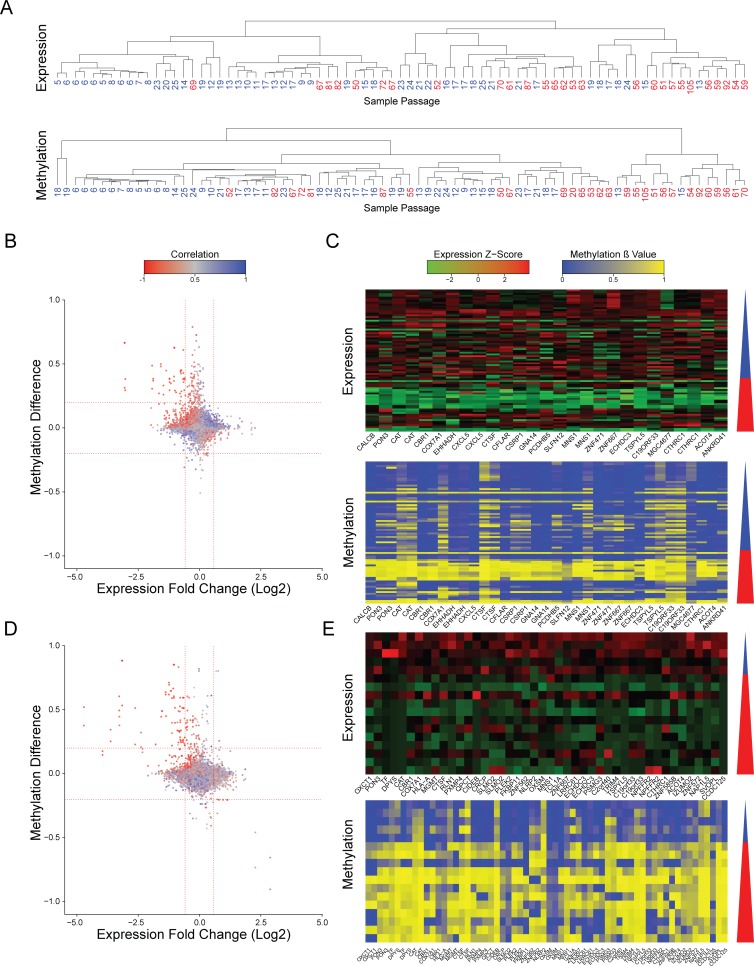
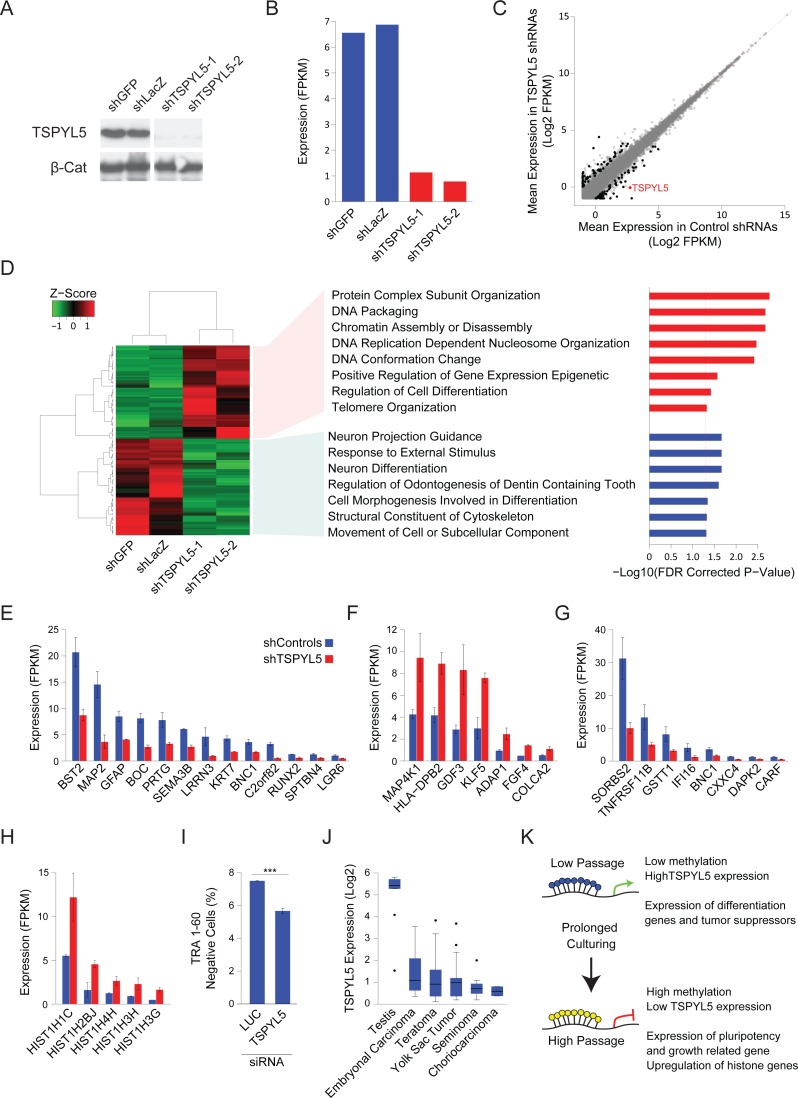
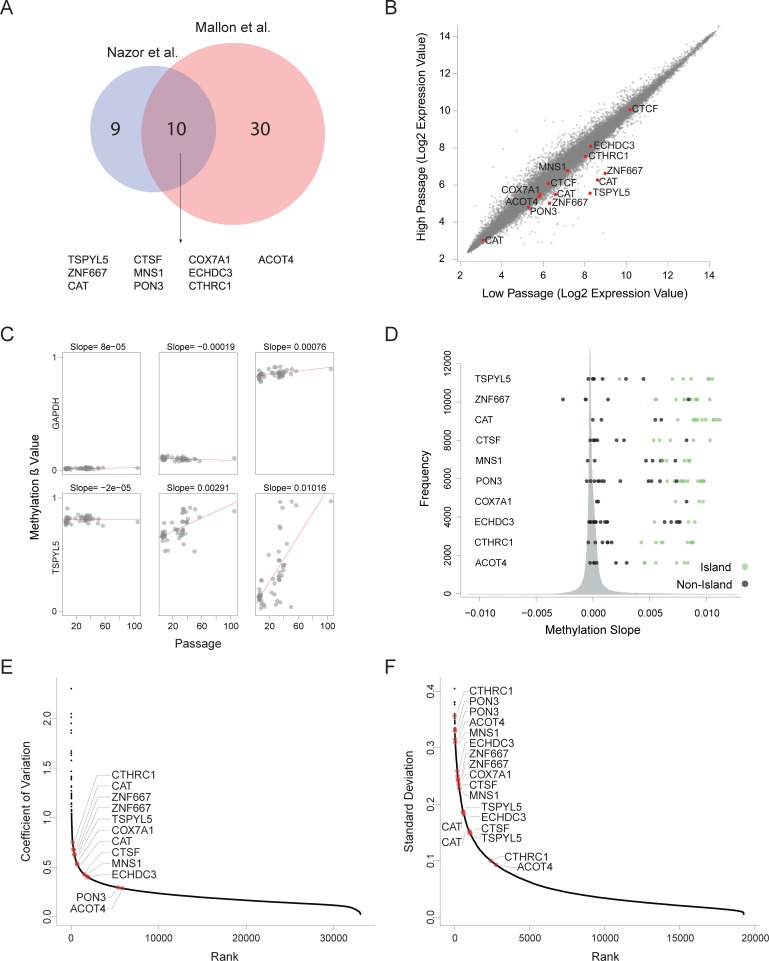
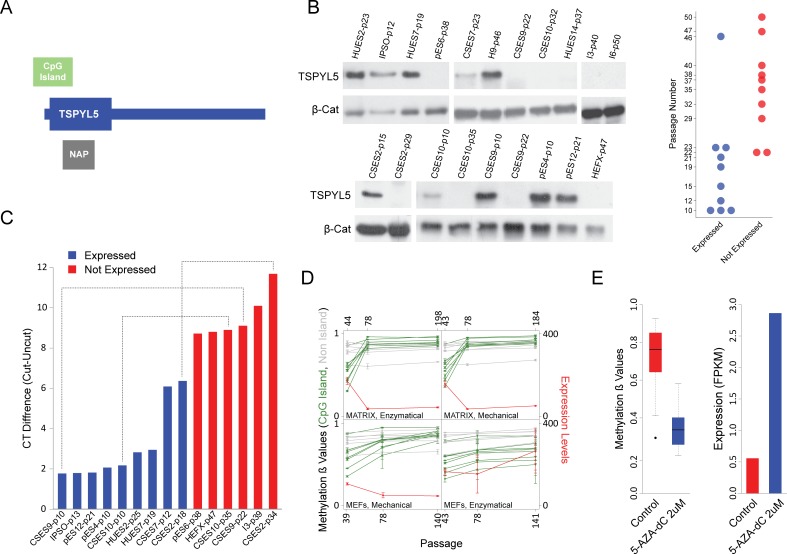
Human pluripotent stem cells (hPSCs) are an important player in disease modeling and regenerative medicine. Nonetheless, multiple studies uncovered their inherent genetic instability upon prolonged culturing, where specific chromosomal aberrations provide cells with a growth advantage. These positively selected modifications have dramatic effects on multiple cellular characteristics. Epigenetic aberrations also possess the potential of changing gene expression and altering cellular functions. In the current study we assessed the landscape of DNA methylation aberrations during prolonged culturing of hPSCs, and defined a set of genes which are recurrently hypermethylated and silenced. We further focused on one of these genes, testis-specific Y-encoded like protein 5 (TSPYL5), and demonstrated that when silenced, differentiation-related genes and tumor-suppressor genes are downregulated, while pluripotency- and growth promoting genes are upregulated. This process is similar to the hypermethylation-mediated inactivation of certain genes during tumor development. Our analysis highlights the existence and importance of recurrent epigenetic aberrations in hPSCs during prolonged culturing.
人类多能干细胞(hPSCs)在疾病建模和再生医学中发挥着重要作用。尽管如此,多项研究发现,长时间培养后它们具有内在的遗传不稳定性,特定的染色体畸变赋予细胞生长优势。这些经过正向选择的修饰对多种细胞特性具有显著影响。表观遗传畸变也具有改变基因表达和细胞功能的潜力。在本研究中,我们评估了hPSCs长时间培养过程中DNA甲基化畸变的情况,并确定了一组经常发生高甲基化和沉默的基因。我们进一步聚焦于其中一个基因,睾丸特异性Y编码样蛋白5(TSPYL5),并证明当该基因沉默时,与分化相关的基因和肿瘤抑制基因会下调,而多能性和生长促进基因会上调。这一过程类似于肿瘤发生过程中某些基因的高甲基化介导的失活。我们的分析突出了hPSCs长时间培养过程中反复出现的表观遗传畸变的存在及其重要性。