Liland Nina S, Biancarosa Irene, Araujo Pedro, Biemans Daan, Bruckner Christian G, Waagbø Rune, Torstensen Bente E, Lock Erik-Jan
National Institute of Nutrition and Seafood Research, Bergen, Norway.
Protix Biosystems BV, Industriestraat 3, Dongen, The Netherlands.
PLoS One. 2017 Aug 24;12(8):e0183188. doi: 10.1371/journal.pone.0183188. eCollection 2017.
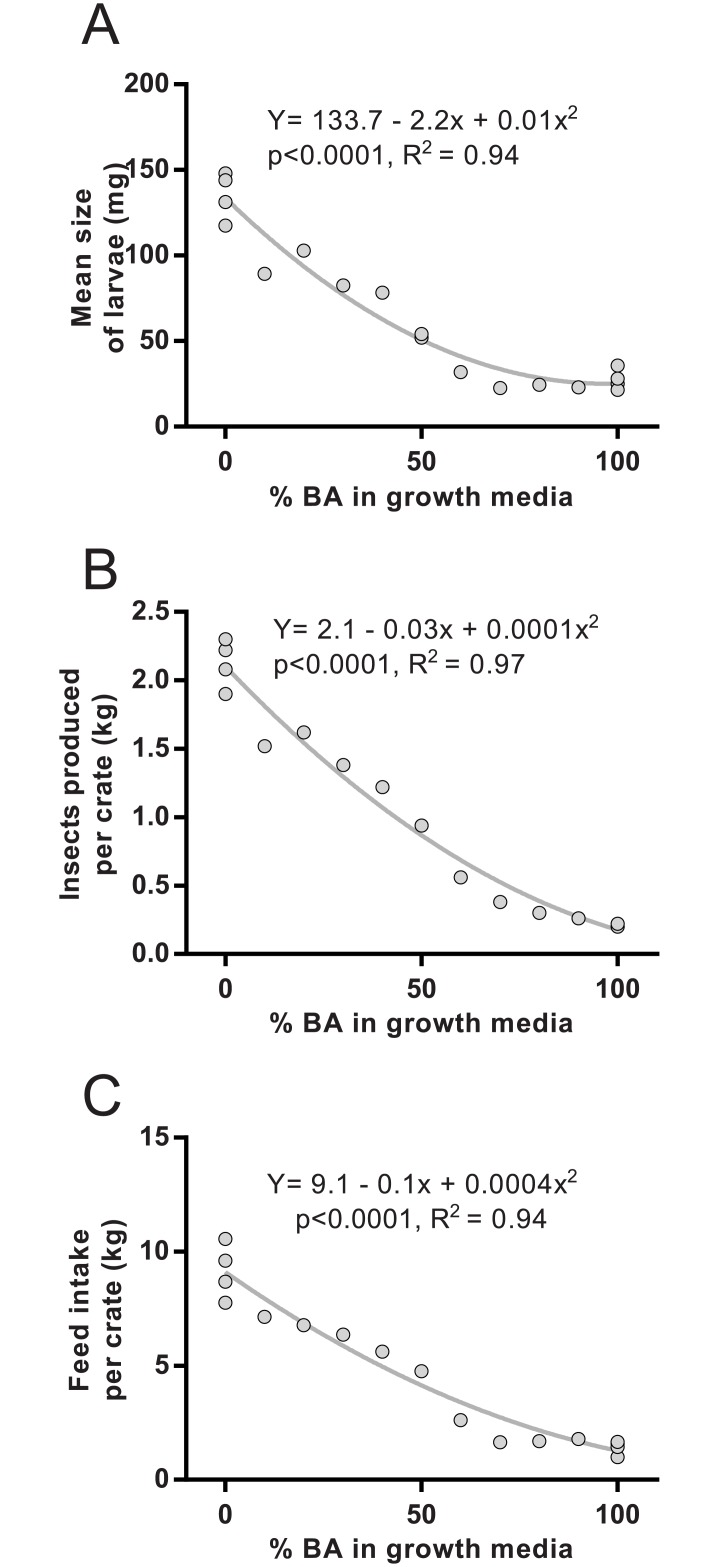
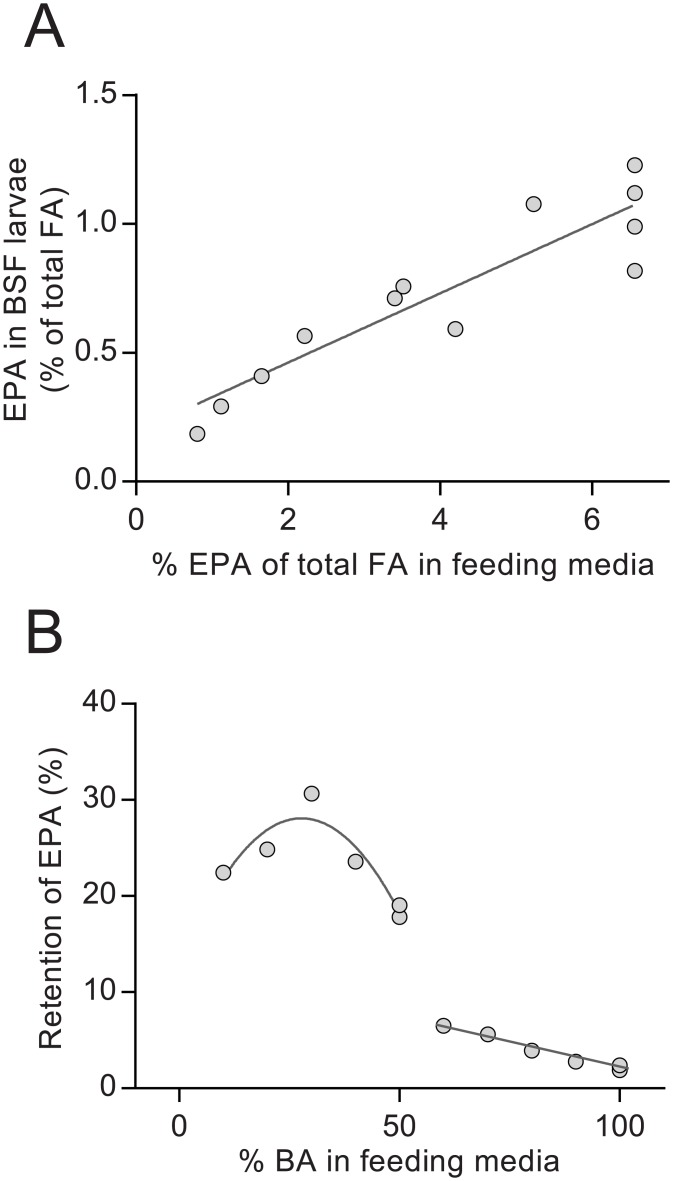
Black soldier fly (Hermetia illucens) larvae are a promising source of protein and lipid for animal feeds. The nutritional composition of the BSF larvae depend partly on the composition of the feeding medium. The BSF lipid profile in part mimics the feeding media lipid profile, and micronutrients, like minerals and vitamins, can readily accumulate in black soldier fly larvae. However, investigative studies on bioconversion and accumulation of nutrients from media to black soldier fly larvae are scarce. Here we show that inclusion of the brown algae Ascophyllum nodosum in the substrate for black soldier fly larvae can introduce valuable nutrients, commonly associated with the marine environment, into the larvae. The omega-3 fatty acid eicosapentaenoic acid (20:5n-3), iodine and vitamin E concentrations increased in the larvae when more seaweed was included in the diet. When the feeding media consisted of more than 50% seaweed, the larvae experienced poorer growth, lower nutrient retention and lower lipid levels, compared to a pure plant based feeding medium. Our results confirm the plasticity of the nutritional make-up of black soldier fly larvae, allowing it to accumulate both lipid- and water-soluble compounds. A broader understanding of the effect of the composition of the feeding media on the larvae composition can help to tailor black soldier fly larvae into a nutrient profile more suited for specific feed or food purposes.
黑水虻(Hermetia illucens)幼虫是动物饲料中一种很有前景的蛋白质和脂质来源。黑水虻幼虫的营养成分部分取决于饲养介质的组成。黑水虻的脂质谱部分模仿饲养介质的脂质谱,矿物质和维生素等微量营养素很容易在黑水虻幼虫中积累。然而,关于从介质到黑水虻幼虫的营养物质生物转化和积累的调查研究很少。在这里,我们表明,在黑水虻幼虫的基质中添加褐藻海带(Ascophyllum nodosum)可以将通常与海洋环境相关的有价值的营养物质引入幼虫体内。当饮食中包含更多海藻时,幼虫体内的ω-3脂肪酸二十碳五烯酸(20:5n-3)、碘和维生素E浓度会增加。与纯植物性饲养介质相比,当饲养介质中海藻含量超过50%时,幼虫的生长较差,营养保留率较低,脂质水平也较低。我们的结果证实了黑水虻幼虫营养组成的可塑性,使其能够积累脂溶性和水溶性化合物。更广泛地了解饲养介质组成对幼虫组成的影响有助于将黑水虻幼虫调整为更适合特定饲料或食品用途的营养成分。