Muenks Andrew G, Stiers Kyle M, Beamer Lesa J
Biochemistry Department, University of Missouri, Columbia, Missouri, United States of America.
PLoS One. 2017 Aug 24;12(8):e0183563. doi: 10.1371/journal.pone.0183563. eCollection 2017.
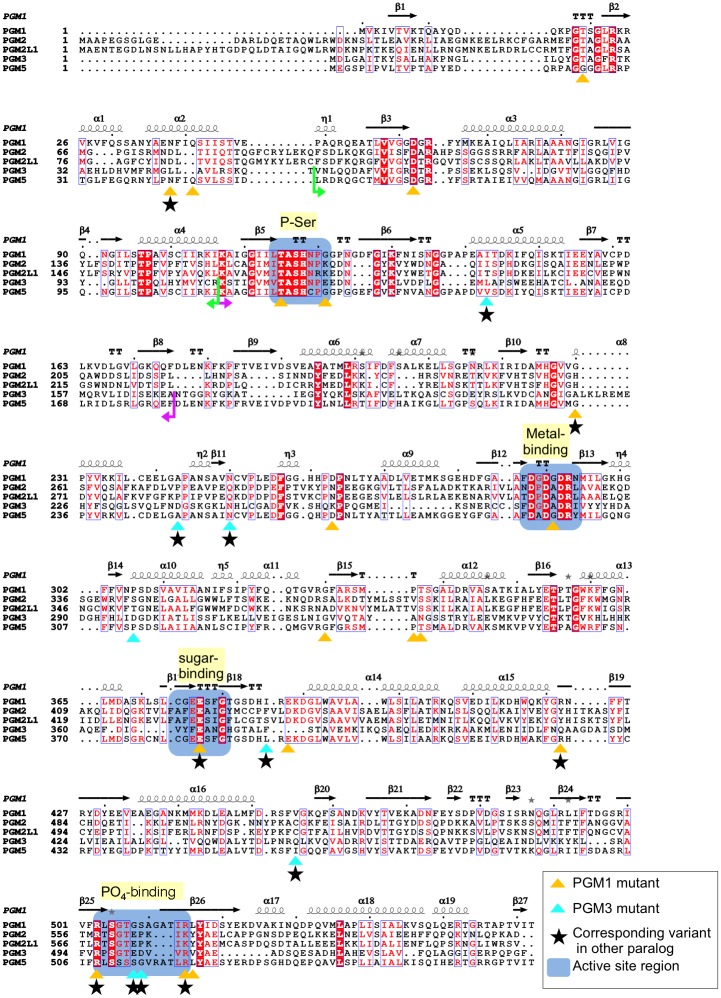
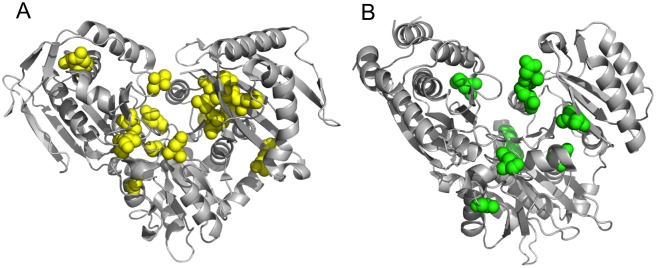
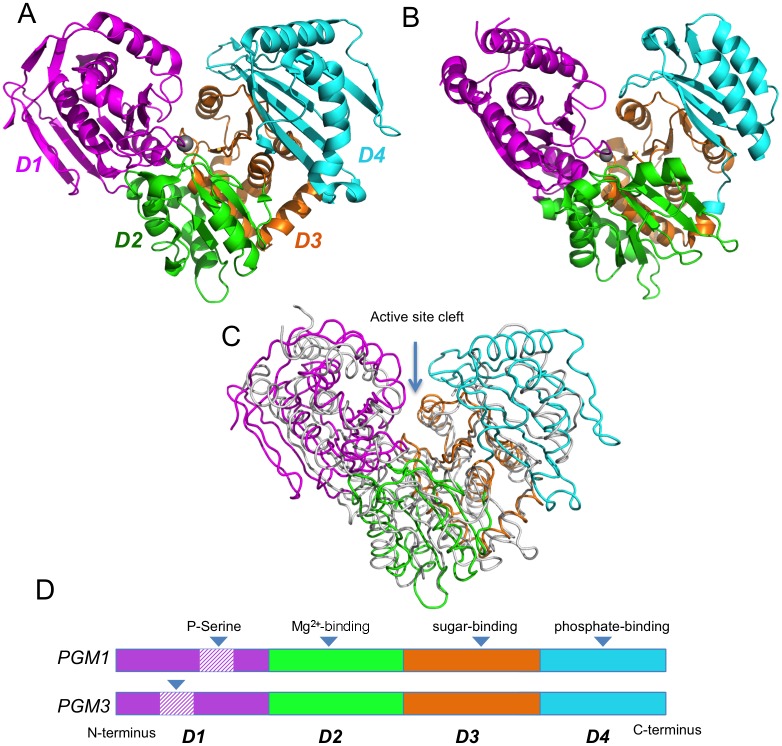
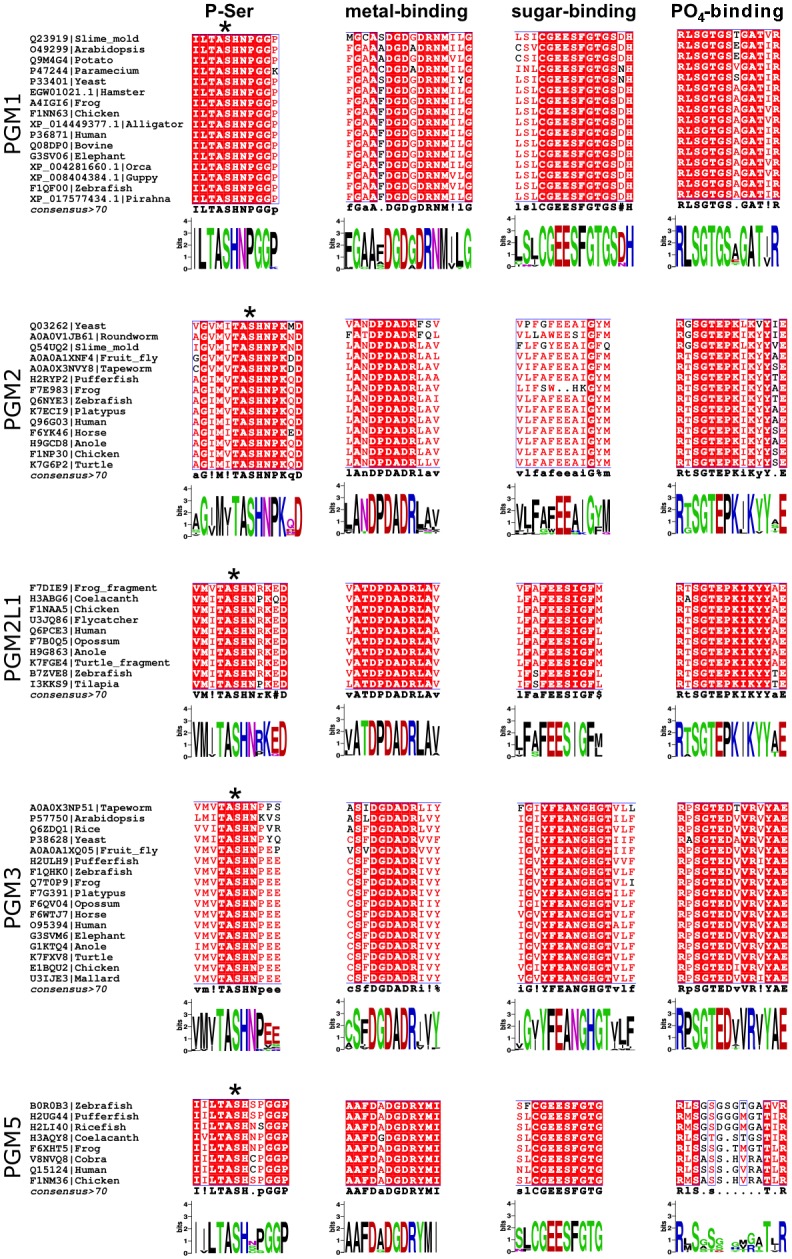
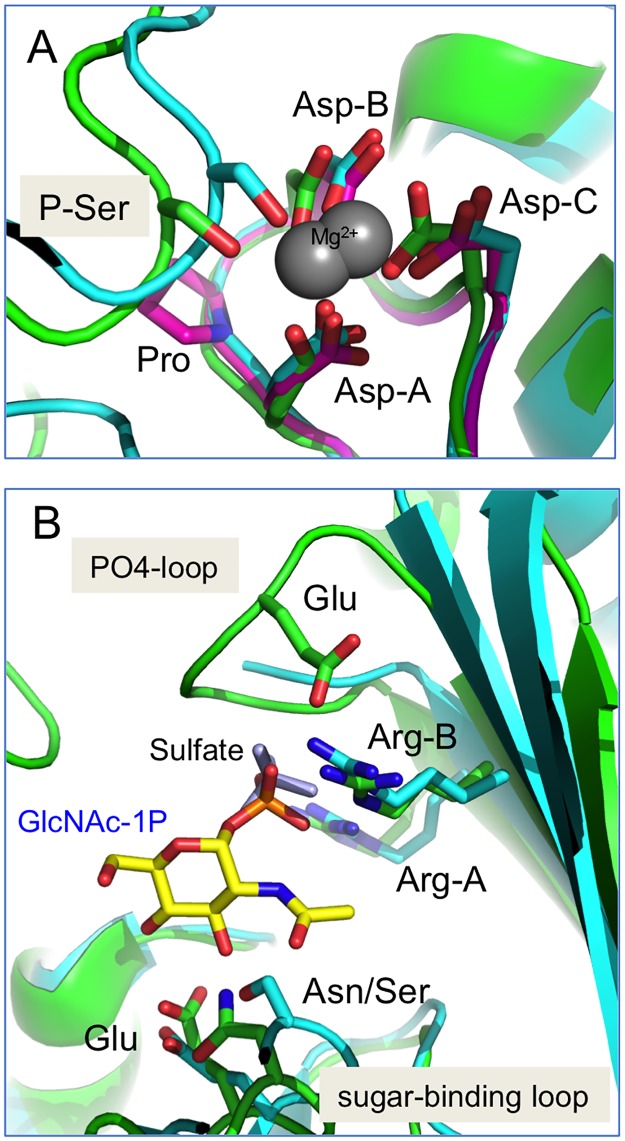
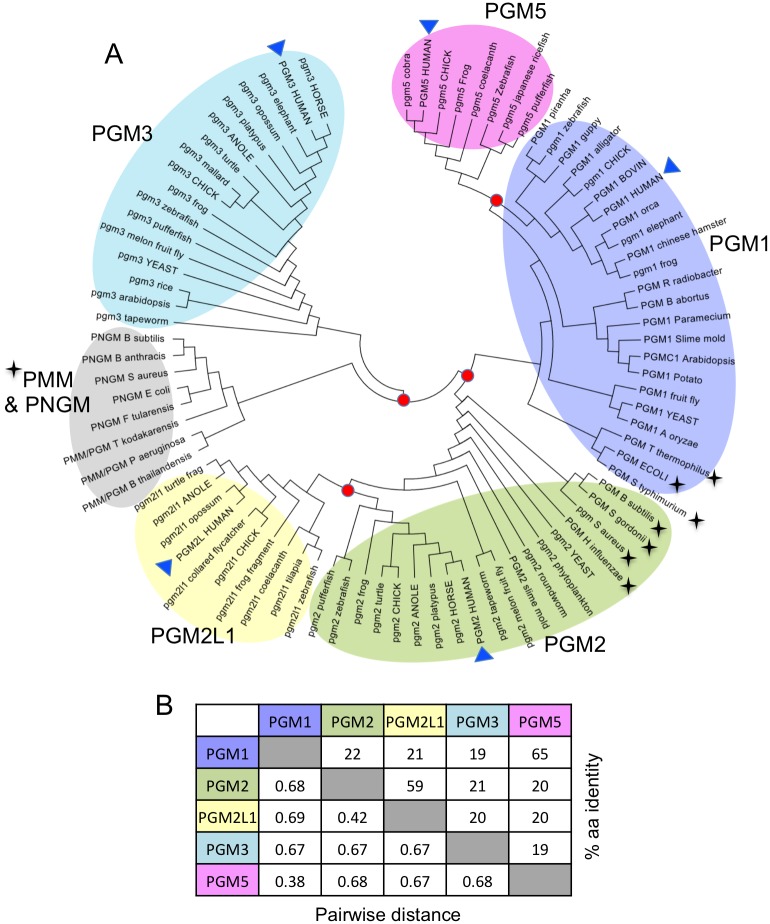
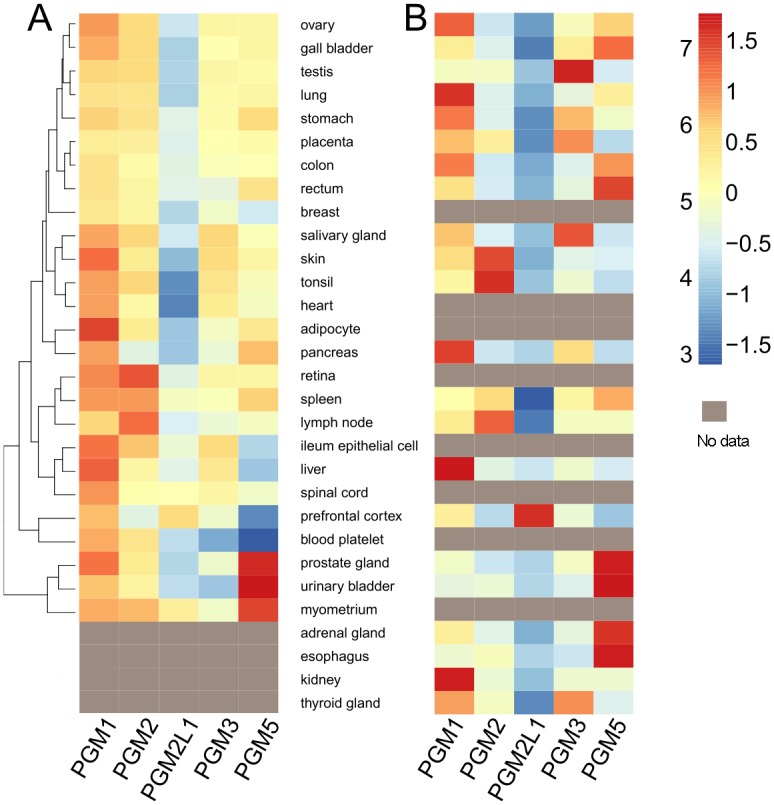
The key metabolic enzyme phosphoglucomutase 1 (PGM1) controls glucose homeostasis in most human cells. Four proteins related to PGM1, known as PGM2, PGM2L1, PGM3 and PGM5, and referred to herein as paralogs, are encoded in the human genome. Although all members of the same enzyme superfamily, these proteins have distinct substrate preferences and different functional roles. The recent association of PGM1 and PGM3 with inherited enzyme deficiencies prompts us to revisit sequence-structure and other relationships among the PGM1 paralogs, which are understudied despite their importance in human biology. Using currently available sequence, structure, and expression data, we investigated evolutionary relationships, tissue-specific expression profiles, and the amino acid preferences of key active site motifs. Phylogenetic analyses indicate both ancient and more recent divergence between the different enzyme sub-groups comprising the human paralogs. Tissue-specific protein and RNA expression profiles show widely varying patterns for each paralog, providing insight into function and disease pathology. Multiple sequence alignments confirm high conservation of key active site regions, but also reveal differences related to substrate specificity. In addition, we find that sequence variants of PGM2, PGM2L1, and PGM5 verified in the human population affect residues associated with disease-related mutants in PGM1 or PGM3. This suggests that inherited diseases related to dysfunction of these paralogs will likely occur in humans.
关键代谢酶磷酸葡萄糖变位酶1(PGM1)控制着大多数人类细胞中的葡萄糖稳态。在人类基因组中编码了四种与PGM1相关的蛋白质,分别称为PGM2、PGM2L1、PGM3和PGM5,本文将它们称为旁系同源物。尽管这些蛋白质属于同一酶超家族的所有成员,但它们具有不同的底物偏好和不同的功能作用。最近PGM1和PGM3与遗传性酶缺陷的关联促使我们重新审视PGM1旁系同源物之间的序列-结构及其他关系,尽管它们在人类生物学中很重要,但却研究不足。利用目前可用的序列、结构和表达数据,我们研究了进化关系、组织特异性表达谱以及关键活性位点基序的氨基酸偏好。系统发育分析表明,构成人类旁系同源物的不同酶亚组之间既有古老的分化,也有较新的分化。组织特异性蛋白质和RNA表达谱显示每个旁系同源物的模式差异很大,这为了解其功能和疾病病理学提供了线索。多序列比对证实了关键活性位点区域的高度保守性,但也揭示了与底物特异性相关的差异。此外,我们发现人类群体中验证的PGM2、PGM2L1和PGM5的序列变异影响与PGM1或PGM3中疾病相关突变体相关的残基。这表明与这些旁系同源物功能障碍相关的遗传性疾病可能会在人类中发生。