Piyaviriyakul Suratsawadee, Thongpraditchote Suchitra, Siripong Pongpun, Vallisuta Omboon
Pharmaceutical Biology Department, Faculty of Pharmacy, University of Surabaya, Surabaya 60293, Indonesia.
Research Division, Natural Products Research Section, National Cancer Institute, Bangkok 10400, Thailand.
Pharmacogn Mag. 2017 Jul-Sep;13(51):393-399. doi: 10.4103/pm.pm_406_16. Epub 2017 Jul 19.
has been reported to have anticancer and anti-inflammatory properties. However, its antiproliferative and anti-inflammatory mechanisms have not been fully elucidated. Moreover, which plant parts are more suitable as starting materials has not been explored.
To investigate the antiproliferative activity of extracts against MCF-7, MDA-MB-231, HeLaS3, A549, and KB cancer cell lines as well as their effects on inflammatory cytokines (tumor necrosis factor [TNF]-α, interleukin [IL]-1β, IL-6, and interferon [IFN]-γ) production by lipopolysaccharide (LPS)-stimulated THP-1 macrophages.
The methanol and aqueous extracts of from different plant parts and its chemical compounds, i.e., ursolic acid (UA), oleanolic acid (OA), and aucubin were tested in this experiment.
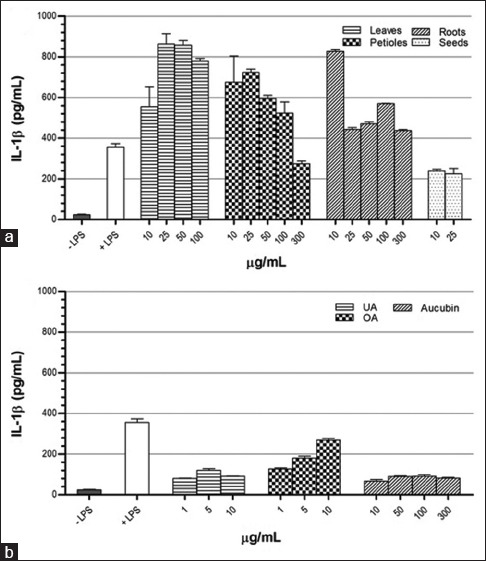
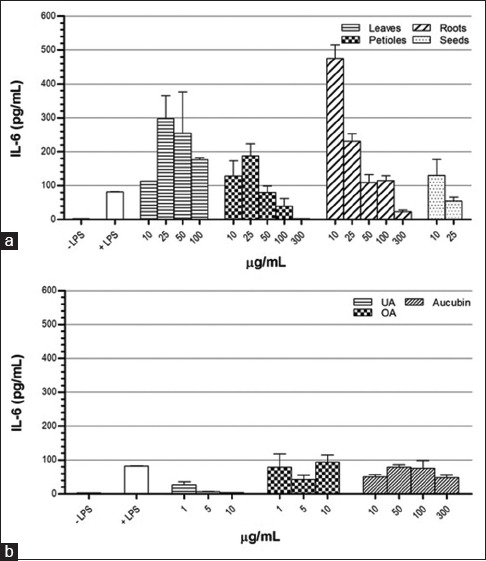
Methanol and aqueous extracts of seeds exhibited the greatest antiproliferative activity. The methanol extracts of seeds also demonstrated the highest inhibition of TNF-α, IL-1β, IL-6, and IFN-γ production. Interestingly, the roots, which were commonly discarded, exhibited comparable activities to those of leaves and petioles. Furthermore, UA exhibited stronger activities than OA and aucubin.
The seeds are being proposed as the main source for further development of anticancer and anti-inflammatory products, whereas the roots could be included in the preparation of derived products with respect to anti-inflammatory.
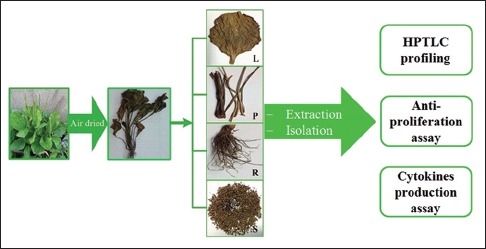
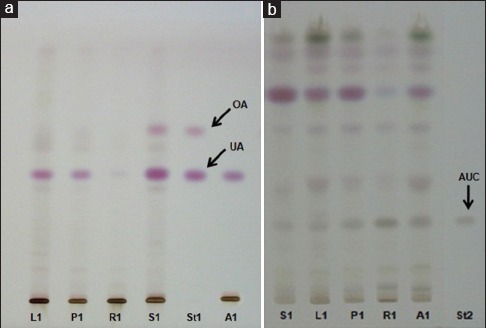
Amongst the parts of , seeds exhibited the greatest antiproliferative activity against MCF-7, MDA-MB-231, HeLaS3, A549, and KB cell lines as well as the highest inhibition on TNF-α, IL-1β, IL-6, and IFN-γ productionThe roots, which were commonly discarded, exhibited comparable antiproliferative and cytokines inhibition activities to those of leaves and petiolesUrsolic acid, a chemical compound of , exhibited stronger activities than oleanolic acid and aucubinThe seeds are being proposed as the main source for further development of anticancer and anti inflammatory products, whereas the roots could be included in the preparation of derived products with respect to anti inflammatory. TNF: Tumor Necrosis Factor; IL: Interleukin; IFN: Interferon; HPTLC: High Performance Thin Layer Chromatography; UA: Ursolic Acid; OA: Oleanolic Acid; AUC: Aucubin.
据报道具有抗癌和抗炎特性。然而,其抗增殖和抗炎机制尚未完全阐明。此外,尚未探索哪些植物部位更适合作为起始原料。
研究提取物对MCF-7、MDA-MB-231、HeLaS3、A549和KB癌细胞系的抗增殖活性,以及它们对脂多糖(LPS)刺激的THP-1巨噬细胞产生炎性细胞因子(肿瘤坏死因子[TNF]-α、白细胞介素[IL]-1β、IL-6和干扰素[IFN]-γ)的影响。
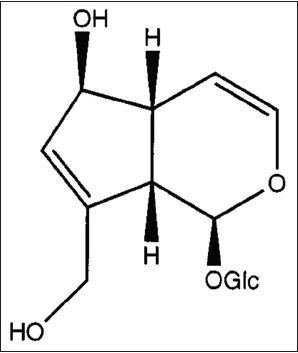
本实验测试了来自不同植物部位的甲醇提取物和水提取物及其化合物,即熊果酸(UA)、齐墩果酸(OA)和桃叶珊瑚苷。
种子的甲醇提取物和水提取物表现出最大的抗增殖活性。种子的甲醇提取物对TNF-α、IL-1β、IL-6和IFN-γ的产生也表现出最高的抑制作用。有趣的是,通常被丢弃的根表现出与叶和叶柄相当的活性。此外,UA的活性比OA和桃叶珊瑚苷更强。
种子被提议作为进一步开发抗癌和抗炎产品的主要来源,而根在抗炎方面可纳入衍生产品的制备中。
在的各部位中,种子对MCF-7、MDA-MB-231、HeLaS3、A549和KB细胞系表现出最大的抗增殖活性,对TNF-α、IL-1β、IL-6和IFN-γ的产生也表现出最高的抑制作用。通常被丢弃的根表现出与叶和叶柄相当的抗增殖和细胞因子抑制活性。熊果酸作为的一种化合物,其活性比齐墩果酸和桃叶珊瑚苷更强。种子被提议作为进一步开发抗癌和抗炎产品的主要来源,而根在抗炎方面可纳入衍生产品的制备中。TNF:肿瘤坏死因子;IL:白细胞介素;IFN:干扰素;HPTLC:高效薄层色谱法;UA:熊果酸;OA:齐墩果酸;AUC:桃叶珊瑚苷