Schmelz Martin, Duguid Shona, Bohn Manuel, Völter Christoph J
Department of Developmental and Comparative Psychology, Max Planck Institute for Evolutionary Anthropology, Leipzig, Germany.
Department of Cognitive Biology, University of Vienna, Vienna, Austria.
Anim Cogn. 2017 Nov;20(6):1107-1114. doi: 10.1007/s10071-017-1126-2. Epub 2017 Aug 24.
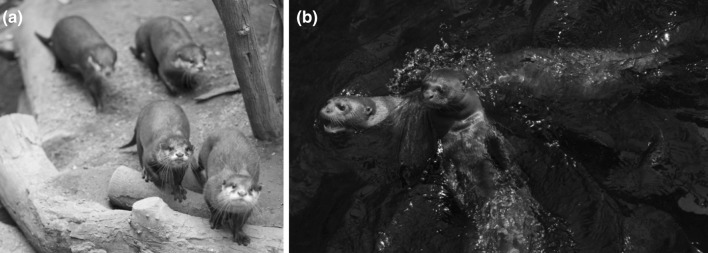
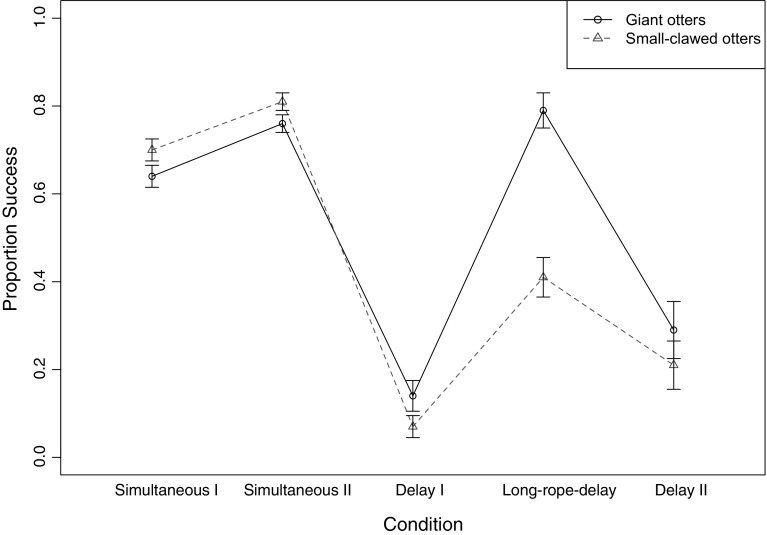
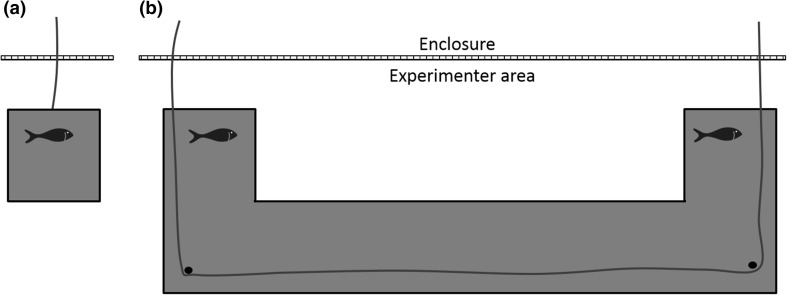
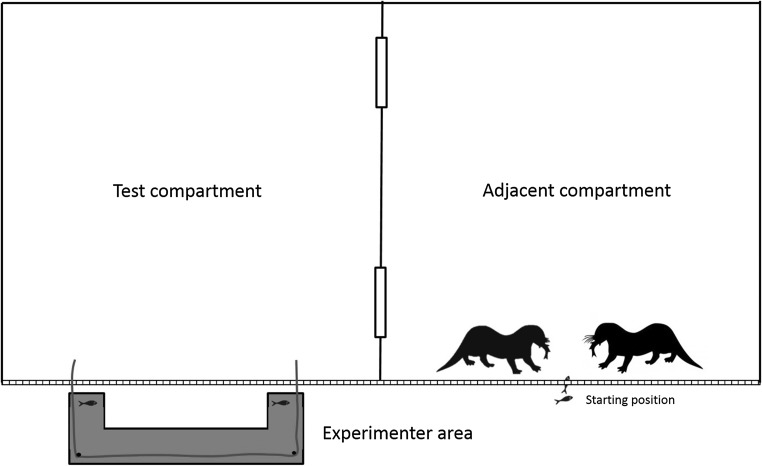
Cooperative problem solving has gained a lot of attention over the past two decades, but the range of species studied is still small. This limits the possibility of understanding the evolution of the socio-cognitive underpinnings of cooperation. Lutrinae show significant variations in socio-ecology, but their cognitive abilities are not well studied. In the first experimental study of otter social cognition, we presented two species-giant otters and Asian small-clawed otters-with a cooperative problem-solving task. The loose string task requires two individuals to simultaneously pull on either end of a rope in order to access food. This task has been used with a larger number of species (for the most part primates and birds) and thus allows for wider cross-species comparison. We found no differences in performance between species. Both giant otters and Asian small-clawed otters were able to solve the task successfully when the coordination requirements were minimal. However, when the temporal coordination demands were increased, performance decreased either due to a lack of understanding of the role of a partner or due to difficulty inhibiting action. In conclusion, two species of otters show some ability to cooperate, quite similar to most other species presented with the same task. However, to draw further conclusions and more nuanced comparisons between the two otter species, further studies with varied methodologies will be necessary.
在过去二十年中,合作问题解决受到了广泛关注,但所研究的物种范围仍然很小。这限制了理解合作的社会认知基础演变的可能性。水獭科在社会生态学方面表现出显著差异,但其认知能力尚未得到充分研究。在第一项关于水獭社会认知的实验研究中,我们向两种水獭——巨型水獭和亚洲小爪水獭——呈现了一个合作问题解决任务。松散绳索任务要求两个个体同时拉动绳索的两端以获取食物。这个任务已被应用于大量物种(大部分是灵长类动物和鸟类),因此可以进行更广泛的跨物种比较。我们发现不同物种在任务表现上没有差异。当协调要求最低时,巨型水獭和亚洲小爪水獭都能够成功解决任务。然而,当时间协调需求增加时,由于对伙伴角色缺乏理解或抑制行动困难,表现会下降。总之,两种水獭表现出了一定的合作能力,与接受相同任务的大多数其他物种非常相似。然而,为了得出进一步的结论并对这两种水獭物种进行更细致入微的比较,有必要采用不同方法进行进一步研究。