Chen Rui, Xu Liu, Fan Qin, Li Man, Wang Jingjing, Wu Li, Li Weidong, Duan Jinao, Chen Zhipeng
a College of Pharmacy , Nanjing University of Chinese Medicine , Nanjing , China.
b Collaborative Innovation Center of Chinese Medicinal Resources Industrialization , Nanjing , China.
Drug Deliv. 2017 Nov;24(1):1191-1203. doi: 10.1080/10717544.2017.1365395.
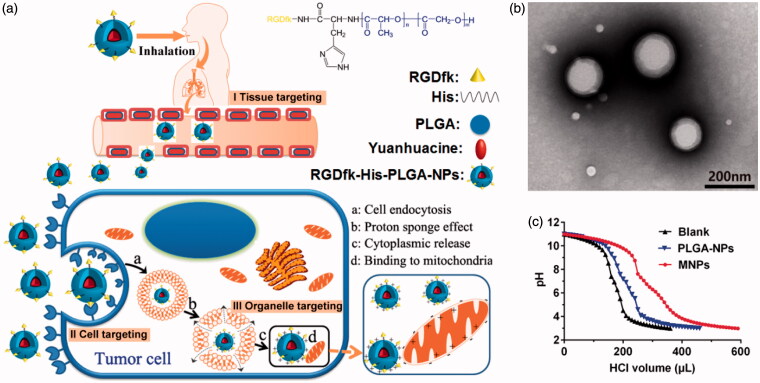
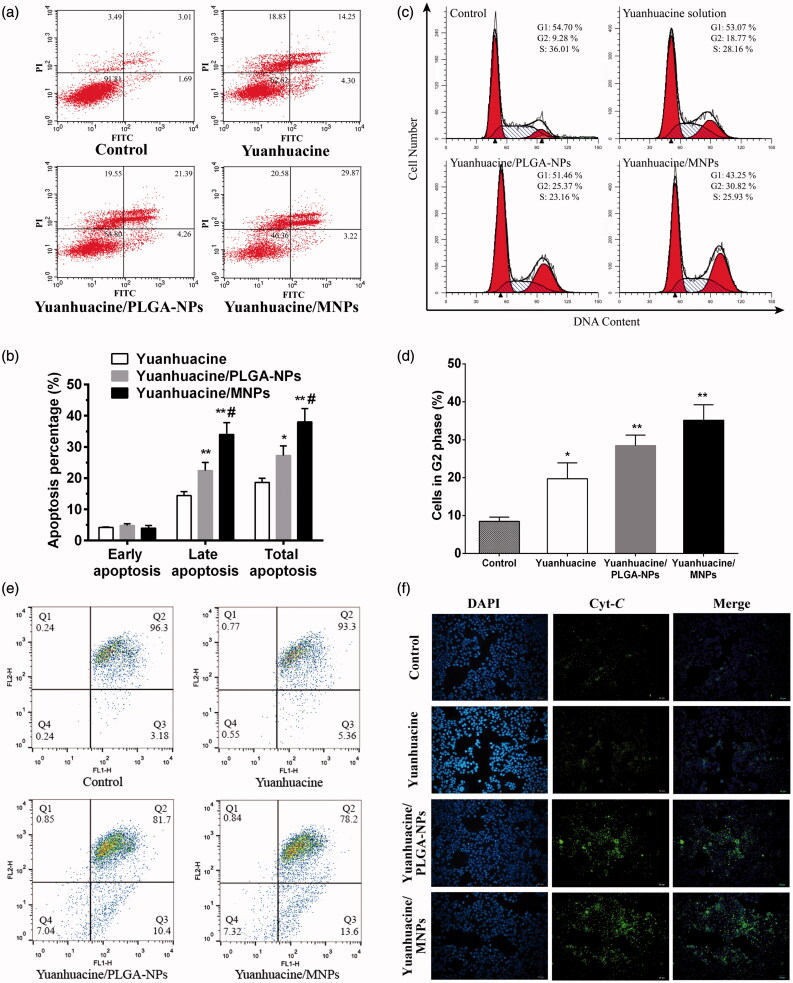
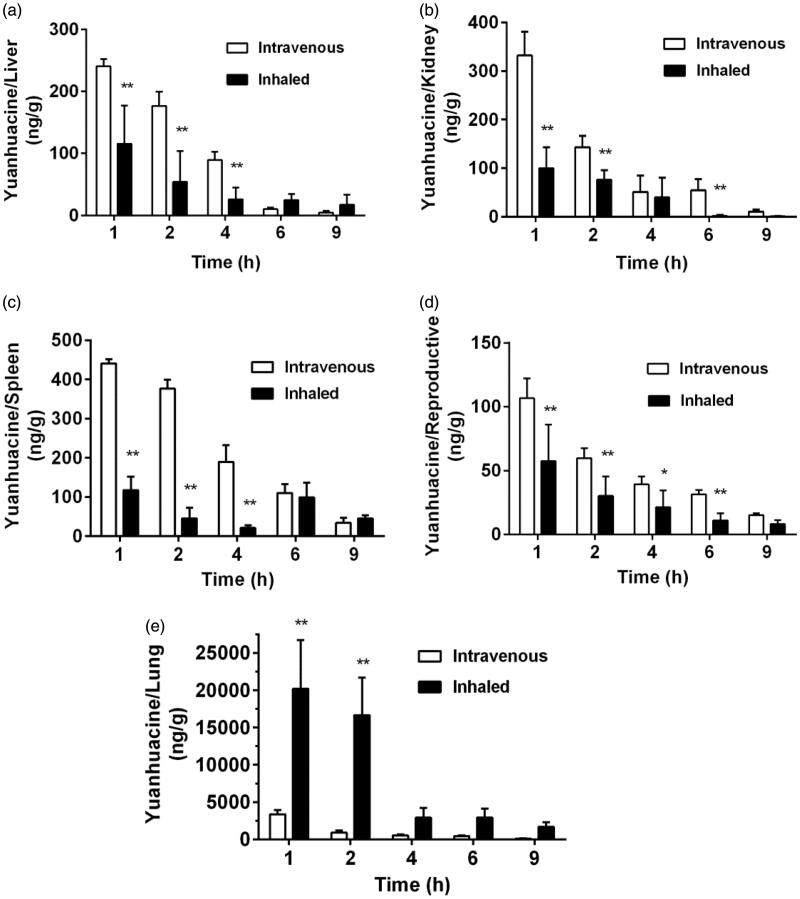
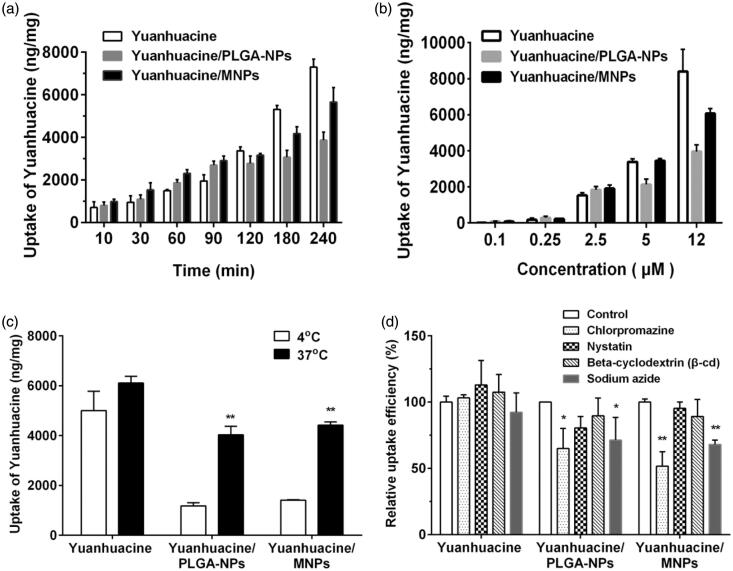
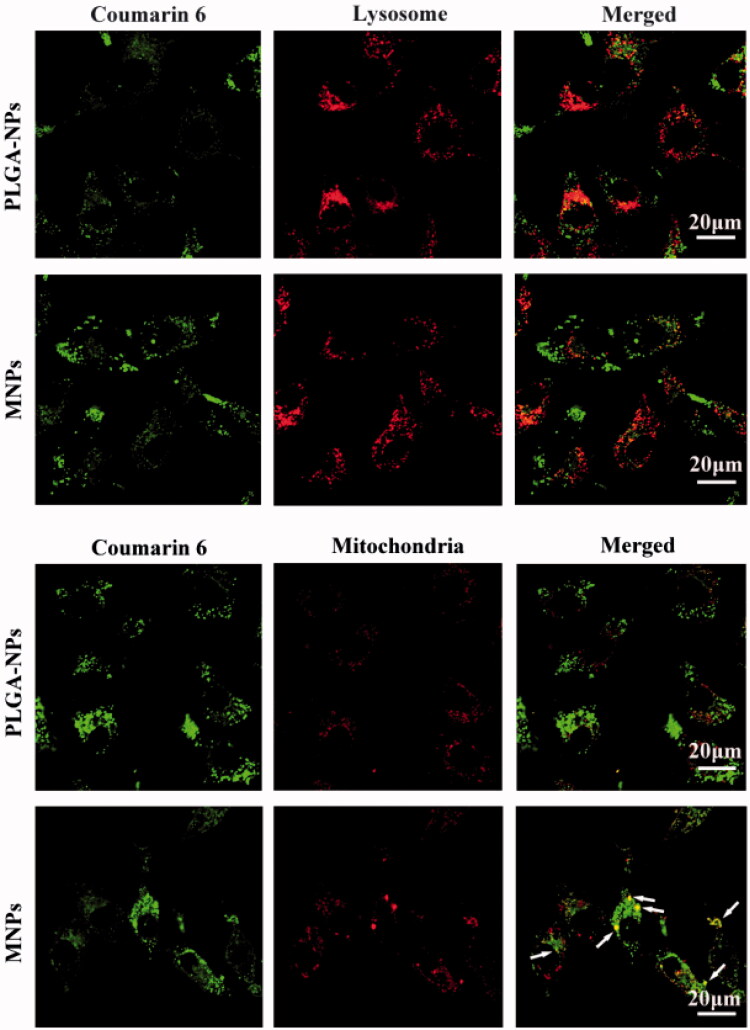
Inhalation administration, compared with intravenous administration, significantly enhances chemotherapeutic drug exposure to the lung tissue and may increase the therapeutic effect for pulmonary anticancer. However, further identification of cancer cells after lung deposition of inhaled drugs is necessary to avoid side effects on normal lung tissue and to maximize drug efficacy. Moreover, as the action site of the major drug was intracellular organelles, drug target to the specific organelle is the final key for accurate drug delivery. Here, we designed a novel multifunctional nanoparticles (MNPs) for pulmonary antitumor and the material was well-designed for hierarchical target involved lung tissue target, cancer cell target, and mitochondrial target. The biodistribution in vivo determined by UHPLC-MS/MS method was employed to verify the drug concentration overwhelmingly increasing in lung tissue through inhaled administration compared with intravenous administration. Cellular uptake assay using A549 cells proved the efficient receptor-mediated cell endocytosis. Confocal laser scanning microscopy observation showed the location of MNPs in cells was mitochondria. All results confirmed the intelligent material can progressively play hierarchical target functions, which could induce more cell apoptosis related to mitochondrial damage. It provides a smart and efficient nanocarrier platform for hierarchical targeting of pulmonary anticancer drug. So far, this kind of material for pulmonary mitochondrial-target has not been seen in other reports.
与静脉注射相比,吸入给药显著增强了化疗药物在肺组织中的暴露,可能会提高肺部抗癌的治疗效果。然而,为避免对正常肺组织产生副作用并最大化药物疗效,在吸入药物在肺部沉积后进一步识别癌细胞是必要的。此外,由于主要药物的作用位点是细胞内细胞器,药物靶向特定细胞器是实现精准给药的最终关键。在此,我们设计了一种新型多功能纳米颗粒(MNPs)用于肺部抗肿瘤,该材料针对涉及肺组织靶向、癌细胞靶向和线粒体靶向的分级靶向进行了精心设计。采用UHPLC-MS/MS方法测定体内生物分布,以验证与静脉注射相比,吸入给药后肺组织中的药物浓度大幅增加。使用A549细胞进行的细胞摄取试验证明了有效的受体介导的细胞内吞作用。共聚焦激光扫描显微镜观察显示MNPs在细胞内的位置是线粒体。所有结果证实了这种智能材料可以逐步发挥分级靶向功能,这可能会诱导更多与线粒体损伤相关的细胞凋亡。它为肺部抗癌药物的分级靶向提供了一个智能且高效的纳米载体平台。到目前为止,其他报道中尚未见到这种用于肺部线粒体靶向的材料。