King's College London, Randall Division of Cell and Molecular Biophysics, New Hunt's House, London SE1 1UL, United Kingdom; Medical Research Council & Asthma UK Centre in Allergic Mechanisms of Asthma, London, United Kingdom.
King's College London, Randall Division of Cell and Molecular Biophysics, New Hunt's House, London SE1 1UL, United Kingdom; Medical Research Council & Asthma UK Centre in Allergic Mechanisms of Asthma, London, United Kingdom.
Biochim Biophys Acta Proteins Proteom. 2017 Nov;1865(11 Pt A):1336-1347. doi: 10.1016/j.bbapap.2017.08.005. Epub 2017 Aug 24.
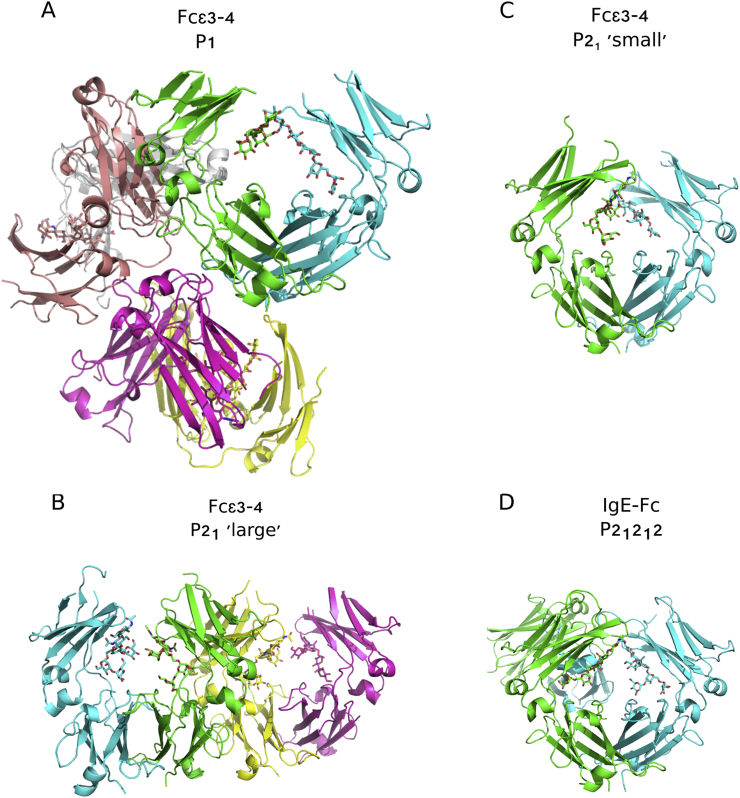
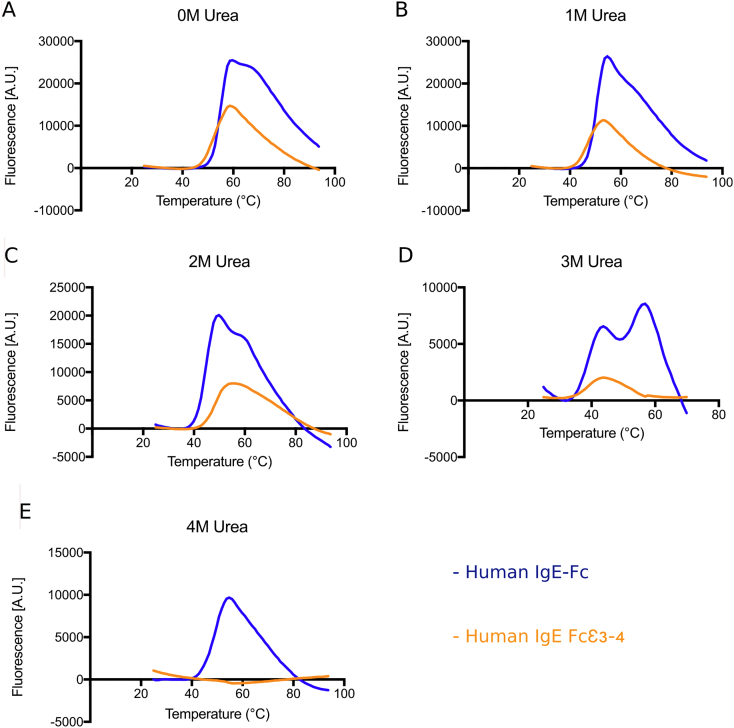
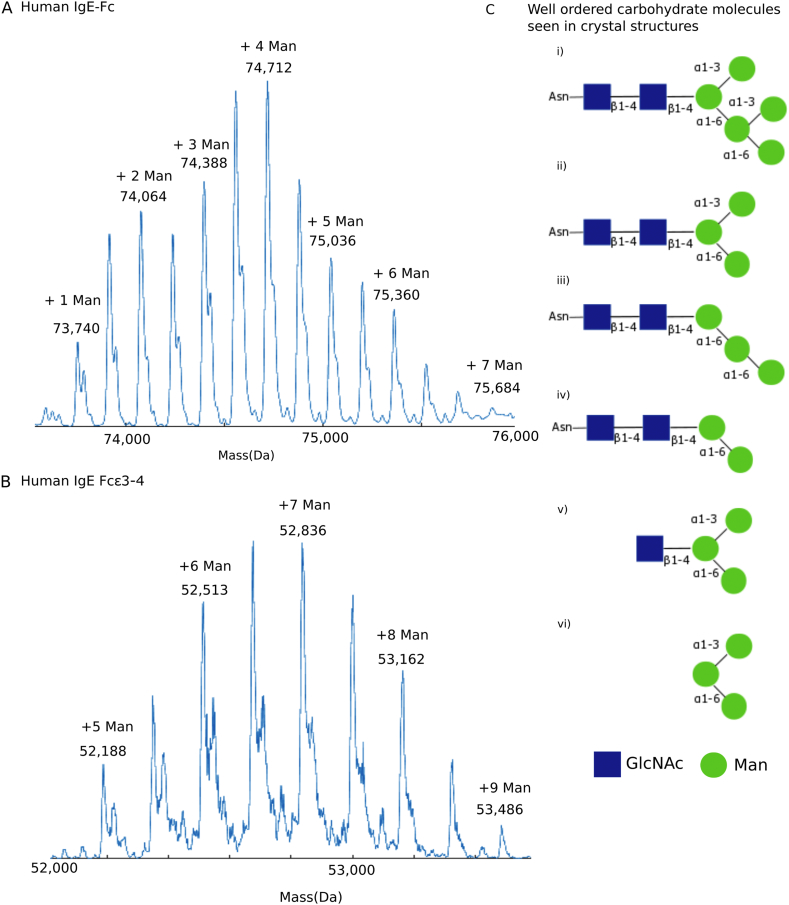
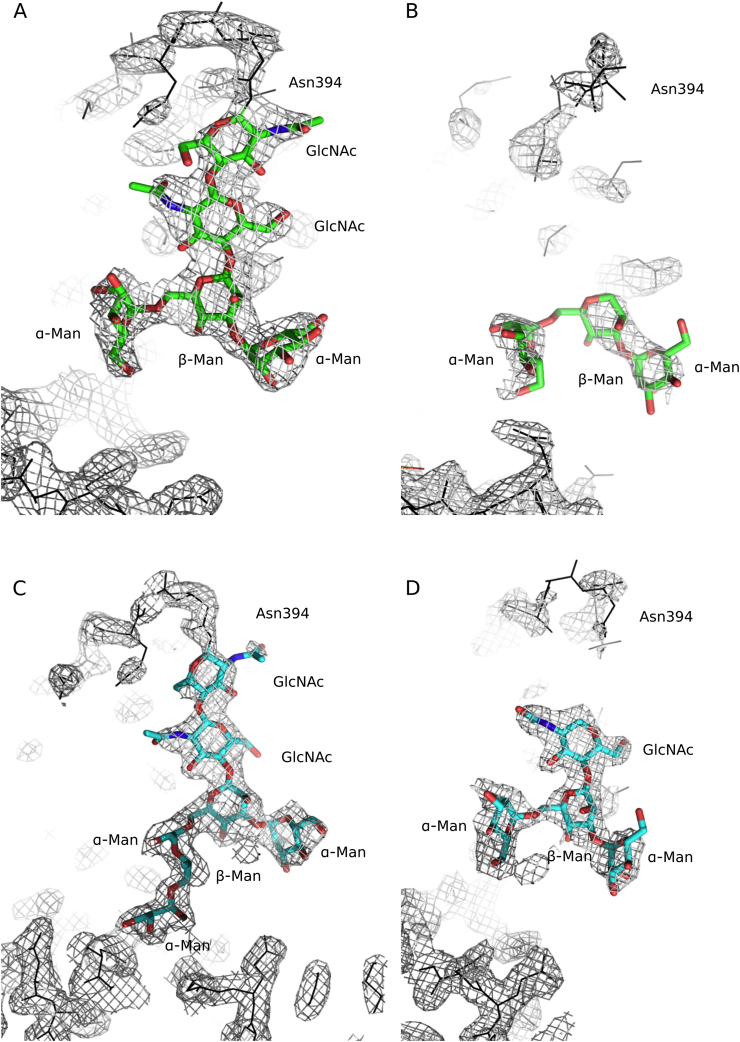
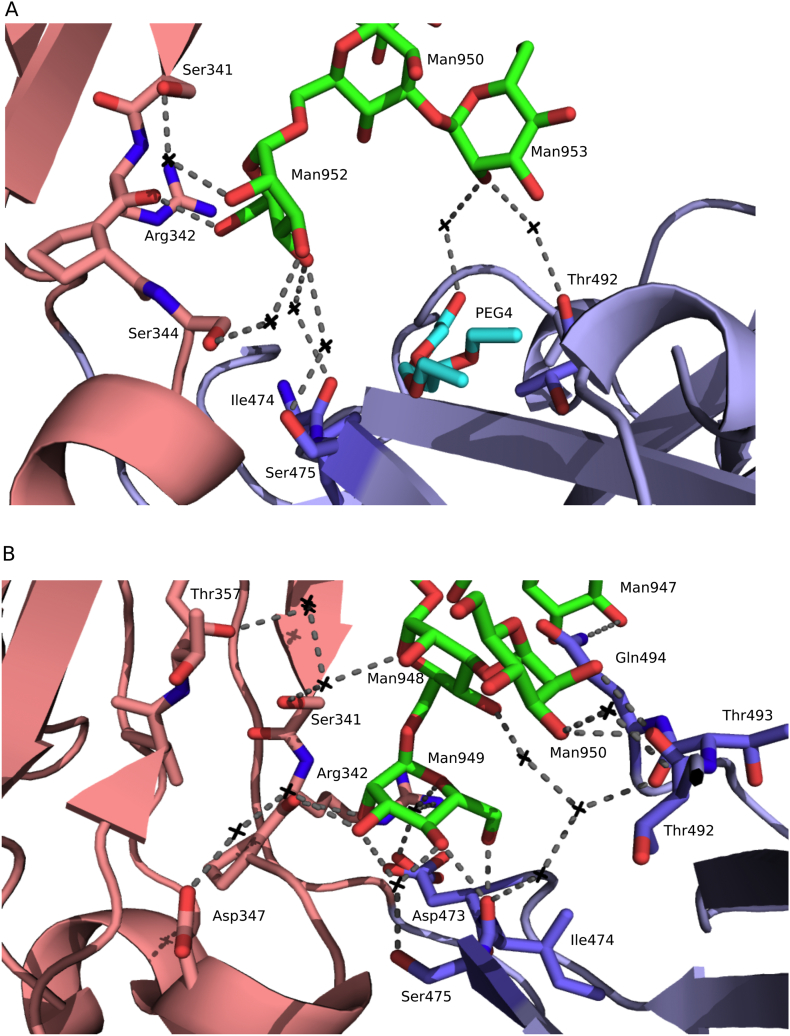
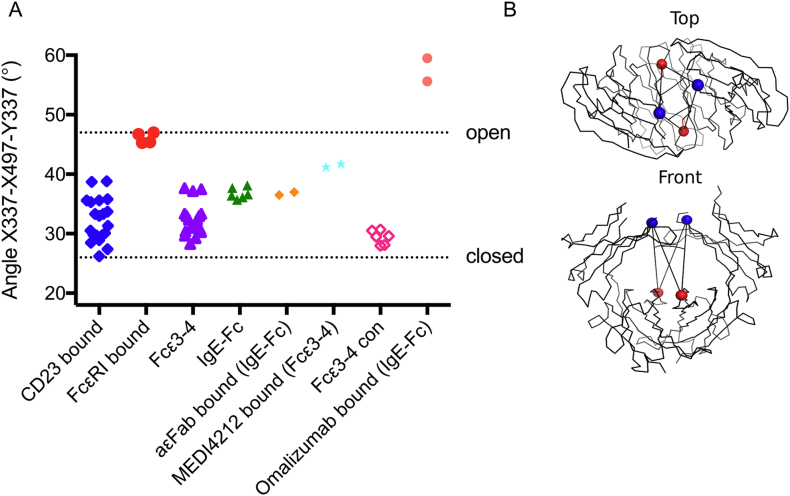
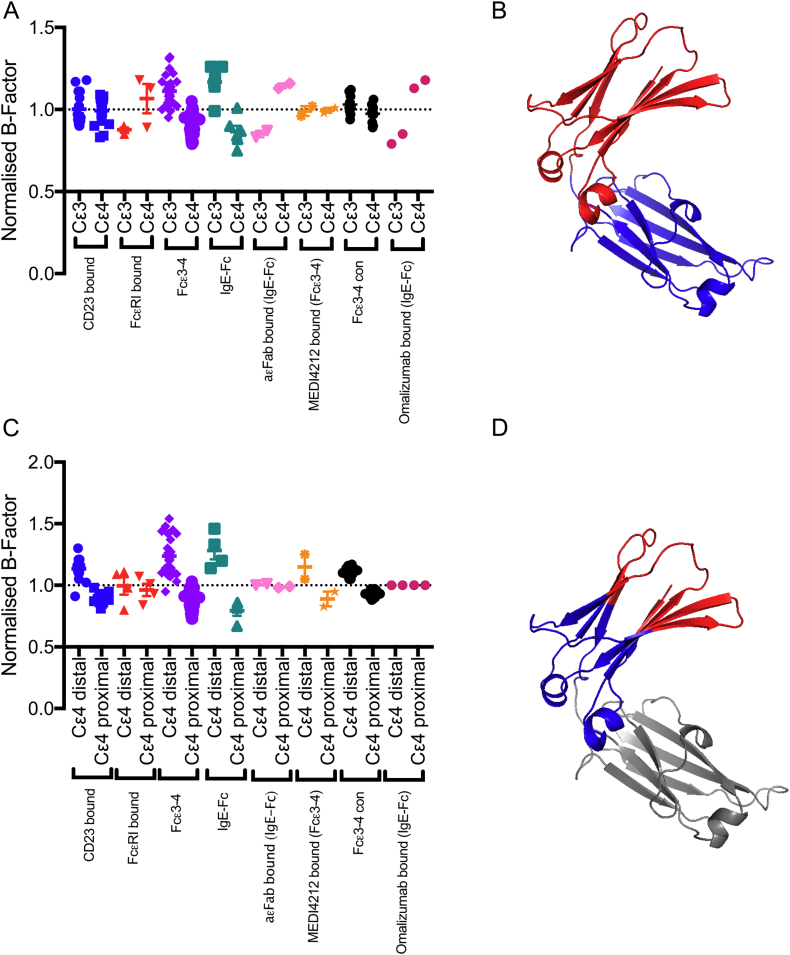
Immunoglobulin E (IgE) is the antibody that plays a central role in the mechanisms of allergic diseases such as asthma. Interactions with its receptors, FcεRI on mast cells and CD23 on B cells, are mediated by the Fc region, a dimer of the Cε2, Cε3 and Cε4 domains. A sub-fragment lacking the Cε2 domains, Fcε3-4, also binds to both receptors, although receptor binding almost exclusively involves the Cε3 domains. This domain also contains the N-linked glycosylation site conserved in other isotypes. We report here the crystal structures of IgE-Fc and Fcε3-4 at the highest resolutions yet determined, 1.75Å and 2.0Å respectively, revealing unprecedented detail regarding the carbohydrate and its interactions with protein domains. Analysis of the crystallographic B-factors of these, together with all earlier IgE-Fc and Fcε3-4 structures, shows that the Cε3 domains exhibit the greatest intrinsic flexibility and quaternary structural variation within IgE-Fc. Intriguingly, both well-ordered carbohydrate and disordered polypeptide can be seen within the same Cε3 domain. A simplified method for comparing the quaternary structures of the Cε3 domains in free and receptor-bound IgE-Fc structures is presented, which clearly delineates the FcεRI and CD23 bound states. Importantly, differential scanning fluorimetric analysis of IgE-Fc and Fcε3-4 identifies Cε3 as the domain most susceptible to thermally-induced unfolding, and responsible for the characteristically low melting temperature of IgE.
免疫球蛋白 E(IgE)是在哮喘等过敏性疾病的机制中起核心作用的抗体。其与受体的相互作用,FcεRI 在肥大细胞和 CD23 在 B 细胞上,由 Fc 区介导,该 Fc 区是 Cε2、Cε3 和 Cε4 结构域的二聚体。缺乏 Cε2 结构域的亚片段,Fcε3-4,也与这两种受体结合,尽管受体结合几乎完全涉及 Cε3 结构域。该结构域还包含在其他同种型中保守的 N-连接糖基化位点。我们在这里报告 IgE-Fc 和 Fcε3-4 的晶体结构,其分辨率分别为 1.75Å 和 2.0Å,这是迄今为止最高的分辨率,揭示了有关碳水化合物及其与蛋白结构域相互作用的前所未有的细节。对这些结构的晶体学 B 因子的分析,以及所有早期的 IgE-Fc 和 Fcε3-4 结构,表明 Cε3 结构域在 IgE-Fc 中表现出最大的固有灵活性和四级结构变化。有趣的是,在同一个 Cε3 结构域中可以看到有序的碳水化合物和无序的多肽。提出了一种用于比较自由和受体结合的 IgE-Fc 结构中 Cε3 结构域的四级结构的简化方法,该方法清楚地区分了 FcεRI 和 CD23 结合状态。重要的是,IgE-Fc 和 Fcε3-4 的差示扫描荧光分析确定 Cε3 是最易受热诱导解折叠的结构域,也是 IgE 特征性低熔点的原因。