Narese Donatella, Bracale Umberto Marcello, Vitale Gaetano, Porcellini Massimo, Midiri Massimo, Bracale Giancarlo
Department of Radiology D.I.B.I.M.E.F., "P. Giaccone" University Hospital, Palermo, Italy.
Vascular and Endovascular Surgery, Federico II University of Naples, Italy.
Transl Med UniSa. 2016 Jan 31;12:19-28. eCollection 2015 May-Aug.
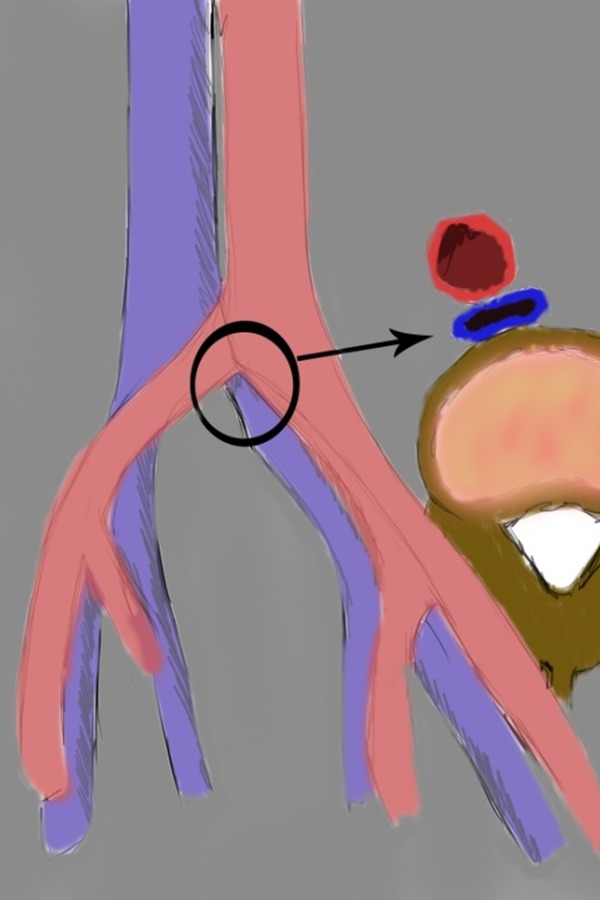
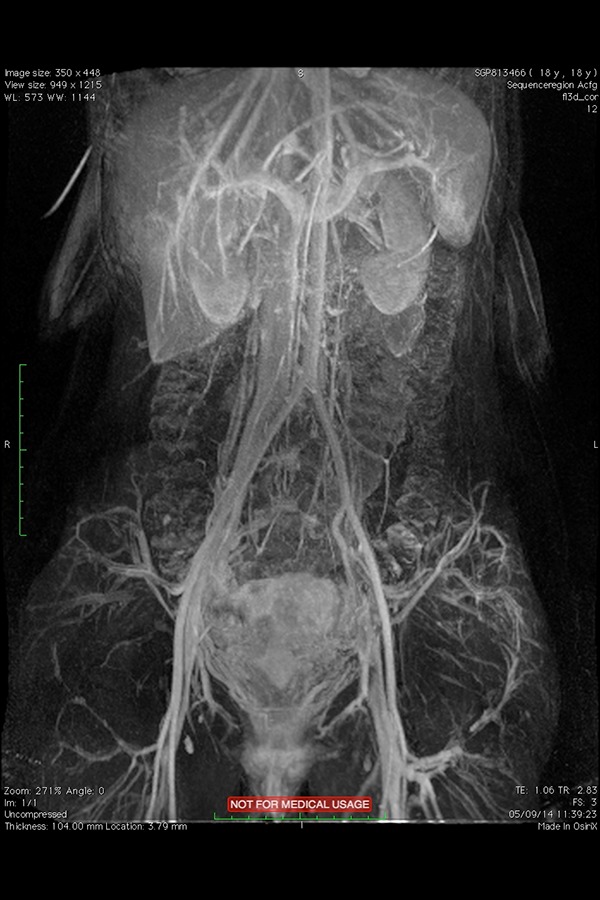
May-Thurner syndrome (MTS) is an anatomically variable condition resulting in compression of the left common iliac vein between the right common iliac artery and the underlying spine with subsequent development of a left deep vein thrombosis (DVT). Although this syndrome is rare, its true prevalence is likely underestimated. Mainly, clinical symptoms and signs include, but are not limited to, pain, swelling, venous stasis ulcers, skin pigmentation changes and post-thrombotic syndrome. Correct treatment is not well established and is based on clinical presentation. Staged thrombolysis with/without prophylactic retrievable inferior vena cava filter placement followed by angioplasty/stenting of the left iliac vein appears to be the best option in MTS patients with extensive DVT. The aim of this review is to present in a simple and didactic form all variable clinical presentations of MTS and to outline possible management within the current guidelines.
梅-图二氏综合征(MTS)是一种解剖结构可变的病症,导致左髂总静脉在右髂总动脉和下方脊柱之间受到压迫,随后发生左下肢深静脉血栓形成(DVT)。尽管该综合征罕见,但其实际患病率可能被低估。主要的临床症状和体征包括但不限于疼痛、肿胀、静脉淤滞性溃疡、皮肤色素沉着改变和血栓形成后综合征。正确的治疗方法尚未明确确立,且基于临床表现。对于患有广泛DVT的MTS患者,分期溶栓联合/不联合预防性可回收下腔静脉滤器置入,随后对左髂静脉进行血管成形术/支架置入似乎是最佳选择。本综述的目的是以简单且有教育意义的形式呈现MTS的所有可变临床表现,并概述现行指南内可能的管理方法。