Caparros-Gonzalez Rafael A, Romero-Gonzalez Borja, Strivens-Vilchez Helen, Gonzalez-Perez Raquel, Martinez-Augustin Olga, Peralta-Ramirez Maria Isabel
Brain, Mind and Behavior Research Center (CIMCYC), Faculty of Psychology, University of Granada. Granada. Spain.
Gynecology and Obstetrics Department, Hospital de Poniente, El Ejido, Spain.
PLoS One. 2017 Aug 28;12(8):e0182817. doi: 10.1371/journal.pone.0182817. eCollection 2017.
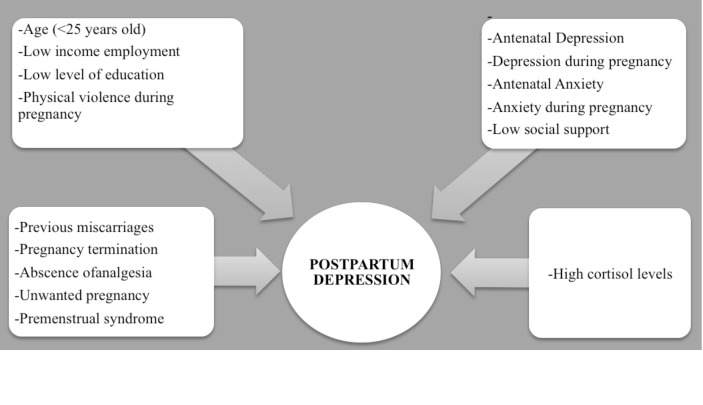
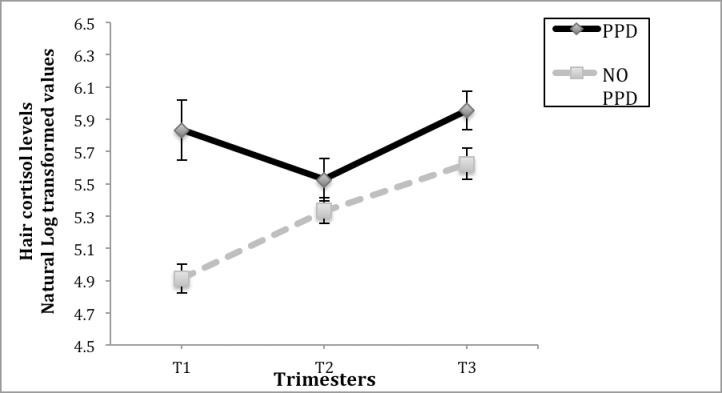
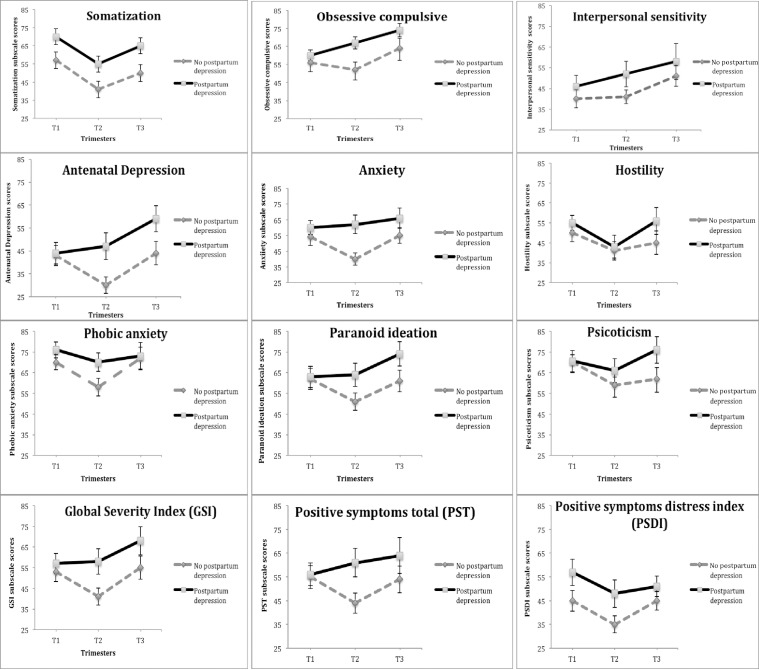
Postpartum depression affects a huge number of women and has detrimental consequences. Knowing the factors associated with postpartum depression during pregnancy can help its prevention. Although there is evidence surrounding behavioral or psychological predictors of postpartum depression, there is a lack of evidence of biological forecasters. The aim of this study was to analyze the sociodemographic, obstetric, and psychological variables along with hair cortisol levels during the first, second, and third trimesters of pregnancy that could predict postpartum depression symptoms. A sample of 44 pregnant women was assessed during 3 trimesters of pregnancy and the postpartum period using psychological questionnaires and hair cortisol levels. Participants were divided into 2 groups: a group with postpartum depression symptoms and a group with no postpartum depression symptoms. Results showed significant positive differences between groups in the first trimester regarding the Somatization subscale of the SCL-90-R (p < .05). In the second trimester, significant differences were found in the Somatization, Depression, Anxiety, and GSI subscales (p < .05). In the third trimester significant differences between both groups were found regarding pregnancy-specific stress. We found significant positive differences between groups regarding hair cortisol levels in the first and the third trimester. Hair cortisol levels could predict 21.7% of the variance of postpartum depression symptoms. In conclusion, our study provided evidence that psychopathological symptoms, pregnancy-specific stress, and hair cortisol levels can predict postpartum depression symptoms at different time-points during pregnancy. These findings can be applied in future studies and improve maternal care in clinical settings.
产后抑郁症影响着大量女性,并会产生有害后果。了解孕期与产后抑郁症相关的因素有助于预防该病。尽管有证据表明存在产后抑郁症的行为或心理预测因素,但缺乏生物学预测因素的证据。本研究的目的是分析社会人口统计学、产科和心理变量,以及孕期前三个月、第二个月和第三个月的头发皮质醇水平,这些因素可能预测产后抑郁症状。使用心理问卷和头发皮质醇水平对44名孕妇在孕期的三个阶段和产后进行了评估。参与者被分为两组:一组有产后抑郁症状,另一组没有产后抑郁症状。结果显示,在孕早期,两组在SCL-90-R的躯体化分量表上存在显著的正差异(p < .05)。在孕中期,在躯体化、抑郁、焦虑和GSI分量表上发现了显著差异(p < .05)。在孕晚期,两组在特定于妊娠的压力方面存在显著差异。我们发现两组在孕早期和孕晚期的头发皮质醇水平上存在显著的正差异。头发皮质醇水平可以预测产后抑郁症状变异的21.7%。总之,我们的研究提供了证据,证明心理病理症状、特定于妊娠的压力和头发皮质醇水平可以在孕期的不同时间点预测产后抑郁症状。这些发现可应用于未来的研究,并改善临床环境中的孕产妇护理。