Di Bono Maria Grazia, Begliomini Chiara, Budisavljevic Sanja, Sartori Luisa, Miotto Diego, Motta Raffaella, Castiello Umberto
Neuroscience of Movement (NeMo) Laboratory, Department of General Psychology, University of Padova, Padova, Italy.
Department of Medicine, University of Padova, Padova, Italy.
PLoS One. 2017 Aug 28;12(8):e0184008. doi: 10.1371/journal.pone.0184008. eCollection 2017.
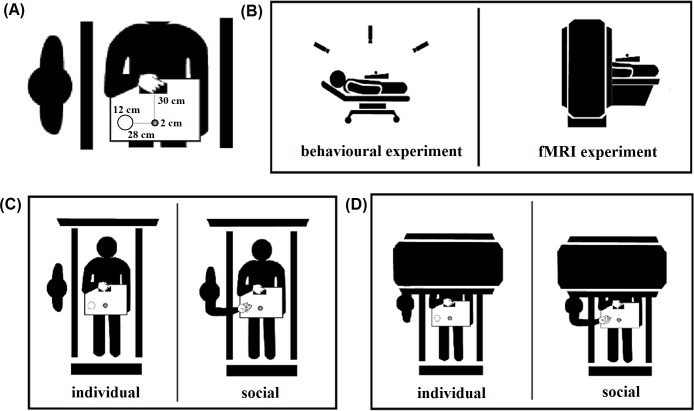
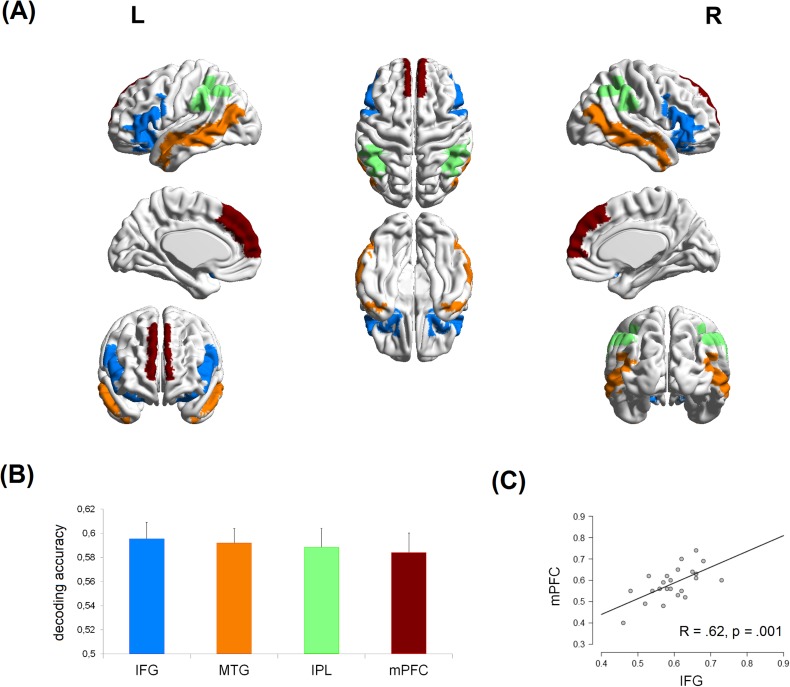
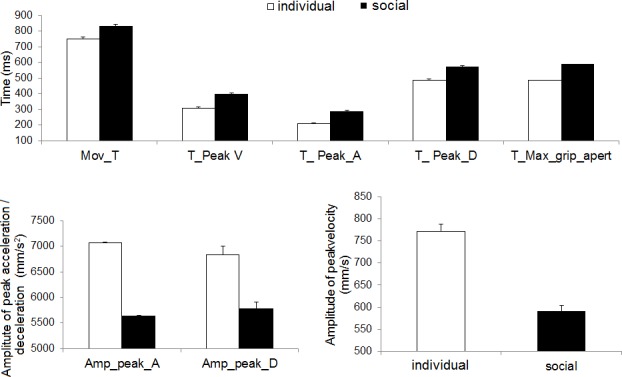
Consistent evidence suggests that the way we reach and grasp an object is modulated not only by object properties (e.g., size, shape, texture, fragility and weight), but also by the types of intention driving the action, among which the intention to interact with another agent (i.e., social intention). Action observation studies ascribe the neural substrate of this 'intentional' component to the putative mirror neuron (pMNS) and the mentalizing (MS) systems. How social intentions are translated into executed actions, however, has yet to be addressed. We conducted a kinematic and a functional Magnetic Resonance Imaging (fMRI) study considering a reach-to-grasp movement performed towards the same object positioned at the same location but with different intentions: passing it to another person (social condition) or putting it on a concave base (individual condition). Kinematics showed that individual and social intentions are characterized by different profiles, with a slower movement at the level of both the reaching (i.e., arm movement) and the grasping (i.e., hand aperture) components. fMRI results showed that: (i) distinct voxel pattern activity for the social and the individual condition are present within the pMNS and the MS during action execution; (ii) decoding accuracies of regions belonging to the pMNS and the MS are correlated, suggesting that these two systems could interact for the generation of appropriate motor commands. Results are discussed in terms of motor simulation and inferential processes as part of a hierarchical generative model for action intention understanding and generation of appropriate motor commands.
一致的证据表明,我们触及和抓取物体的方式不仅受到物体属性(如大小、形状、质地、易碎性和重量)的调节,还受到驱动该动作的意图类型的调节,其中包括与另一个主体互动的意图(即社会意图)。动作观察研究将这种“意图”成分的神经基础归因于假定的镜像神经元(pMNS)和心理化(MS)系统。然而,社会意图如何转化为执行动作尚未得到解决。我们进行了一项运动学和功能性磁共振成像(fMRI)研究,考虑了对位于同一位置的同一物体进行的触及抓取动作,但具有不同意图:将其递给另一个人(社会条件)或将其放在凹形底座上(个体条件)。运动学表明,个体意图和社会意图具有不同的特征,在触及(即手臂运动)和抓取(即手部开度)两个层面的动作都较慢。fMRI结果表明:(i)在动作执行过程中,pMNS和MS内存在社会条件和个体条件下不同的体素模式活动;(ii)属于pMNS和MS的区域的解码准确率相关,表明这两个系统可能相互作用以生成适当的运动指令。我们从运动模拟和推理过程的角度对结果进行了讨论,这些过程是动作意图理解和生成适当运动指令的分层生成模型的一部分。