Zhang Xuemei, Li Xuejuan, Hua Hongchen, Wang Aiping, Liu Wanhui, Li Youxin, Fu Fenghua, Shi Yanan, Sun Kaoxiang
School of Pharmacy, Yantai University, Yantai, Shandong Province, People's Republic of China.
State Key Laboratory of Long-acting and Targeting Drug Delivery System, Yantai, Shandong Province, People's Republic of China.
Int J Nanomedicine. 2017 Aug 8;12:5717-5732. doi: 10.2147/IJN.S138501. eCollection 2017.
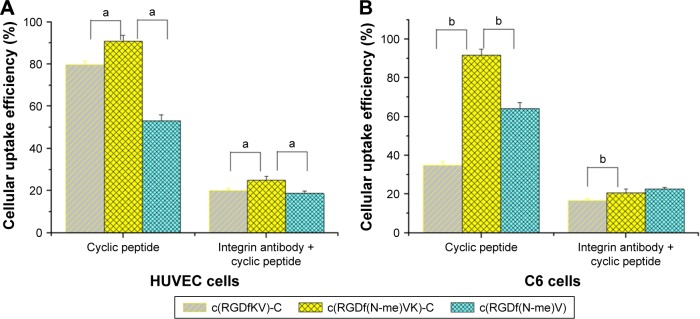
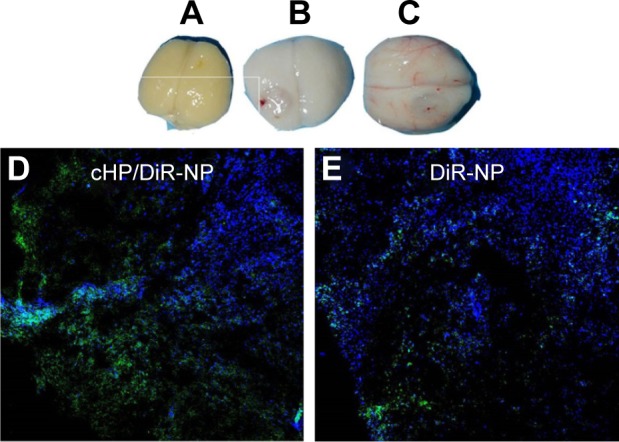
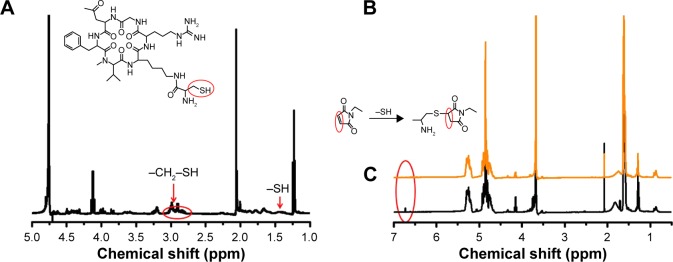
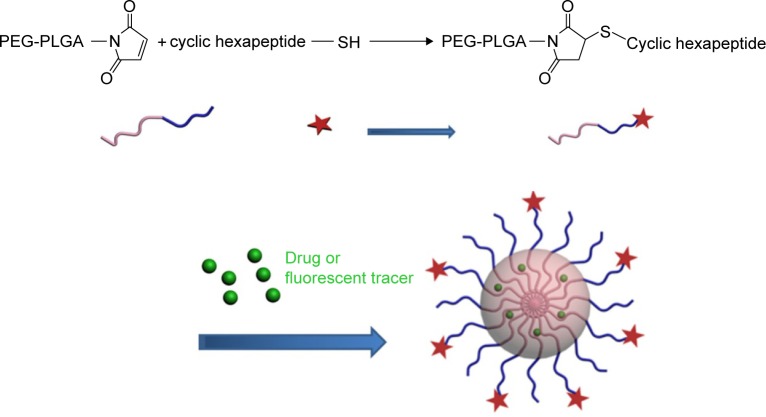
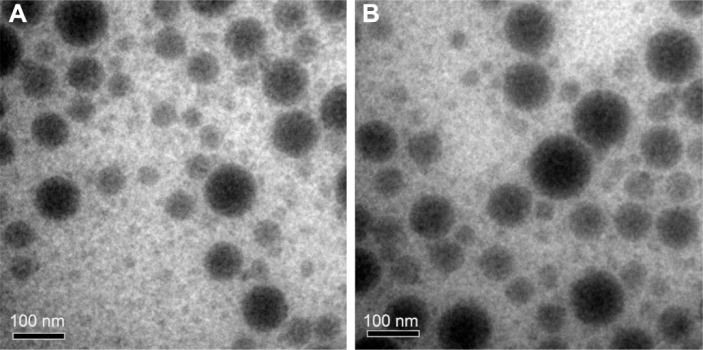
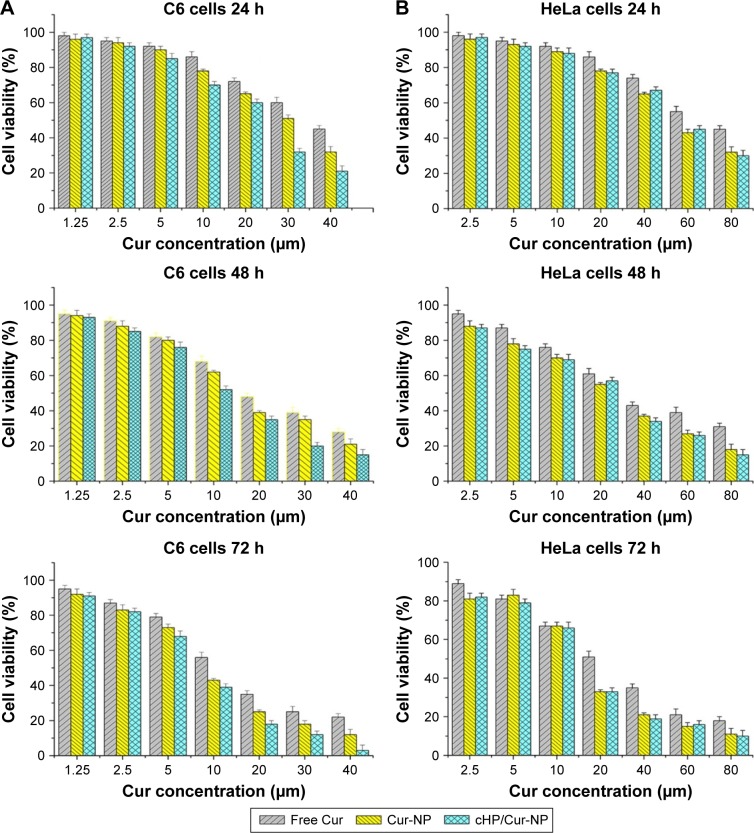
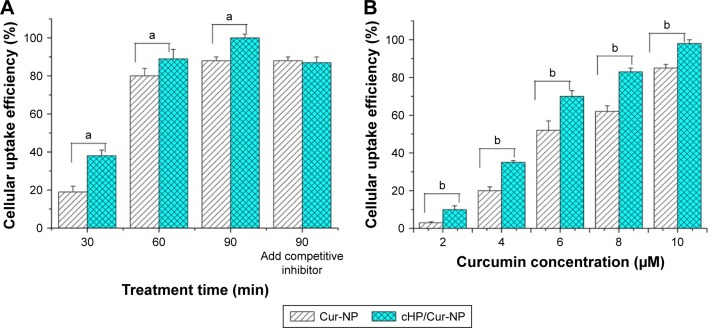
Glioma has one of the highest mortality rates among primary brain tumors. The clinical treatment for glioma is very difficult due to its infiltration and specific growth locations. To achieve improved drug delivery to a brain tumor, we report the preparation and in vitro and in vivo evaluation of curcumin nanoparticles (Cur-NPs). The cyclic hexapeptide c(RGDf(N-me) VK)-C (cHP) has increased affinity for cells that overexpress integrins and was designed to target Cur-NPs to tumors. Functional polyethyleneglycol-modified poly(d,l-lactide-co-glycolide) (PEG-PLGA) conjugated to cHP was synthesized, and targeted Cur-NPs were prepared using a self-assembly nanoprecipitation process. The physicochemical properties and the in vitro cytotoxicity, accuracy, and penetration capabilities of Cur-NPs targeting cells with high levels of integrin expression were investigated. The in vivo targeting and penetration capabilities of the NPs were also evaluated against glioma in rats using in vivo imaging equipment. The results showed that the in vitro cytotoxicity of the targeted cHP-modified curcumin nanoparticles (cHP/Cur-NPs) was higher than that of either free curcumin or non-targeted Cur-NPs due to the superior ability of the cHP/Cur-NPs to target tumor cells. The targeted cHP/Cur-NPs, c(RGDf(N-me)VK)-C-modified Cur-NPs, exhibited improved binding, uptake, and penetration abilities than non-targeting NPs for glioma cells, cell spheres, and glioma tissue. In conclusion, c(RGDf(N-me)VK)-C can serve as an effective targeting ligand, and cHP/Cur-NPs can be exploited as a potential drug delivery system for targeting gliomas.
胶质瘤是原发性脑肿瘤中死亡率最高的肿瘤之一。由于其浸润性和特殊的生长位置,胶质瘤的临床治疗非常困难。为了实现更好的脑肿瘤药物递送,我们报道了姜黄素纳米颗粒(Cur-NPs)的制备及其体外和体内评价。环六肽c(RGDf(N-me)VK)-C(cHP)对过表达整合素的细胞具有更高的亲和力,被设计用于将Cur-NPs靶向肿瘤。合成了与cHP偶联的功能性聚乙二醇修饰的聚(d,l-丙交酯-共-乙交酯)(PEG-PLGA),并采用自组装纳米沉淀法制备了靶向Cur-NPs。研究了Cur-NPs的物理化学性质以及靶向高表达整合素细胞的体外细胞毒性、靶向准确性和穿透能力。还使用体内成像设备评估了纳米颗粒对大鼠胶质瘤的体内靶向和穿透能力。结果表明,由于cHP/Cur-NPs靶向肿瘤细胞的能力更强,靶向的cHP修饰姜黄素纳米颗粒(cHP/Cur-NPs)的体外细胞毒性高于游离姜黄素或非靶向Cur-NPs。靶向的cHP/Cur-NPs,即c(RGDf(N-me)VK)-C修饰的Cur-NPs,对胶质瘤细胞、细胞球和胶质瘤组织的结合、摄取和穿透能力均优于非靶向纳米颗粒。总之,c(RGDf(N-me)VK)-C可作为一种有效的靶向配体,cHP/Cur-NPs可作为一种潜在的靶向胶质瘤的药物递送系统。