National Translational Science Center for Molecular Medicine, The Fourth Military Medical University, Xi'an, Shaanxi 710032, P.R. China.
Mol Med Rep. 2017 Oct;16(4):4593-4602. doi: 10.3892/mmr.2017.7201. Epub 2017 Aug 9.
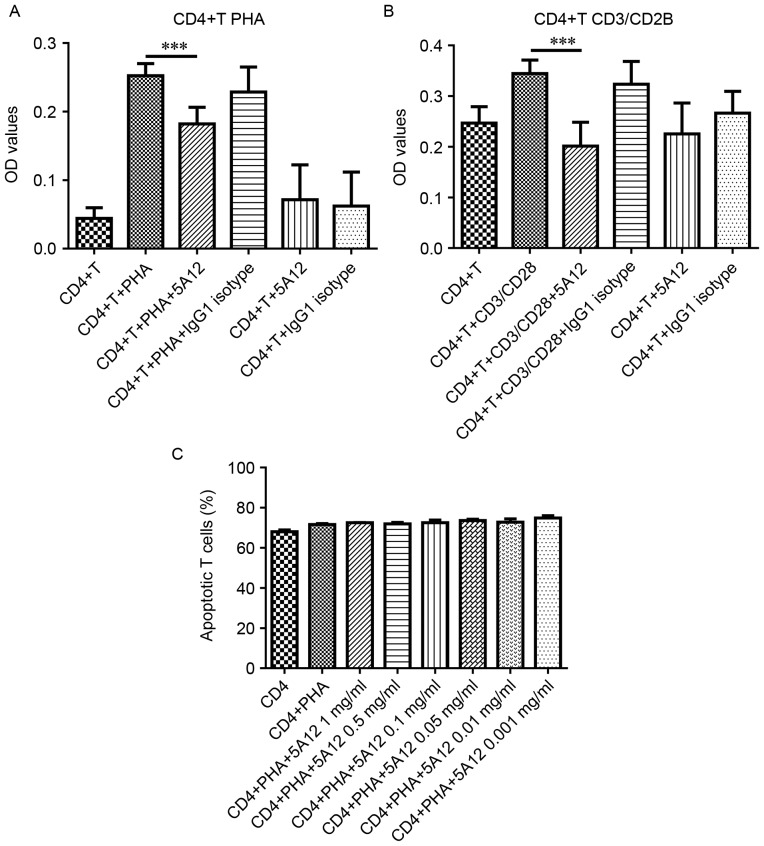
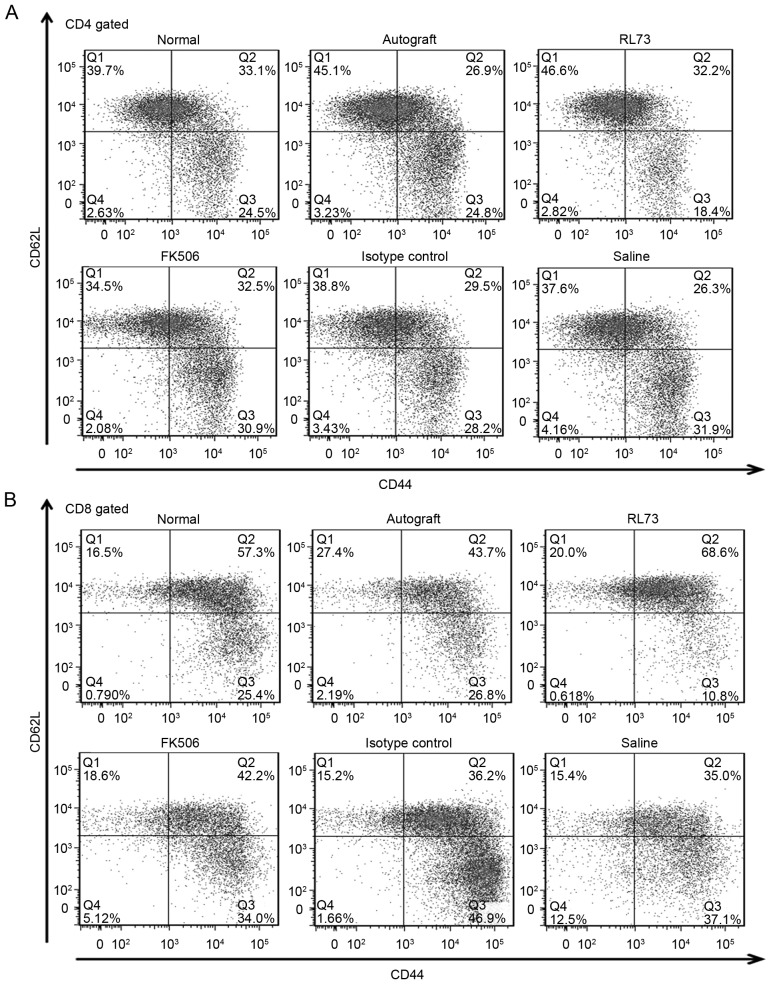
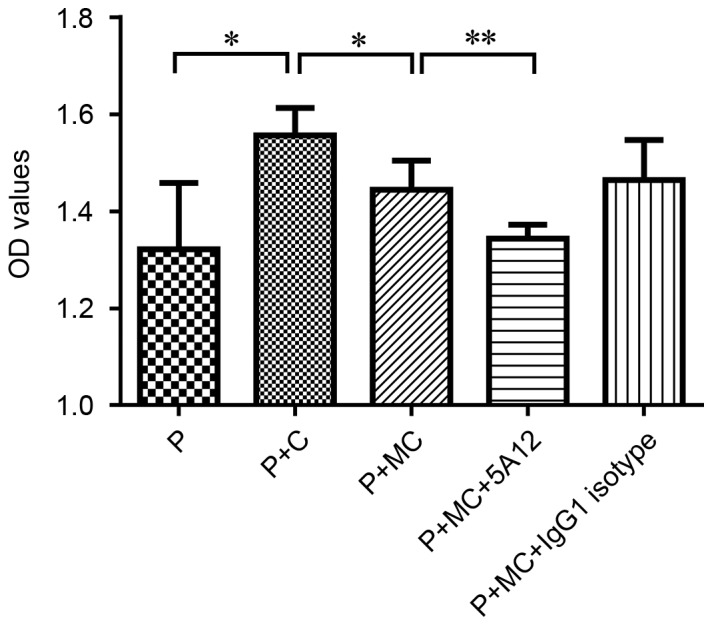
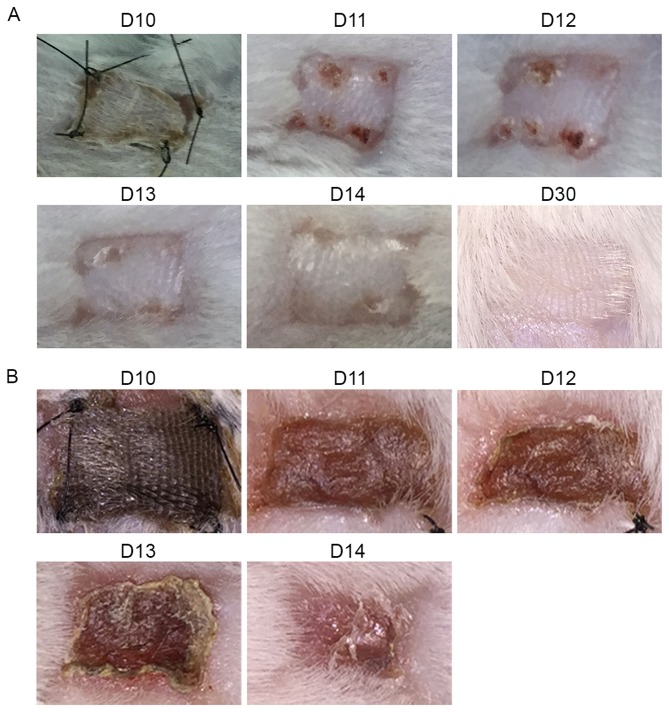
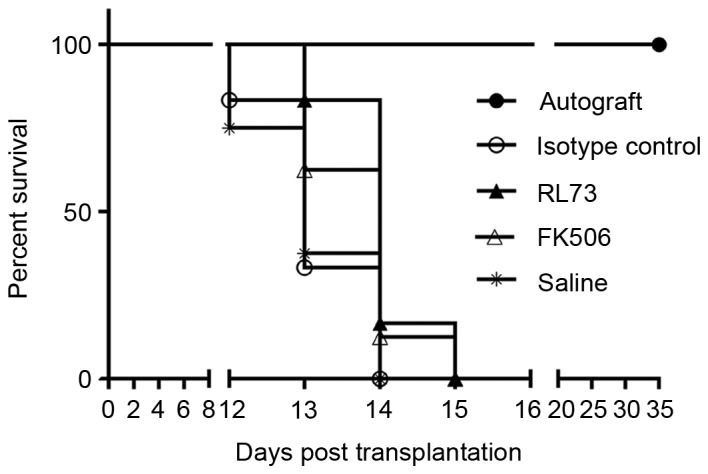
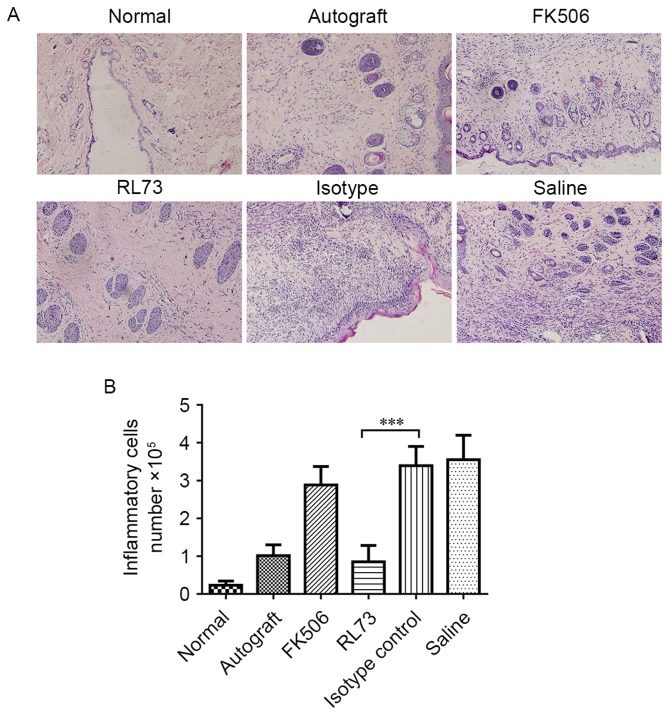
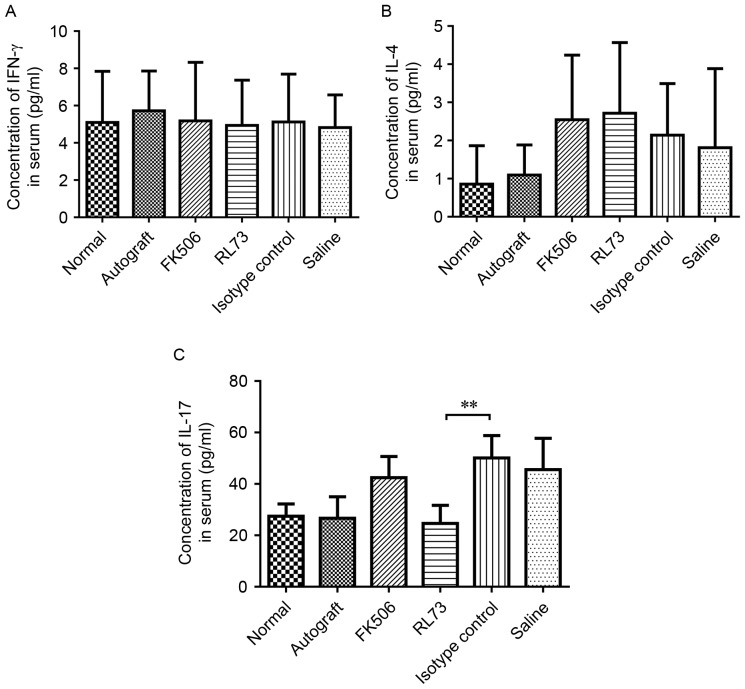
Cluster of differentiation (CD)147 is highly involved in the T cell activation process. High CD147 expression is observed on the surfaces of activated T cells, particularly CD4+ T cells. In organ transplantation, it is important to prevent graft rejection resulting from the excessive activation of T cells, particularly CD4+ T cells, which exhibit a key role in amplifying the immune response. The present study aimed to investigate the effects of CD147 blockade in vitro and in vivo and used a transplant rejection system to assess the feasibility of utilizing CD147 antibody‑based immunosuppressant drugs for the treatment of graft rejection. The effects of CD147 antibodies were evaluated on lymphocyte proliferation stimulated by phytohemagglutinin or CD3/CD28 magnetic beads and in a one‑way mixed lymphocyte reaction (MLR) system in vitro. For the in vivo analysis, an allogeneic skin transplantation mouse model was used. CD147 antibodies were effective against lymphocytes, particularly CD4+T lymphocytes, and were additionally effective in the one‑way MLR system. In the allogeneic skin transplantation mouse model, the survival of transplanted skin was extended in the CD147 antibody‑treated group. Furthermore, the level of inflammatory cell infiltration in transplanted skin was reduced. CD147 blockade decreased the serum levels of interleukin (IL)‑17 and the proportions of peripheral blood CD4+ and CD8+ memory T cells. The data demonstrated that CD147 blockade suppressed skin graft rejection, primarily by suppressing CD4+T and memory T cell proliferation, indicating that CD147 exhibits great potential as a target of immunosuppressant drugs.
CD147 簇分化物高度参与 T 细胞激活过程。在活化的 T 细胞表面,尤其是 CD4+T 细胞上观察到高 CD147 表达。在器官移植中,重要的是要防止由于 T 细胞过度激活,尤其是在放大免疫反应中起关键作用的 CD4+T 细胞而导致的移植物排斥。本研究旨在研究 CD147 阻断在体外和体内的作用,并使用移植排斥系统评估基于 CD147 抗体的免疫抑制剂药物治疗移植物排斥的可行性。在体外,通过植物血球凝集素或 CD3/CD28 磁珠刺激的淋巴细胞增殖以及单向混合淋巴细胞反应(MLR)系统评估 CD147 抗体的作用。对于体内分析,使用同种异体皮肤移植小鼠模型。CD147 抗体对淋巴细胞,特别是 CD4+T 淋巴细胞有效,并且在单向 MLR 系统中更有效。在同种异体皮肤移植小鼠模型中,在 CD147 抗体治疗组中,移植皮肤的存活时间延长。此外,移植皮肤中炎性细胞浸润的水平降低。CD147 阻断降低了血清中白细胞介素(IL)-17 的水平以及外周血 CD4+和 CD8+记忆 T 细胞的比例。数据表明,CD147 阻断抑制皮肤移植物排斥反应,主要是通过抑制 CD4+T 和记忆 T 细胞的增殖,表明 CD147 作为免疫抑制剂药物的靶标具有很大的潜力。